What are the goals of ADHD treatment?
We do not aim to silence the child or turn an adult into someone else. The goal of treatment is to reduce the symptoms that disrupt their life, improve school, work and relationships, protect their self-esteem, and prevent complications such as accidents and substance use.
Major guidelines such as NICE and the US Centers for Disease Control and Prevention agree that the best treatment is multimodal: it begins by educating the family or patient about the disorder, then the right combination is chosen according to age, severity and co-occurring conditions.
How does treatment differ by age?
| Age | Usual starting point | Notes |
|---|---|---|
| Preschool | Parent training in behavior management first | Medication is used only rarely, and after an additional specialist assessment |
| School age | Combining medication, behavioral therapy and parent training | With adjustments and support at school |
| Adolescence | Medication with behavioral therapy and organizational skills | Involving the teenager in decisions and monitoring substance use and driving |
| Adults | Medication with cognitive behavioral therapy when needed | Adjustments in the work environment and time-management skills |
What is parent training and why is it important?
The US Centers for Disease Control and Prevention recommends parent training in behavior management as the first-line treatment for children under 6, before trying medication, because it gives good results at this age without side effects. Parents learn practical skills:
- Short, clear instructions, one at a time, with eye contact.
- A consistent daily routine for sleep, meals, homework and play.
- Rewarding good behavior right away, and recognizing effort, not only results.
- Calm, predictable consequences instead of shouting and hitting.
- Breaking big tasks into small steps with visual checklists.
- Positive time with the child every day, away from giving instructions.
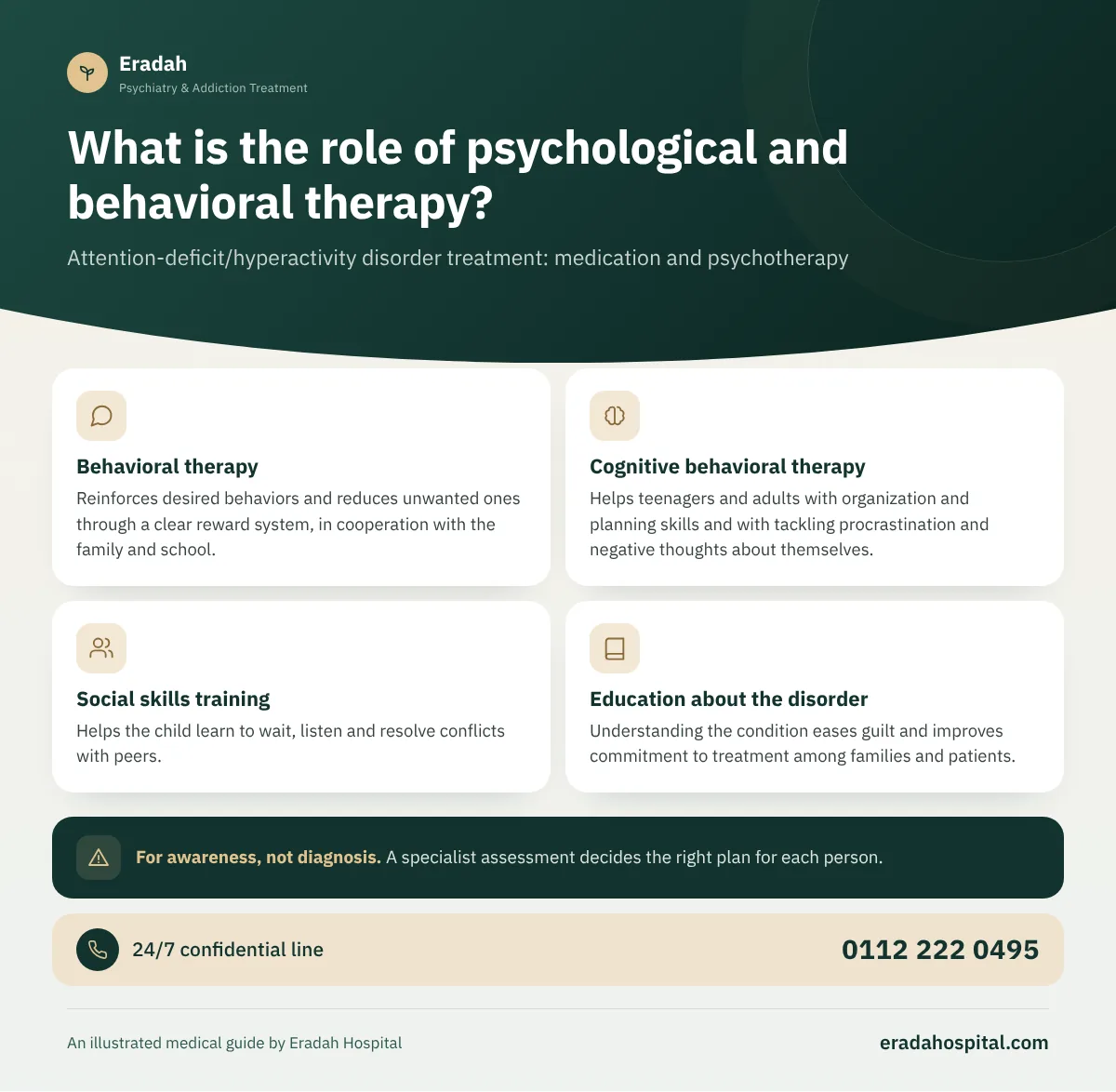
What is the role of psychological and behavioral therapy?
Reinforces desired behaviors and reduces unwanted ones through a clear reward system, in cooperation with the family and school.
Helps teenagers and adults with organization and planning skills and with tackling procrastination and negative thoughts about themselves.
Helps the child learn to wait, listen and resolve conflicts with peers.
Understanding the condition eases guilt and improves commitment to treatment among families and patients.
How can school support a student with ADHD?
- Sitting in the front rows, away from windows and doors.
- Breaking homework and tests into shorter parts, with extra time when needed.
- Short, structured movement breaks during the school day.
- A daily communication notebook between teacher and family to follow homework and behavior.
- Rewarding effort and improvement in front of classmates instead of public criticism.
- Assessment for learning difficulties, if present, with specialized educational support.
What types of ADHD medication are there?
Medications fall into two main groups, and the doctor chooses among them according to age, symptoms, co-occurring conditions and medical history. The medications available differ from country to country:
| Group | Examples | Role and notes |
|---|---|---|
| Stimulants of the methylphenidate family | Methylphenidate, including Ritalin and Concerta | A common first choice for children in NICE guidelines, available in short- and long-acting forms |
| Stimulants of the amphetamine family | Lisdexamfetamine and dexamfetamine | Among the first choices for adults in NICE guidelines, and an alternative for children when needed |
| Non-stimulants | Atomoxetine, guanfacine, and clonidine in some countries | When stimulants are unsuitable or not tolerated, or with substance use or certain co-occurring conditions |
StatPearls notes that stimulants are the first-line treatment and that a large proportion of patients respond to them. Non-stimulants take effect more slowly, and may suit people with a history of substance use.
What are the common side effects of the medications?
The most common side effects of stimulants in general are: reduced appetite, difficulty sleeping, headache and stomach pain, and a slight rise in pulse and blood pressure. They may also affect height growth in some children, which is why height and weight are monitored. These effects often ease or can be handled with adjustments decided by the doctor. Any palpitations, chest pain, fainting or major mood change calls for contacting the doctor right away.
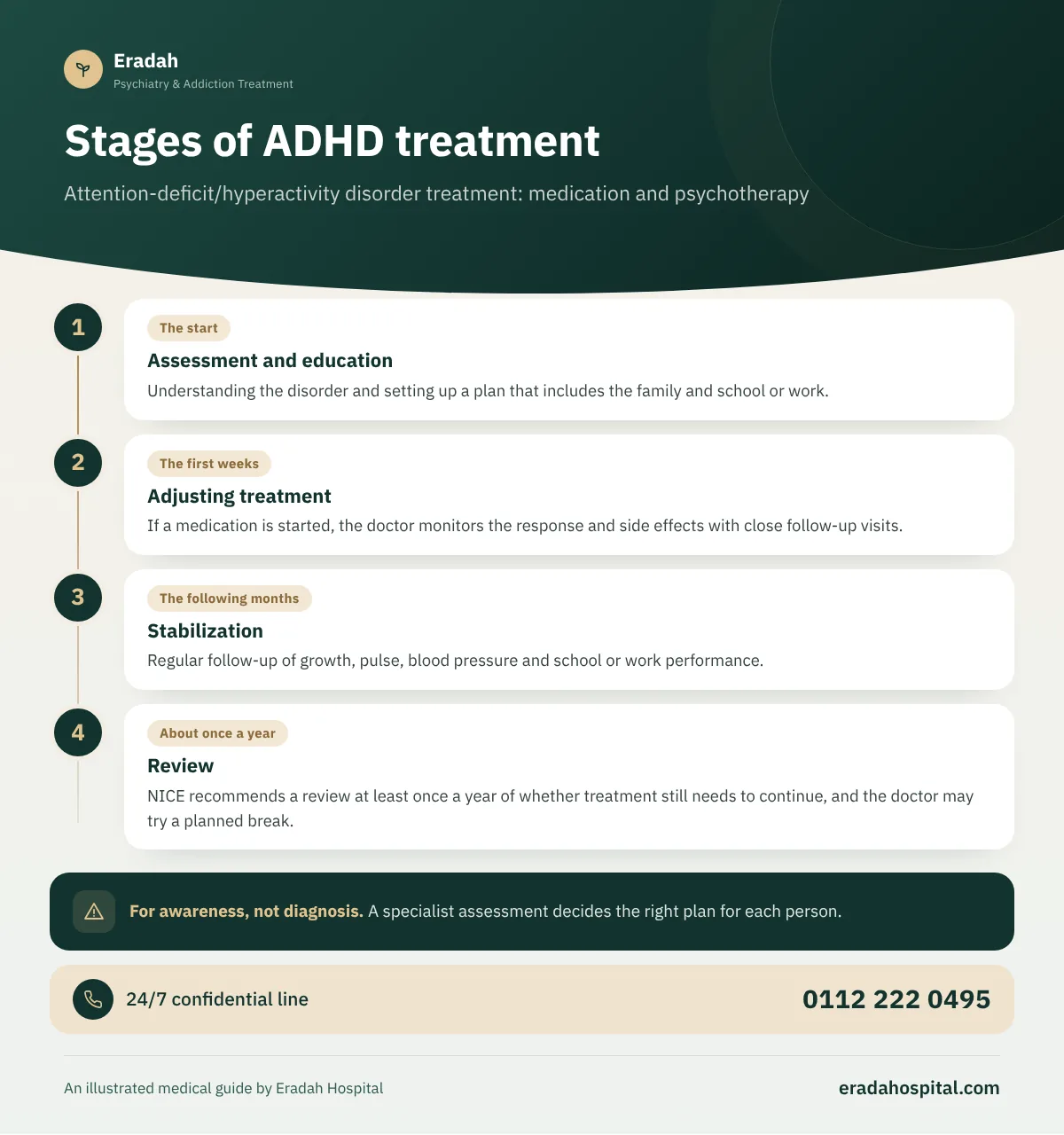
How long does treatment last?
- The startAssessment and education
Understanding the disorder and setting up a plan that includes the family and school or work.
- The first weeksAdjusting treatment
If a medication is started, the doctor monitors the response and side effects with close follow-up visits.
- The following monthsStabilization
Regular follow-up of growth, pulse, blood pressure and school or work performance.
- About once a yearReview
NICE recommends a review at least once a year of whether treatment still needs to continue, and the doctor may try a planned break.
What is the role of lifestyle?
- Regular sleep: the US National Institute of Mental Health considers it an important goal because lack of sleep worsens symptoms.
- Daily physical activity: helps burn off energy and improve mood and focus.
- Managing screens: especially before bed and while studying.
- Organizing tools: alarms, lists and calendars for teenagers and adults.
- Staying away from substances: smoking, alcohol and hashish increase distraction and complicate treatment.
How does the family help treatment succeed?
Sticking to routines and behavior-management skills, communicating regularly with the school and doctor, keeping medication in a safe place and giving it as prescribed all make a big difference. Most importantly, the child should feel that treatment is there to help them, not to punish them, and should be praised consistently for their effort.
Choosing a hospital for ADHD treatment
ADHD is mostly treated through a clinic and regular follow-up, not through a hospital stay. A good provider is judged by the accuracy of diagnosis and the quality of follow-up more than anything else, because symptoms such as anxiety, learning difficulties or sleep disorders can look similar. Before choosing a doctor or center for your child or yourself, review this checklist:
- A diagnosis based on information from home and school or work and validated scales, not on one short visit.
- Parent training in behavior management, especially with young children.
- Regular follow-up after any medication is started: appetite, sleep, weight, height and heart rate.
- Communication with the school to put in place adjustments suited to the student.
- Asking teenagers and adults about smoking and drugs, because the disorder raises the likelihood of substance use.
- Cognitive behavioral therapy for adults focused on organization and time management.
At Eradah we see children and adolescents for assessment, treatment and follow-up. The psychiatrist decides on and reviews the medication plan, while specialists provide behavioral and cognitive therapy. For people who have both ADHD and substance use, the dual diagnosis pathway combines both treatments. You can find details of this relationship in ADHD and addiction.
How does treatment work at Eradah?
At Eradah, treatment begins with a comprehensive assessment for children or adults that covers co-occurring conditions and substance use. An individual plan is then built that combines education, behavioral or cognitive therapy and medication follow-up when needed, with family support and coordination with the school or workplace. For people with ADHD and addiction, integrated treatment is provided within the dual diagnosis program.