What is melatonin?
Melatonin is a small hormone the body makes from the amino acid tryptophan, via serotonin, in a pea-sized gland deep in the brain called the pineal gland. It is the chemical messenger that translates “darkness” outside into a signal inside the body.
When melatonin rises in the blood in the evening, body temperature drops slightly, alertness falls and the body prepares for sleep. But it does not make a person lose consciousness or act like a sedative; someone resisting sleep can stay up even with it raised, and exposure to bright light at night suppresses its release. This is why scientists describe it as a timing regulator more than a sleeping pill.
Melatonin is also found in other tissues such as the gut, and its role as an antioxidant and in immunity is being studied, but these roles are still under research. The confirmed role is in the body clock and sleep.
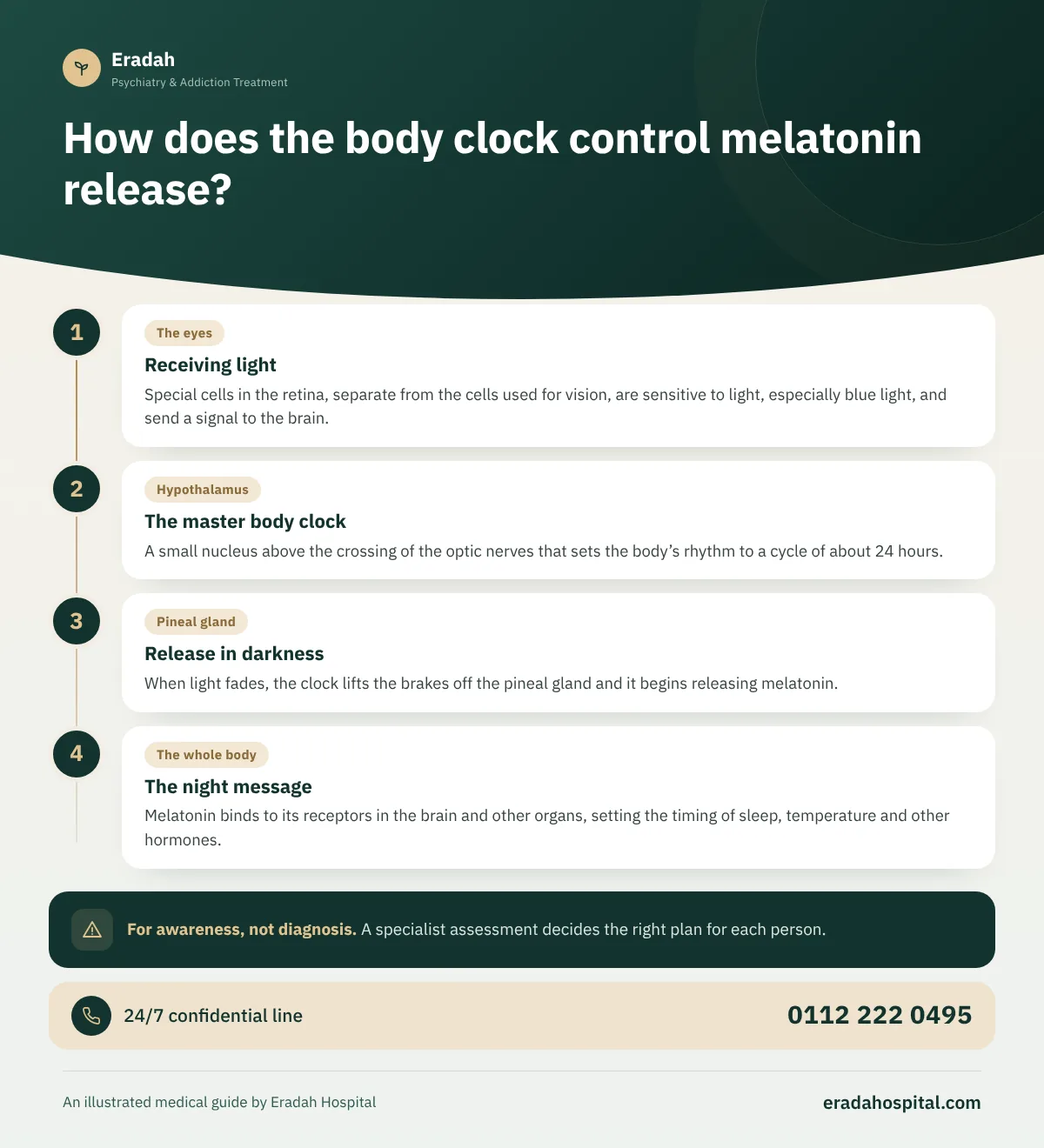
How does the body clock control melatonin release?
- The eyesReceiving light
Special cells in the retina, separate from the cells used for vision, are sensitive to light, especially blue light, and send a signal to the brain.
- HypothalamusThe master body clock
A small nucleus above the crossing of the optic nerves that sets the body’s rhythm to a cycle of about 24 hours.
- Pineal glandRelease in darkness
When light fades, the clock lifts the brakes off the pineal gland and it begins releasing melatonin.
- The whole bodyThe night message
Melatonin binds to its receptors in the brain and other organs, setting the timing of sleep, temperature and other hormones.
Melatonin usually begins to rise about two hours before your usual bedtime, peaks around the middle of the night, then falls toward morning, which is when cortisol begins to climb to prepare for waking. These two hormones work like the two ends of a daily seesaw.
What does melatonin do in the body?
Tells the organs it is night, so sleep, temperature, digestion and hormone release fall into step.
Helps shift the body clock earlier or later, which is why it is used medically in some timing disorders.
The length of its release changes with the length of the night, which matters more in animals than in humans.
Antioxidant and immune effects studied in the lab, with no proven applications yet for the general public.
Why do light and screens stop melatonin release?
Light is the strongest signal that sets the body clock, and bright light in the evening suppresses melatonin and delays when it is released. In a Harvard study published in 2015, reading on a light-emitting tablet in the evening for several nights suppressed melatonin and delayed the timing of the body clock, with greater drowsiness the next morning, compared with reading a printed book.
It is not only screens; strong white lighting at home and in shops at night also has an effect. And exciting screen content, such as games, messages and social media, keeps the brain alert regardless of light. This ties in with many of the complaints in our phone addiction guide.
Is melatonin really the “sleep hormone”?
The nickname is common and understandable, but it is not accurate. Nocturnal animals, which are active in the dark, also release melatonin at night, so it means “night,” not “sleep.” In humans, melatonin opens the “gate to sleep,” but sleep itself also needs “sleep pressure,” which builds up over the hours of wakefulness, and a calm mind.
So someone with insomnia caused by anxiety, depression, pain or withdrawal from substances will often not solve the problem by raising melatonin alone; what keeps them awake is hyperarousal, not a missing “night signal.” The insomnia guide explains the causes and treatment in detail.
What is the link between melatonin and sleep during addiction recovery?
Disturbed sleep is among the most common complaints in the first weeks after stopping alcohol or drugs, and in some people in recovery it can last for months. The cause is not melatonin alone: the stress system is on high alert, the brain is resetting its transmitters, and daily habits have been turned upside down by years of staying up late and sleeping by day.
Alcohol in particular weakens melatonin release and spoils the structure of sleep, so a person who drinks thinks they fall asleep faster but wakes exhausted. After stopping, the daily rhythm needs time to return. Restoring routine helps here: morning light, fixed times, daytime activity, and fewer screens at night. A person in recovery is advised not to use any sleeping pills or supplements on their own, because some sleeping pills can themselves cause dependence, may interfere with treatment medicines, or may add dangerous drowsiness if a relapse happens and alcohol is drunk. It is best for the sleep plan to be part of the treatment program under medical supervision. The page on cortisol and addiction explains why stress rises at this stage.
Are melatonin supplements safe?
Melatonin is available as a supplement or a medicine in various forms, and its regulation differs between countries: in the United States it is sold as a dietary supplement, and in the United Kingdom it is a prescription medicine. According to the US National Institutes of Health, it is considered relatively safe in the short term for most adults, but long-term safety has not been well studied.
- The contents may not match the label: In a 2023 study of melatonin gummies on the US market, the actual amount in most products differed from what was written, ranging from far less than stated to more than three times as much.
- Drug interactions: It may interact with blood thinners, epilepsy medicines, sedatives, blood pressure and diabetes medicines, immunosuppressants and some antidepressants.
- Side effects: Headache, dizziness, nausea and next-day drowsiness, so do not drive if you feel sleepy.
- Children and pregnant women: It is not given to children and is not used during pregnancy and breastfeeding except under medical supervision.
Can melatonin be measured with a test?
It can be measured in saliva or blood, or by measuring its breakdown products in urine, but this is done in sleep centers and research under special conditions, chiefly repeated evening samples under dim light to pin down when its release begins. A random sample in an ordinary lab during the day is meaningless, because melatonin is almost absent in the daytime anyway.
So doctors diagnose sleep disorders from the medical history and a sleep diary kept for two weeks or more, sometimes a wrist-worn device that records activity and rest, or a sleep study in a lab when sleep apnea is suspected.
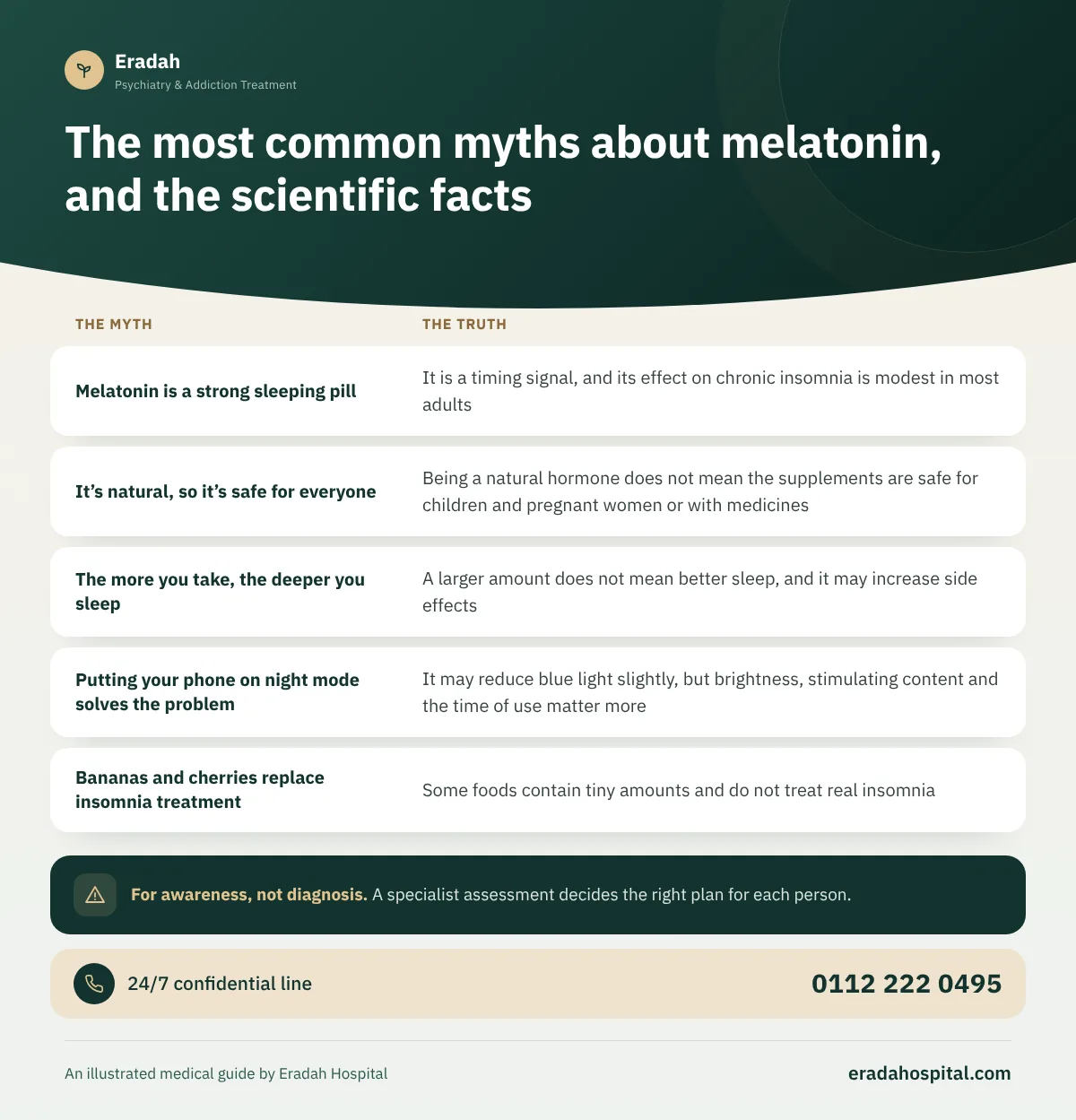
Melatonin myths and facts
| The myth | The truth |
|---|---|
| Melatonin is a strong sleeping pill | It is a timing signal, and its effect on chronic insomnia is modest in most adults |
| It’s natural, so it’s safe for everyone | Being a natural hormone does not mean the supplements are safe for children and pregnant women or with medicines |
| The more you take, the deeper you sleep | A larger amount does not mean better sleep, and it may increase side effects |
| Putting your phone on night mode solves the problem | It may reduce blue light slightly, but brightness, stimulating content and the time of use matter more |
| Bananas and cherries replace insomnia treatment | Some foods contain tiny amounts and do not treat real insomnia |
Melatonin guide: everything you need to know
We have gathered everything about melatonin into 2 pages, each answering one question in detail. Choose what you are looking for:
Melatonin deficiency: symptoms and causes
Signs of disrupted melatonin release, its causes from light, staying up late, night shifts, aging, medicines and alcohol, and when you need a sleep doctor.
Ways to increase melatonin naturally
Daylight and darkness at night, sleep routine, handling screens and night work, with a table of evidence strength and warnings about supplements for children and pregnant women.
A child swallowed sleep supplements, or extreme drowsiness after mixing them with sedatives? Call an ambulance (123)
- A child swallowed a quantity of melatonin pills or “sleep gummies,” even if they seem normal now
- Extreme drowsiness or difficulty waking the person
- Slow or difficult breathing, or bluish lips
- Taking sleep supplements with alcohol, sedatives or opioid painkillers, followed by confusion or unsteadiness
- Long-standing insomnia with severe despair or thoughts of death or self-harm
Call an ambulance (123) or go to the nearest emergency department immediately, bring the product packaging so the contents are known, and do not try to induce vomiting. If the person is asleep and breathing, place them on their side and stay beside them until help arrives. If there are thoughts of death or self-harm, do not leave them alone and call the mental health support line 16328 (24 hours).
Ambulance 123 Mental health support line 16328