Can serotonin really be raised without medication?
The honest answer: brain serotonin cannot be measured in a particular person, so we cannot say that a habit “raised your serotonin” by a certain amount. But research in humans and animals suggests that some habits affect the serotonin system, and more importantly, many of them really do improve mood in scientific trials.
One of the best-known reviews on this subject was by the researcher Young, published in 2007 in a psychiatry and neuroscience journal, which discussed four non-drug approaches: bright light, exercise, diet, and improving mood itself through positive experiences and relationships. It concluded that light and exercise are the most promising, while the effect of diet is limited.
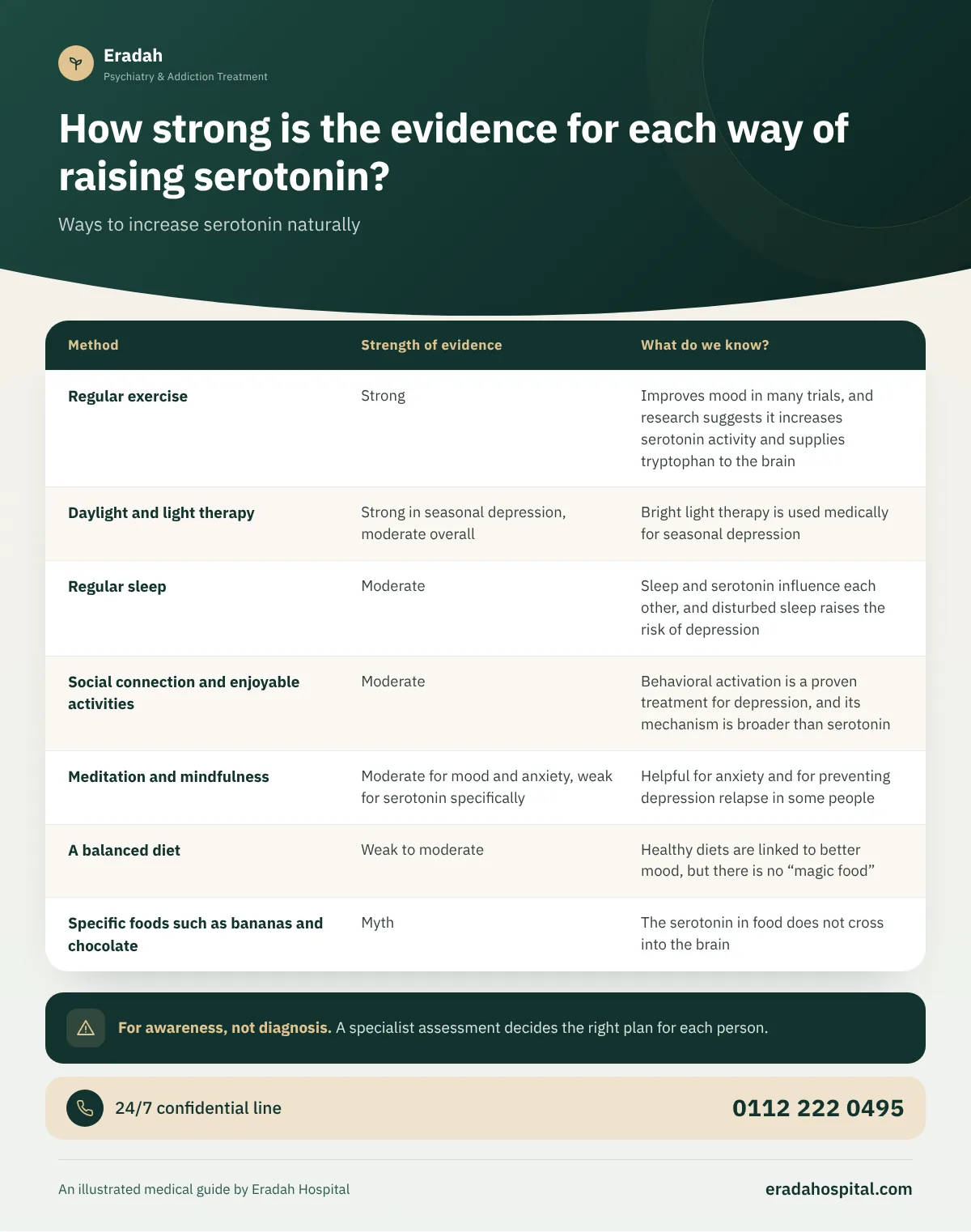
How strong is the evidence for each way of raising serotonin?
| Method | Strength of evidence | What do we know? |
|---|---|---|
| Regular exercise | Strong | Improves mood in many trials, and research suggests it increases serotonin activity and supplies tryptophan to the brain |
| Daylight and light therapy | Strong in seasonal depression, moderate overall | Bright light therapy is used medically for seasonal depression |
| Regular sleep | Moderate | Sleep and serotonin influence each other, and disturbed sleep raises the risk of depression |
| Social connection and enjoyable activities | Moderate | Behavioral activation is a proven treatment for depression, and its mechanism is broader than serotonin |
| Meditation and mindfulness | Moderate for mood and anxiety, weak for serotonin specifically | Helpful for anxiety and for preventing depression relapse in some people |
| A balanced diet | Weak to moderate | Healthy diets are linked to better mood, but there is no “magic food” |
| Specific foods such as bananas and chocolate | Myth | The serotonin in food does not cross into the brain |
Does sunlight raise serotonin?
Research points to a relationship between the amount of daylight and serotonin activity in the brain, and lack of light in winter is linked to seasonal depression in some people. That is why bright light therapy is used medically for this type of depression, under a doctor’s supervision.
In Egypt we do not lack sun, but many people spend their day in closed offices or in front of screens and go outside after sunset. The simplest practical step: get out into the morning light daily, walk outdoors, and place your workspace near a window. Take care to avoid midday heat and protect your skin.
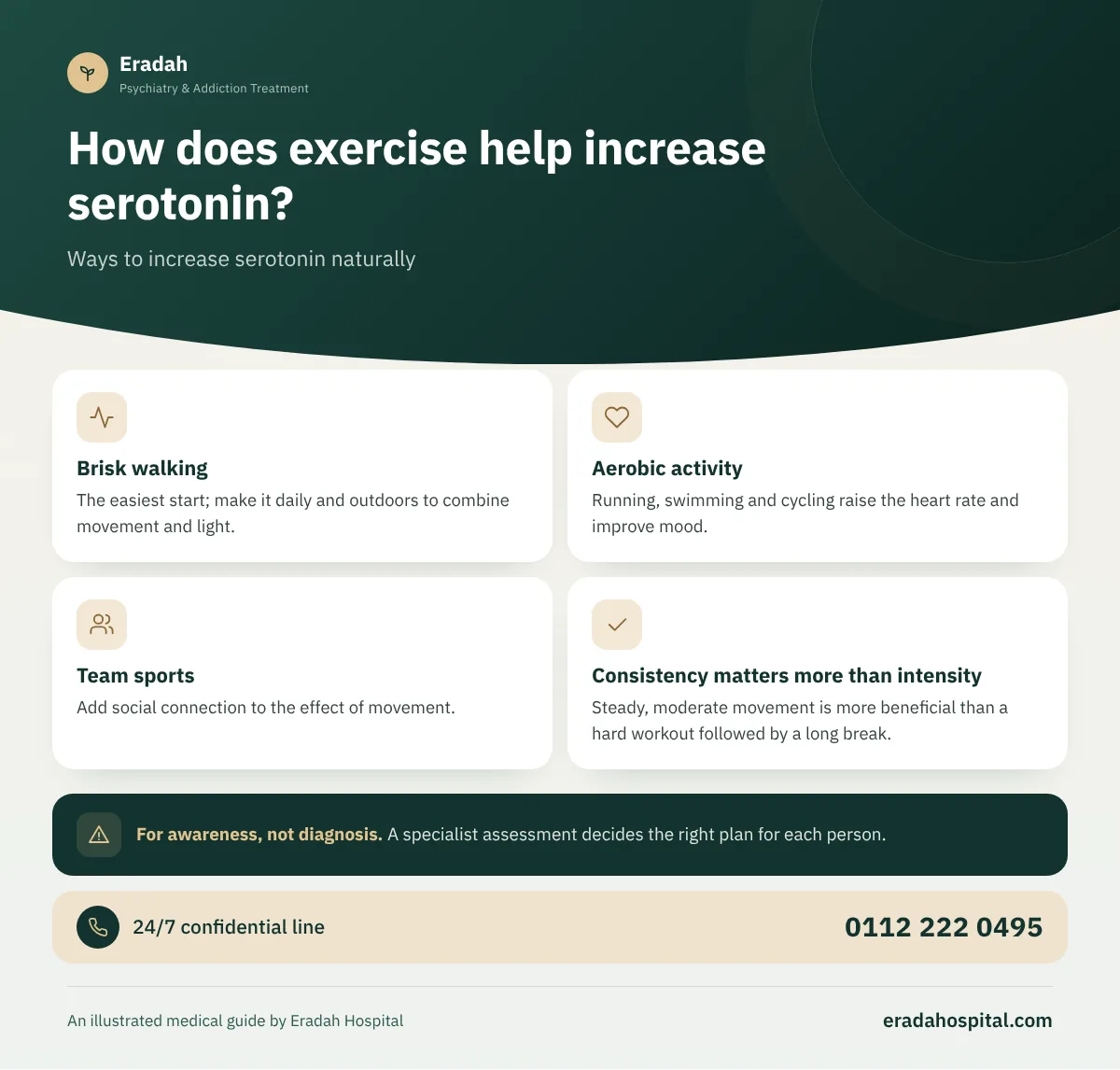
How does exercise help increase serotonin?
Exercise is among the most studied habits for supporting mood. Research suggests physical activity increases serotonin release in the brain and raises the amount of tryptophan available to it, alongside its effect on dopamine, endorphins, brain plasticity and sleep quality. Most importantly, clinical trials have found that exercise reduces symptoms of mild to moderate depression.
The easiest start; make it daily and outdoors to combine movement and light.
Running, swimming and cycling raise the heart rate and improve mood.
Add social connection to the effect of movement.
Steady, moderate movement is more beneficial than a hard workout followed by a long break.
General health references advise adults to get about 150 minutes of moderate activity a week plus strength training twice a week. If you have a chronic illness or have been inactive for a long time, start gradually and consult your doctor.
How are sleep, serotonin and mood related?
Serotonin takes part in regulating the sleep-wake cycle, and disturbed sleep in turn weakens mood regulation and increases irritability and anxiety. There is no evidence that sleep alone “raises serotonin,” but improving sleep is, in practice, one of the strongest supports for mood.
- Keep a fixed wake-up time even on days off; it sets the body clock more than bedtime does.
- Cut back on screens and bright lights for an hour before bed.
- Avoid caffeine in the evening, and heavy meals right before bed.
- Do not use alcohol or sedatives “to sleep”; they ruin sleep quality and may cause dependence.
- If insomnia lasts for weeks, see the guide to chronic insomnia.
Are there foods that raise serotonin?
The brain needs tryptophan to make serotonin, and it is found in protein foods such as eggs, fish, poultry, dairy, legumes, nuts and seeds. But it is more complicated than “eat tryptophan and you get serotonin”: tryptophan competes with other amino acids in the same protein to cross into the brain, which is why a protein-rich meal raises brain serotonin only slightly.
Bananas, pineapple and chocolate do contain serotonin, but it does not cross the blood-brain barrier, so it does not reach the brain. This is why lists of “happiness foods” are exaggerated. What the evidence supports is the overall dietary pattern: vegetables, fruit, whole grains, legumes, fish and healthy oils, with fewer processed foods and sugars. These patterns have been linked in studies to better mood and a lower risk of depression.
Are serotonin supplements safe?
Supplements are marketed to raise serotonin, such as tryptophan, 5-HTP, St. John’s wort and others. Researchers have studied some of them, but the evidence for their benefit is mixed, and product quality is not always guaranteed. Most importantly, they are not safe for everyone:
- They can cause serotonin syndrome when combined with antidepressants, tramadol, migraine medications or drugs.
- St. John’s wort interacts with many medications, including birth control pills and heart medications, and weakens their effect.
- They should not be used in pregnancy and breastfeeding, in children, or with chronic illnesses except under medical supervision.
For this reason we do not mention amounts here and do not recommend any specific product. If you are thinking of any supplement, ask your doctor or pharmacist first, and tell them about every medication you take.
When are natural ways to raise serotonin not enough?
Healthy habits benefit everyone, but they are not a substitute for treatment when there is real depression or an anxiety disorder. Seek a medical assessment if sadness or loss of pleasure lasts more than two weeks, if your daily life is affected, or if you have turned to alcohol, sedatives or drugs to improve your mood.
16Do relationships and enjoyable activities support serotonin?
Researchers have discussed the possibility that mood itself may influence serotonin, that is, that positive experiences and supportive relationships may modify its system, although direct evidence is limited. What is strongly established is that behavioral activation, meaning a gradual return to enjoyable and worthwhile activities and contact with people, is an effective treatment for depression.