What is serotonin’s role in the reward system and addiction?
Dopamine dominates the conversation about addiction because it cements the learning that “this is worth repeating.” Serotonin works in the background as a modulator: it regulates mood, patience, the ability to wait for a reward and the restraint of hasty actions. When this system is disrupted, a person becomes more impulsive and less able to tolerate distress.
Animal and human research suggests that weak serotonin activity is linked to greater impulsivity and to choosing a small immediate reward over a larger delayed one, a common trait in addiction. Serotonin also contributes to the negative mood that appears after quitting, which is one of the strongest drivers of returning to use.
To see the full picture, remember that addiction is a disease affecting all the brain’s circuits: the reward circuit, the stress circuit and the frontal lobe responsible for decisions. Serotonin is a player in all three circuits, not a single switch.
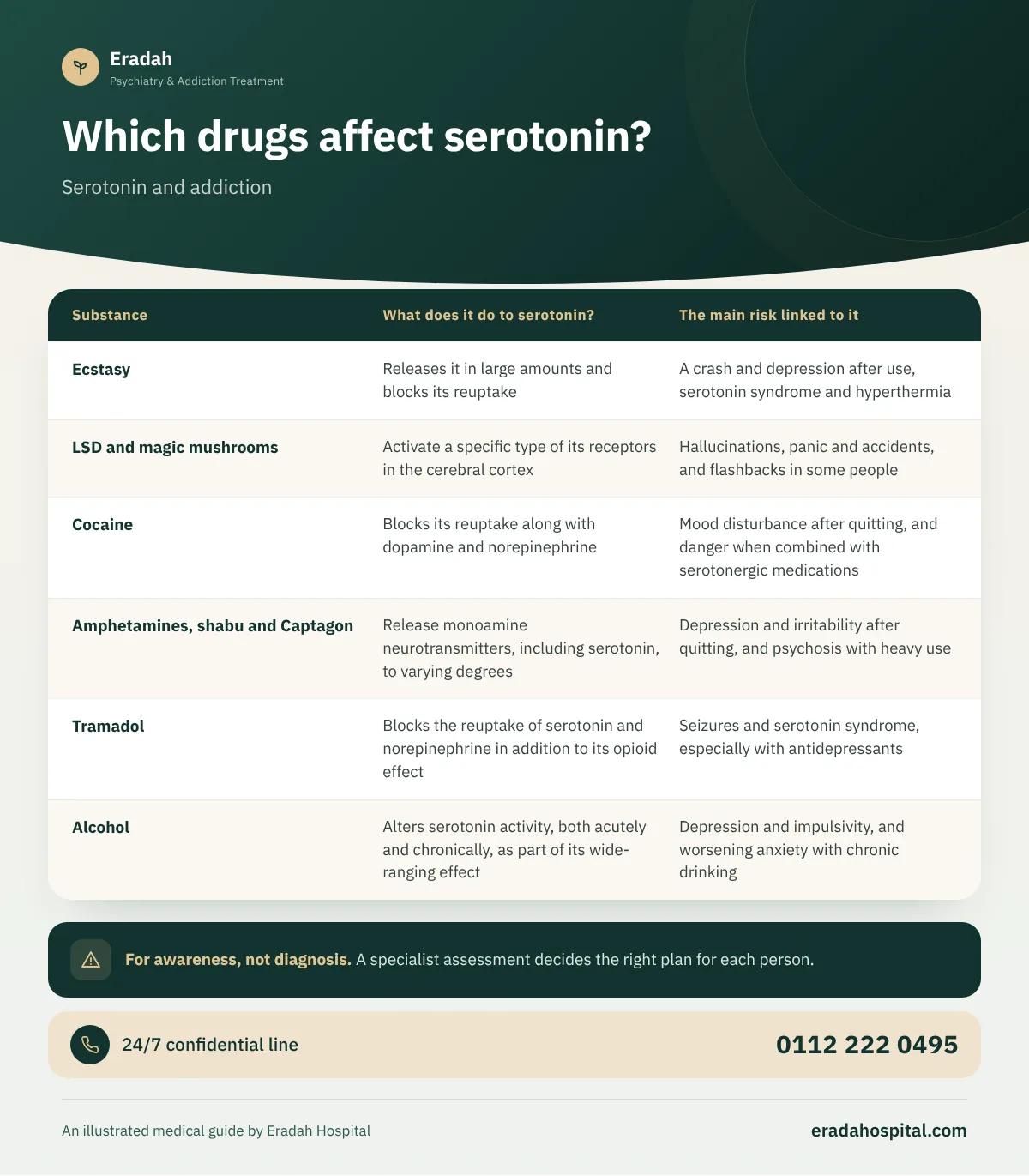
Which drugs affect serotonin?
| Substance | What does it do to serotonin? | The main risk linked to it |
|---|---|---|
| Ecstasy | Releases it in large amounts and blocks its reuptake | A crash and depression after use, serotonin syndrome and hyperthermia |
| LSD and magic mushrooms | Activate a specific type of its receptors in the cerebral cortex | Hallucinations, panic and accidents, and flashbacks in some people |
| Cocaine | Blocks its reuptake along with dopamine and norepinephrine | Mood disturbance after quitting, and danger when combined with serotonergic medications |
| Amphetamines, shabu and Captagon | Release monoamine neurotransmitters, including serotonin, to varying degrees | Depression and irritability after quitting, and psychosis with heavy use |
| Tramadol | Blocks the reuptake of serotonin and norepinephrine in addition to its opioid effect | Seizures and serotonin syndrome, especially with antidepressants |
| Alcohol | Alters serotonin activity, both acutely and chronically, as part of its wide-ranging effect | Depression and impulsivity, and worsening anxiety with chronic drinking |
Why is ecstasy followed by a crash and depression?
Ecstasy empties the serotonin store all at once, so the person feels an artificial sense of closeness to others and openness for hours. But the brain needs time to rebuild the store, so over the following days many go through a crash: sadness, anxiety, irritability, poor sleep and poor concentration.
The US National Institute on Drug Abuse notes that people who use it regularly may have poor sleep, loss of appetite, depression, anxiety, and memory and attention problems. Animal studies have also shown that large doses may damage the endings of the nerve cells that release serotonin; how far this applies to humans, and whether it can fully recover, is not yet settled.
How does the serotonin system adapt to repeated use?
When the brain is repeatedly exposed to a substance that floods it with serotonin or drains it, it tries to restore balance: receptor sensitivity and number change, and serotonin production and reuptake change. The result is tolerance: the person needs a larger amount for the same effect, while the effect of natural pleasures in daily life fades.
With ecstasy in particular, many notice that the “magic” fades quickly with repetition, so they increase the amount or mix it with other substances, which raises the risk of hyperthermia and serotonin syndrome. With hallucinogens, tolerance develops very quickly, making closely spaced repeat use less effective, which is why they rarely cause compulsive daily use, but their danger lies in panic, accidents and psychosis.
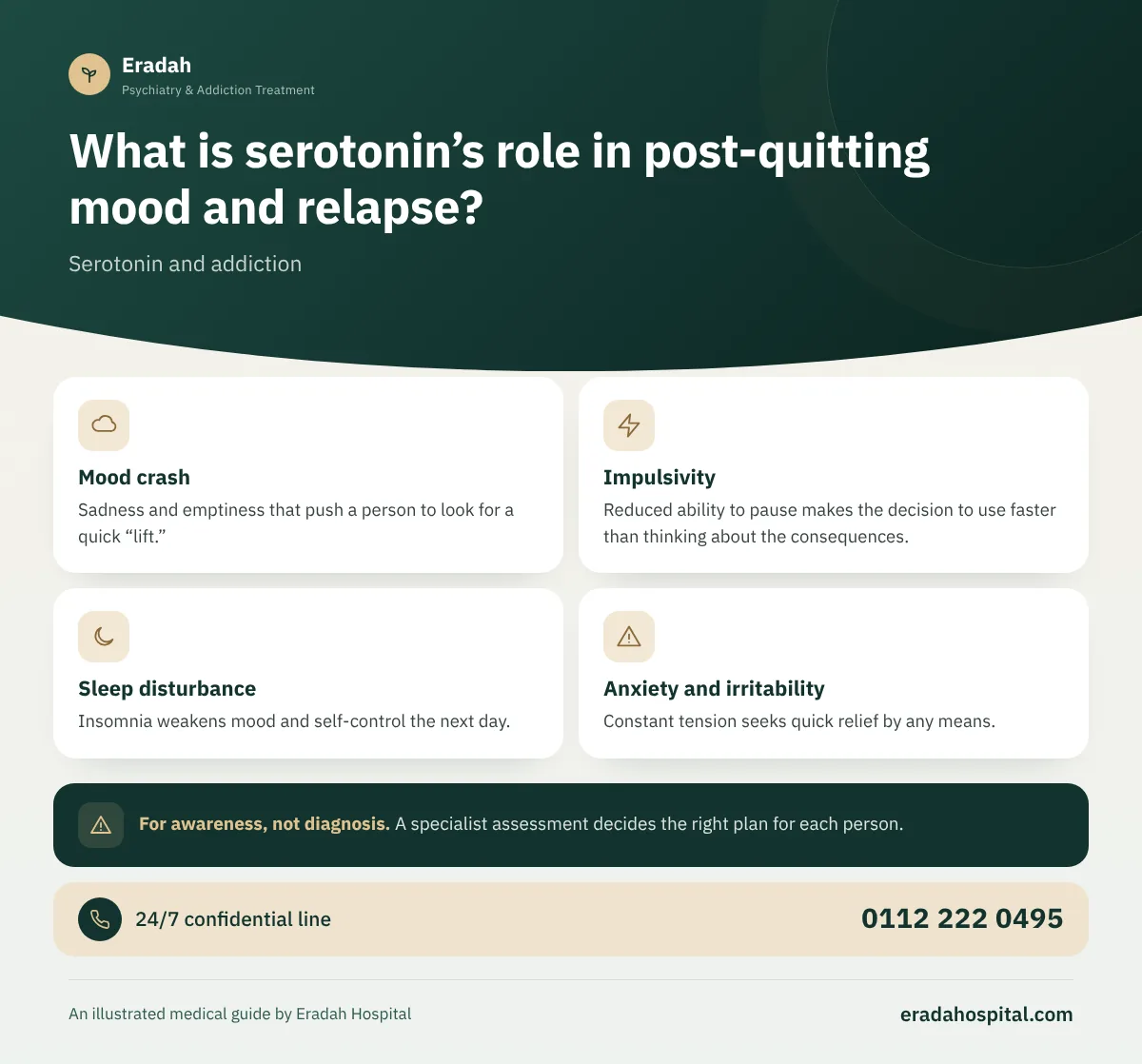
What is serotonin’s role in post-quitting mood and relapse?
After stopping many substances, a person goes through a phase of low mood, loss of pleasure, irritability and disturbed sleep that may last weeks or even months in some people. The dopamine system, the serotonin system and the stress hormones all take part in this phase. Its danger is that the person remembers that the substance used to “improve his mood,” and goes back to it.
Sadness and emptiness that push a person to look for a quick “lift.”
Reduced ability to pause makes the decision to use faster than thinking about the consequences.
Insomnia weakens mood and self-control the next day.
Constant tension seeks quick relief by any means.
This is why good addiction treatment pays attention to assessing mood after quitting, distinguishing a temporary low that will improve on its own from true depression that needs treatment. Untreated co-occurring depression is one of the best-known causes of relapse.
Do antidepressants that act on serotonin cause addiction?
This is one of the questions that worry patients and their families most in Egypt. Antidepressants of the SSRI class and similar drugs do not cause euphoria, cravings or compulsive drug-seeking, which is why they are not classed as addictive substances. But they can cause discontinuation symptoms if stopped suddenly: dizziness, headache, nausea, sweating, electric-shock-like sensations, mood swings and anxiety.
The UK’s National Health Service notes that many people experience some of these symptoms when stopping, that they usually begin within days and last weeks in most people, and that stopping is therefore done gradually over weeks or months under the doctor’s plan. The difference between “physical dependence” and “addiction” matters: the first is a physical adaptation managed by tapering, and the second is a behavioral disease involving loss of control and continued use despite harm.
How is addiction treated alongside depression or anxiety?
Addiction often occurs together with depression and anxiety, which is called dual diagnosis. A person may start using to ease sadness or anxiety, or the substance use itself may cause the depression. Successful treatment addresses both together in a single plan, not one after the other.
| The situation | What does the doctor usually do? |
|---|---|
| Depression or anxiety that persists after withdrawal ends | May prescribe an antidepressant along with psychotherapy after confirming the diagnosis |
| Low mood in the first weeks | Monitors and supports, since part of it may improve on its own with recovery |
| History of stimulant, ecstasy or tramadol use | Chooses the medication carefully and explains the risk of interactions if a relapse occurs |
| Co-occurring obsessive-compulsive disorder (OCD) or post-traumatic stress disorder (PTSD) | Treats it with a specialized plan because it fuels the urge to use |
Remember that depression medications do not treat the addiction itself but the co-occurring condition. Addiction treatment rests on psychotherapy, rehabilitation, relapse prevention and family support, with medications added according to the substance and the case.
How is serotonin related to behavioral addictions?
Researchers are studying serotonin’s role in compulsive and impulsive behaviors, such as gambling and betting addiction and compulsive shopping. Medications that act on serotonin have also been tried for repetitive behaviors such as hair-pulling disorder, with mixed results, and behavioral therapy remains the foundation of treatment for them.
The shared message is that impulsivity and poor distress tolerance are traits that can be trained through psychotherapy, and that treating co-occurring anxiety and depression reduces the need to “escape,” whether into a substance or into a behavior.
How does the serotonin system recover after quitting?
The brain is a flexible organ, and stopping use allows neurotransmitter systems to gradually return to balance. Sleep and mood improve gradually in most people in recovery over weeks to months, although the timeline varies with the substance, the length of use, age and mental health. There are no precise figures for when serotonin recovery is “complete,” but the overall trend is encouraging.
- Complete abstinence from substances, including “small doses” that restart the circuit.
- Protecting sleep and keeping regular sleep times from the first weeks.
- Regular physical activity and getting out in daylight.
- Psychotherapy to learn to cope with distress and impulsivity without a substance.
- Treating co-occurring depression or anxiety under a psychiatrist’s supervision.
- Staying away from supplements and non-prescribed medications that interfere with treatment.
How can the family support someone going through a mood slump after quitting?
A family may be surprised that their son has become “sadder” after quitting, not happier. This is expected in the early stages and does not mean treatment has failed. Calm support and patience, and encouragement to stay active, sleep well and attend follow-up, help more than blame or comparison. If severe hopelessness or talk of death appears, seek help immediately through 123 or the mental health support line 16328.
At Eradah we handle addiction and the co-occurring mental health condition in one plan: careful assessment, safe detox, psychological and medication treatment when needed, family involvement, and follow-up to prevent relapse, in complete confidentiality.
Serotonin syndrome: call the ambulance (123) immediately
- Sudden agitation, confusion or severe anxiety after starting a new medicine, increasing a medicine or mixing substances
- High body temperature with heavy sweating and a racing heart
- Repeated involuntary muscle twitching or jerking, especially in the legs, or involuntary eye movements
- Severe muscle rigidity, or seizures
- Diarrhea and vomiting with altered consciousness or difficulty responding
Call the ambulance on 123 or go to the nearest emergency room immediately, and do not wait for the symptoms to go away on their own. Take with you the packaging of all the medicines and supplements the person has taken, do not give them any other medicine or supplement at home, and tell the doctor about any drug they used without fear; the information can save their life.
Ambulance 123 Mental health support line 16328