Why do the harms of buprenorphine differ depending on how it is used?
Buprenorphine is one of the safer opioids when used as prescribed, thanks to its ceiling effect on breathing. But this feature is not an absolute shield; mixing, injecting, and random amounts strip away much of its safety.
When talking about the harms of buprenorphine, two contexts must be distinguished. The first is a patient taking it with a prescription and a treatment plan, where most harms are expected side effects that are monitored and managed, and the US Food and Drug Administration describes its benefits in treating opioid use disorder as clearly outweighing its risks. The second is a person using it without a prescription, injecting it, or mixing it with other substances, where the serious harms appear.
What are the common side effects of buprenorphine?
MedlinePlus lists these effects, which should be reported to the doctor if they are severe or do not go away:
- Headache, abdominal pain, and constipation.
- Difficulty falling or staying asleep.
- Numbness or redness in the mouth and tongue pain, especially with forms that dissolve in the mouth.
- Blurred vision and back pain.
- Drowsiness and dizziness, and lightheadedness or fainting may occur when standing up suddenly, especially at the start of treatment.
MedlinePlus advises not driving or operating machinery until you know how the medication affects you, and not drinking alcohol during treatment.
How risky is mixing buprenorphine with sedatives and alcohol?
This is the most dangerous thing about buprenorphine. According to a StatPearls review, combining it with central nervous system depressants such as benzodiazepines can lead to life-threatening respiratory depression, coma, and death. The World Health Organization considers mixing opioids with alcohol or sedatives one of the most important risk factors for overdose.
| Substance | What may happen |
|---|---|
| Benzodiazepines such as Xanax and Rivotril | Deep drowsiness and respiratory depression that can end in death |
| Alcohol | Doubled depression of the nervous system and a higher risk of choking on vomit |
| Pregabalin, sleeping pills, and other sedatives | Increased drowsiness and slowed breathing |
| Some MAO-inhibitor antidepressants, and St. John's wort | MedlinePlus warns about interactions, and symptoms such as agitation, fever, and muscle rigidity may appear that require seeing a doctor immediately |
| Other opioids such as heroin | Either precipitated withdrawal if buprenorphine is taken on top of them, or an overdose when trying to override its effect with large amounts |
Read about Xanax and pregabalin to understand why this mixture is both common and dangerous.
What are the harms of buprenorphine to the body's systems?
| System | Possible harms |
|---|---|
| Brain | Drowsiness, dizziness, and slower concentration, with respiratory depression when mixed or taken in large amounts |
| Liver | Effects on the liver in some patients; MedlinePlus lists yellowing of the skin and eyes, dark urine, and pain in the upper right abdomen among the signs |
| Digestive system | Constipation, nausea, and abdominal pain |
| Hormones | Reduced desire and erections and menstrual irregularities; it may reduce fertility in men and women |
| Heart | It has been linked to QT prolongation on the heart tracing in some patients, and needs assessment in those with risk factors |
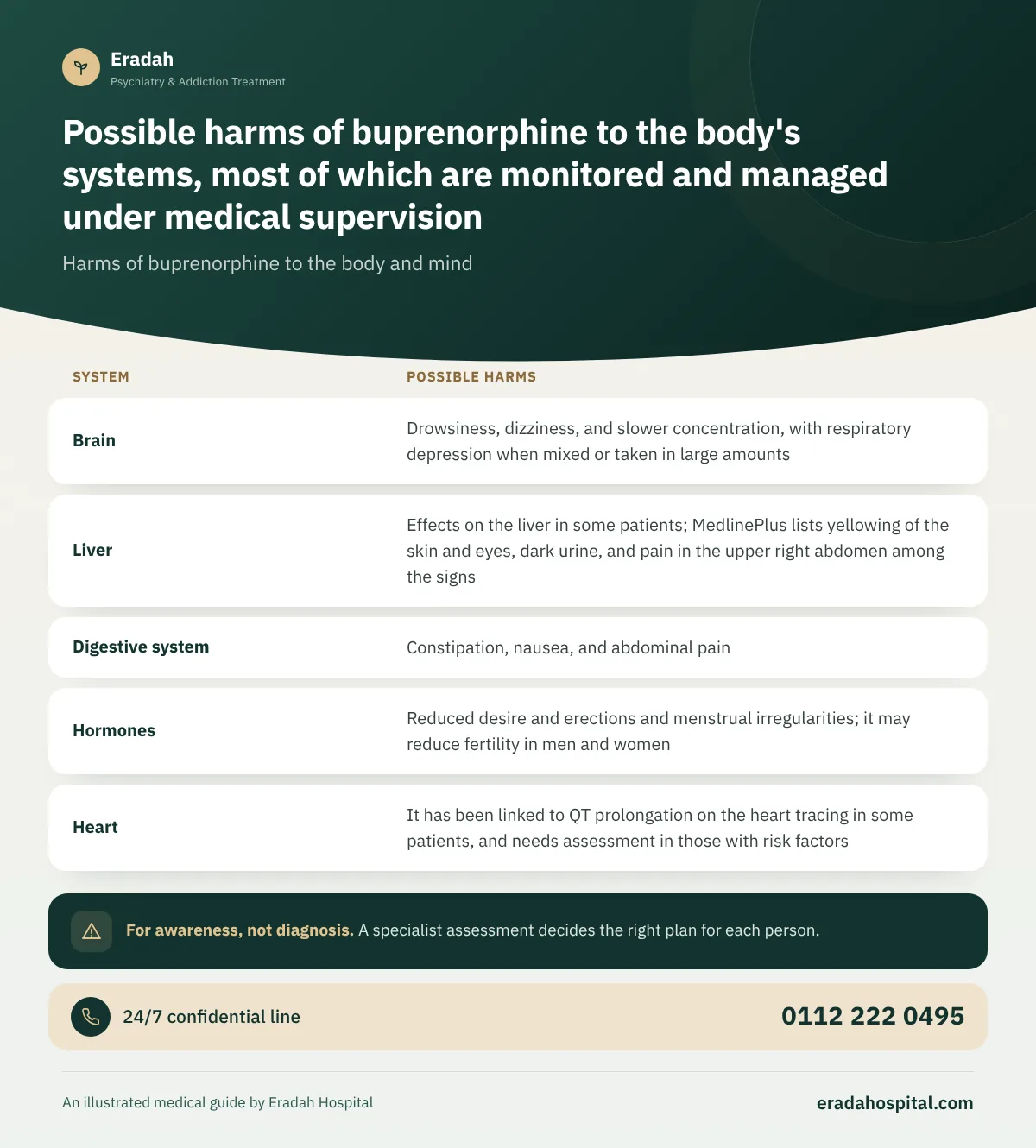
That is why MedlinePlus asks you to tell the doctor in advance about any liver disease, including hepatitis B or C, and any heart rhythm problem or low potassium or magnesium.
Does buprenorphine harm the teeth?
In January 2022 the US Food and Drug Administration warned of dental problems with buprenorphine medications that dissolve in the mouth, including cavities, infections, and tooth loss, and said they were reported even in patients with no previous history of dental problems. Even so, the agency affirmed that the benefit outweighs the risk, and that the solution is prevention, not stopping treatment.
- After the medication has dissolved completely, take a sip of water, swish it around your teeth and gums, then swallow it, as MedlinePlus advises.
- Wait at least one hour before brushing your teeth.
- Visit your dentist regularly and tell them you take buprenorphine.
What are the harms of injecting and misusing buprenorphine?
MedlinePlus warns against injecting buprenorphine tablets or films because it can cause severe reactions, including withdrawal symptoms, especially with formulations that contain naloxone. A StatPearls review links injecting it to liver damage in people with hepatitis. Injecting adds its known risks: abscesses, vein inflammation, and transmission of hepatitis viruses and HIV when equipment is shared.
Misuse in general moves a person from treatment stability into a cycle of dependence and drug seeking, and often ends in mixing with other substances. When this coincides with depression or anxiety, the better course is a plan that treats both conditions together under dual diagnosis care.
Is buprenorphine dangerous in pregnancy and breastfeeding?
Pregnancy calls for a specialist decision. NIDA states that medications for opioid use disorder are safe and effective during pregnancy and breastfeeding, because the alternative, continued use or repeated withdrawal, is more dangerous to the mother and fetus. On the other hand, MedlinePlus notes that the newborn may have withdrawal symptoms that need care after birth, and a StatPearls review says they may appear between the first and eighth day of life. So the obstetrician and pediatrician must be told in advance, and you should not stop the medication on your own.
Why is buprenorphine dangerous to children?
A child has no tolerance to opioids, so a small amount can cause severe drowsiness and slowed breathing. That is why MedlinePlus asks that it be kept in its original container out of children's reach and sight, and that unused amounts be disposed of safely.
Do the harms of buprenorphine go away?
Most side effects, such as constipation, insomnia, drowsiness, and hormonal disturbance, improve with time, with an adjusted plan, or after a structured taper. The harm of an overdose cannot be undone once it happens, which is why not mixing and safe storage matter more than anything else. If you are using it without a prescription and want to stop, start with a specialist assessment, not abrupt discontinuation; read about buprenorphine withdrawal symptoms and duration.
Danger signs after taking buprenorphine: call the ambulance (123) immediately
- Severe drowsiness, difficulty waking the person, or no response when called
- Slow or weak breathing, or unusual snoring, especially with alcohol, sedatives or pregabalin
- Very small, pinpoint pupils with bluish lips or fingernails
- Severe confusion, slurred speech or loss of balance
- The medication reaching a child or someone not accustomed to opioids, even if they seem normal
Call ambulance (123) immediately. If the person is unconscious but breathing, place them on their side so they do not choke on vomit. Stay with them and do not leave them alone. Do not give them food or drink, and tell the paramedics everything they took or used, and the amount and time if you know them.
Call the ambulance 123