Physical symptoms of Captagon use
They appear while the pill is active, and usually last many hours:
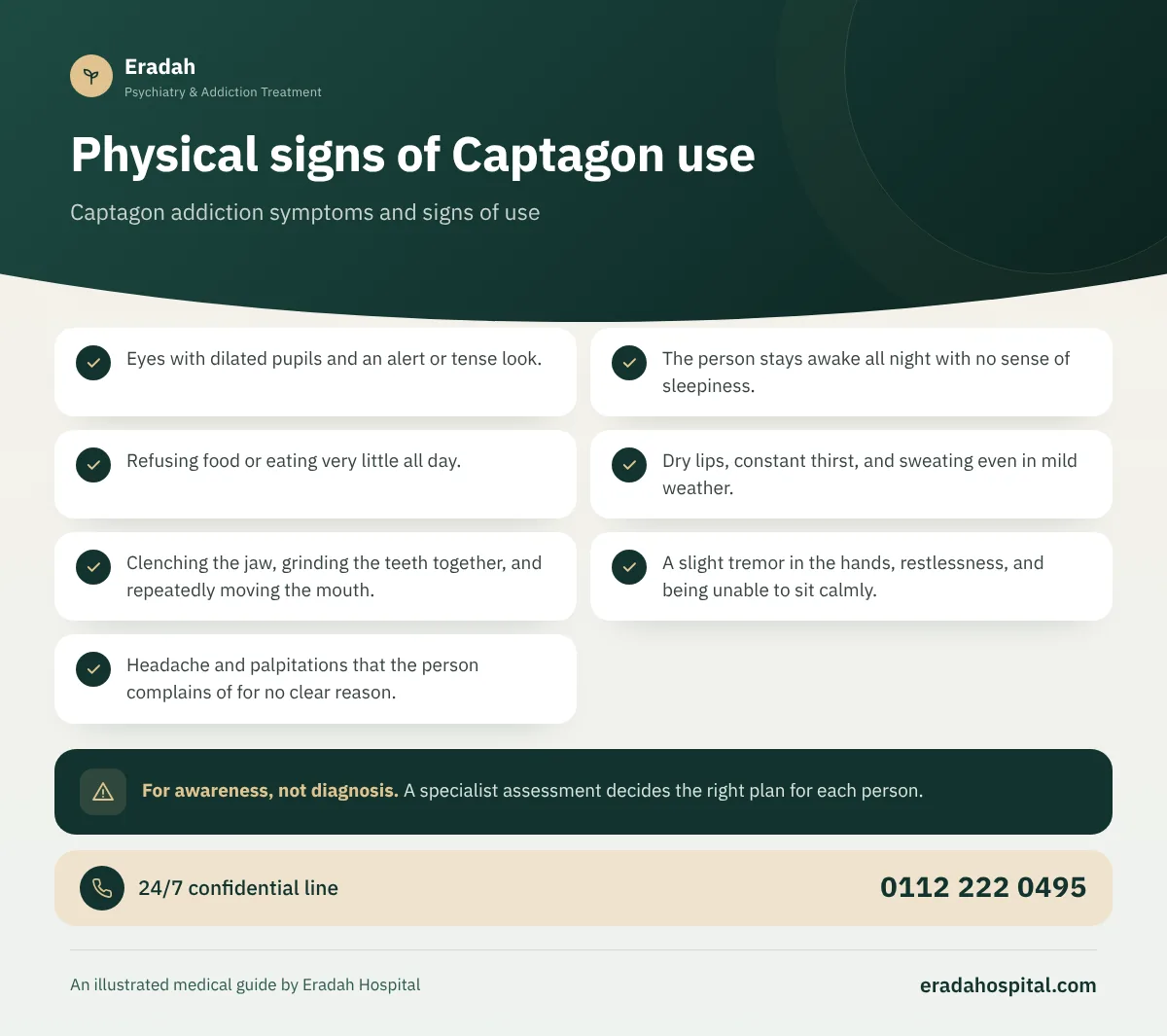
- Eyes with dilated pupils and an alert or tense look.
- The person stays awake all night with no sense of sleepiness.
- Refusing food or eating very little all day.
- Dry lips, constant thirst, and sweating even in mild weather.
- Clenching the jaw, grinding the teeth together, and repeatedly moving the mouth.
- A slight tremor in the hands, restlessness, and being unable to sit calmly.
- Headache and palpitations that the person complains of for no clear reason.
Behavioral changes the family notices
- Fast, excessive talking, and unusual enthusiasm for many projects or ideas.
- Bouts of overactivity followed by days of sluggishness and sleep.
- Asking for money repeatedly, or small items going missing from the house.
- Going out at night or spending the night away from home on the pretext of studying or work.
- New friends and distancing from old friends.
- Drinking a lot of coffee and energy drinks while staying up.
- Irritability and exaggerated reactions to small things.
What do Captagon pills look like?
What parents most often find is the pills themselves. They are usually small, white or beige or pale yellow, stamped with a logo resembling two facing crescents, and they may be wrapped in paper or hidden in other medicine boxes or small bags. But the absence of the logo means nothing, as some pills come without markings or with different logos.
Psychological symptoms of Captagon use
- Excess confidence and a feeling of power and of being able to do anything at first.
- Tension, anxiety, and racing thoughts that are hard to stop.
- Suspicion of the people around them and a feeling that someone is watching them or plotting against them.
- Quick temper that can turn into threats or violence.
- Sadness, flatness, and helplessness on the days they abstain from the pills.
Symptoms of Captagon use in students
In the Arab region, Captagon is tied to exams more than to any other occasion, so these signs deserve special attention during exam season:
- Staying up several nights in a row with energy that doesn't match the lack of sleep.
- Refusing home meals and losing weight within a few weeks.
- Anxiety and tension beyond the usual exam stress.
- A collapse and very long sleep after the exams end.
- The same pattern repeating every exam season.
Signs of use in drivers and people who work long hours
An employer, colleagues, or family may notice that a driver or worker works beyond normal hours without rest, then goes through periods of severe exhaustion and absence. Other signs include reckless driving and irritability with passengers or colleagues, and a constant need for pills “to finish the shift.” This pattern threatens not only the person's health but the safety of others on the road.
When Captagon is used for weight loss
Some girls and young men turn to stimulant pills to lose weight quickly, and they may not show the obvious signs of staying up late. Here the family should notice rapid unexplained weight loss, skipped meals with repeated excuses, and excessive preoccupation with weight and body shape, along with irritability, palpitations, and insomnia. This may be tied to an eating disorder that itself needs assessment and treatment, not just taking the pills away.
Captagon compared with shabu and hashish: how do you tell the difference?
| The sign | Captagon | Crystal meth (shabu) | Hashish |
|---|---|---|---|
| Form of the substance | Often small pills | Crystals or powder | Brown pieces or herbs |
| Staying up | One night or more | Several days in a row | No; drowsiness and sluggishness |
| Appetite | Weak | Very weak | Increased |
| Mental state | Enthusiasm, then irritability and a crash | Agitation, suspiciousness, and more severe psychosis | Relaxation and slowness |
This comparison is for understanding only; diagnosis is made by a doctor after assessment and tests. The page on amphetamine addiction symptoms goes further in explaining the signs shared between stimulants.
When does Captagon use become addiction?
Captagon addiction is diagnosed as a stimulant use disorder, and the doctor relies on DSM-5 criteria that look at things including:
- Has the person lost control over the number of pills or how often?
- Have they tried to stop more than once and failed?
- Do they spend most of their time thinking about the pills and planning to get them?
- Have they neglected their studies, work, or home because of them?
- Do they carry on despite anxiety, suspiciousness, palpitations, or family problems?
- Do they need more pills for the same effect?
The more criteria met within a year, the more severe the condition, and the diagnosis ranges from mild to moderate to severe. What happens on stopping is explained on the page about amphetamine and Captagon withdrawal symptoms.
How do you talk to your son about Captagon?
- Start with an open question about the pressures he's under, not an accusing question about the pills.
- Acknowledge the pressure he is under in school or work before you discuss the solution.
- Make clear that you are worried about his health, his heart, and his sleep, not about the family's image.
- Suggest practical alternatives to staying up: a study schedule, enough sleep, and support in difficult subjects.
- Agree with him on a specific step, such as seeing a specialist, and follow it up with him.
Signs of poisoning from Captagon pills: call the ambulance (123) immediately
- Very high body temperature, or sweating that stops, with flushing and confusion
- Chest pain spreading to the arm or jaw, or severe irregular palpitations
- A seizure or loss of consciousness, even briefly
- Sudden agitation and violence, or hallucinations and intense fear of things that are not there
- A sudden severe headache, or numbness and weakness on one side of the body, or slurred speech
Call the ambulance (123) immediately and say that the person took stimulant pills, if you know. Move them away from heat and crowds and speak to them in a calm voice. If they lose consciousness, place them on their side and stay beside them until help arrives. Don’t give them coffee, energy drinks or any other pills.
Call the ambulance 123