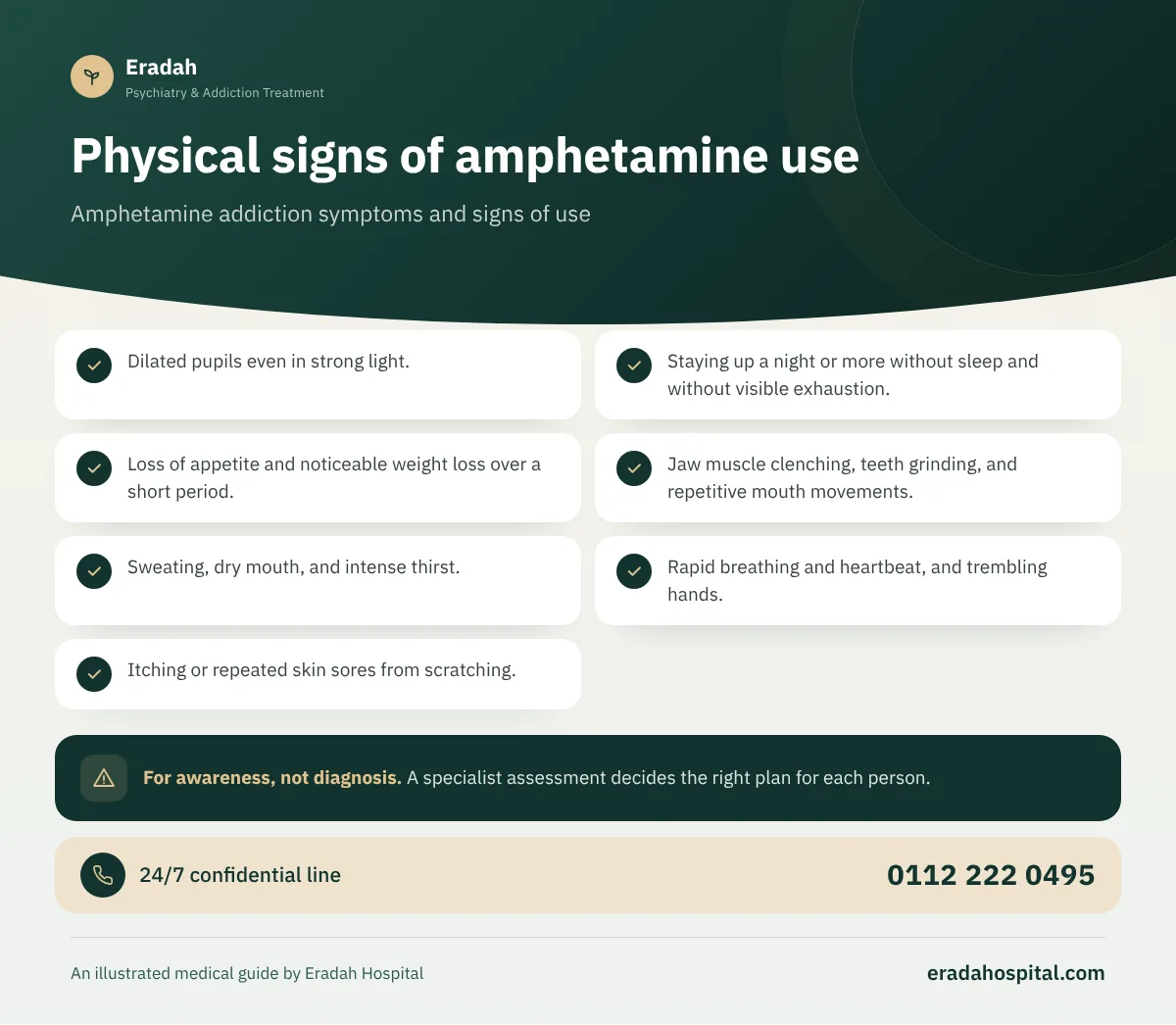
Physical signs of amphetamine use
These signs appear while the substance is active, and some may last for many hours:
- Dilated pupils even in strong light.
- Staying up a night or more without sleep and without visible exhaustion.
- Loss of appetite and noticeable weight loss over a short period.
- Jaw muscle clenching, teeth grinding, and repetitive mouth movements.
- Sweating, dry mouth, and intense thirst.
- Rapid breathing and heartbeat, and trembling hands.
- Itching or repeated skin sores from scratching.
Behavioral signs
- Fast, flowing speech and jumping from one topic to another.
- Unexplained excess activity: cleaning, organizing, or taking things apart for hours.
- Episodes of staying up for days followed by very long sleep.
- Secrecy about friends, the phone, and going out, and asking for money often.
- Decline in school or work after a period of excessive enthusiasm.
- Reckless driving or unusual risky behavior.
- Unknown pills or small bags of powder among his belongings.
Psychological signs and signs of psychosis
At first there is excess confidence, enthusiasm, and exaggerated optimism, then with repetition worrying psychological signs begin:
- Anxiety, tension, and severe irritability over small things.
- Exaggerated suspicion of family or friends, and a feeling of being watched or targeted.
- Hearing voices or seeing things that are not there, or feeling insects under the skin.
- Sudden anger that may reach aggression.
- A sharp drop in mood and severe exhaustion after the effect wears off.
The “staying up then crashing” pattern: the clearest sign
One of the most distinctive features of stimulant use is a cyclical pattern the family notices: days of excess activity, staying up, talking a lot, and eating little, then a period of very long sleep, intense hunger, tiredness, depression, and quick irritability. Repetition of this pattern weekly or in certain seasons such as exams deserves attention.
What happens when the substance is stopped completely is a different stage, with a separate page on withdrawal symptoms.
What might the family find among the person’s belongings?
The presence of some items may be an indicator worth attention, without being conclusive proof on its own: unknown pills with no box or prescription, pills with engraved logos, small bags of white powder, tubes or rolled paper, boxes of stimulant medication that are not his, or large amounts of energy drinks with constant staying up.
Signs of use at work and among drivers
In the workplace, stimulants may first appear as exaggerated productivity and the ability to work for hours without rest, then turn into repeated mistakes, irritability with colleagues, and sudden absence after days of staying up. Among drivers, people around them may notice driving long distances without stopping, then severe exhaustion and sudden dozing in the crash phase, which is among the most dangerous moments for driving.
How do you tell amphetamine use from other substances?
The signs of stimulants resemble each other, and differ from sedatives and opioids. This is a general comparison for understanding only; the diagnosis is made by the doctor:
| The sign | Amphetamine | Crystal meth (shabu) | Tramadol and opioids | Hashish |
|---|---|---|---|---|
| Pupils | Dilated | Dilated | Constricted | Usually normal with red eyes |
| Sleep | Staying up a night or more | Staying up for consecutive days | Drowsiness and dozing | Lethargy and drowsiness |
| Appetite | Weak | Very weak | Weak | Increased |
| Mood and behavior | Enthusiasm and fast talking, then irritability | Agitation and stronger suspicion | Calm and slowness | Relaxation and unexplained laughter |
When is use an addiction? Diagnostic criteria
Doctors diagnose stimulant use disorder according to the DSM-5 criteria, which include eleven criteria over a year, among them:
- Using larger amounts or for longer periods than intended.
- A persistent desire, or failed attempts, to cut down or stop.
- Spending a lot of time getting the substance or recovering from its effects.
- A strong, urgent craving to use.
- Neglecting basic obligations at school, work, or home.
- Continuing despite clear psychological or physical problems caused by the substance.
- Tolerance and symptoms when stopping.
| Number of criteria | Level |
|---|---|
| 2 to 3 | Mild |
| 4 to 5 | Moderate |
| 6 or more | Severe |
Doctors take into account that a patient who takes a stimulant by prescription and under supervision may develop normal tolerance without that meaning addiction, so these two criteria are not counted in his case.
Signs of stimulant use in students and teenagers
- Unusual staying up before exams, with energy that does not match the lack of sleep.
- Rapid weight loss and skipping meals.
- Sharp mood swings between enthusiasm, irritability, and flatness.
- Money of unknown source, or repeated requests for money with changing excuses.
- New friends and excess secrecy, and a sudden drop in grades after a temporary improvement.
How do you start the conversation with someone you suspect uses?
- Choose a time when he is calm and not under the influence of the substance or in the crash phase.
- Start with what you noticed changing in his sleep, eating, and mood, without accusation.
- Listen to his motives: pressure from study, work, weight, or sadness.
- Avoid arguing if suspicion or intense anger appears, and postpone the conversation.
- Offer a clear step: a confidential consultation or an assessment appointment with a specialist.
| Instead of saying | Try saying |
|---|---|
| “You’re ruining your future with these pills” | “I noticed you’re not sleeping and you look worn out, and I’m worried about you” |
| “If you don’t quit, I’ll tell everyone” | “Let’s understand with a specialist what’s going on, and I’m with you” |
Signs of poisoning from amphetamine and stimulants: call the ambulance on 123 immediately
- A very high body temperature with hot skin or heavy sweating
- Chest pain or pressure, or a very fast or irregular pulse
- Seizures, muscle stiffness or an uncontrollable tremor
- Severe agitation, hallucinations, or confusion and loss of awareness of place and time
- A sudden severe headache, weakness on one side of the body, difficulty speaking, or loss of consciousness
Call the ambulance on 123 immediately, move the person to a quiet, cool place away from crowds, and talk to them calmly without violent restraint. If they lose consciousness, place them on their side and stay with them until help arrives, and do not give them any other substance or stimulating drinks.
Call the ambulance 123