Signs of opioid use
Because krokodil is an opioid, its first signs resemble those of heroin use: drowsiness, heaviness, and withdrawal from surroundings. What sets it apart comes later, on the skin and in the mouth.
- Drowsiness and nodding off at inappropriate times, and slow speech and movement.
- Very small pupils.
- Itching and redness of the skin.
- Nausea, constipation, loss of appetite, and weight loss.
- When an injection is late: runny nose, yawning, sweating, chills, aches, and irritability.
Distinctive skin signs
Studies describe skin signs far more severe than doctors usually see in people who inject opioids. What a family may notice includes:
- Discolored, scaly skin that looks like reptile scales, the sign that gave the drug its name.
- Open sores around injection sites, and sometimes in places far from them.
- Inflamed veins that are hardened or painful.
- Wounds that turn black or give off a foul smell.
- Hiding the arms and legs under long clothes even in the heat.
- Frequent bandages without a convincing explanation.
Signs in the mouth and jaw
A systematic review published in 2019 states that jawbone death is the most prominent oral harm of krokodil, and that related signs include changes in the lining of the mouth and a higher risk of tooth decay and gum disease. A family may notice pain or swelling in the jaw or face, loosening teeth, a wound in the mouth that does not heal, or exposed bone in the gum. These signs need a dentist or an oral and maxillofacial surgeon quickly.
Behavioral and psychological signs
- Used syringes, unfamiliar equipment, or cough medicines and painkillers containing codeine in large quantities.
- Withdrawing from others and neglecting hygiene, work, and studies.
- A constant need for money, or items disappearing from the house.
- Denial or anger when asked about the wounds.
How do you tell krokodil from heroin?
| Krokodil | Heroin | |
|---|---|---|
| Format | Light brown liquid prepared at home | Powder that is sniffed, smoked, or injected |
| Signs of opioid use | Drowsiness and pinpoint pupils | Drowsiness and pinpoint pupils |
| Skin | Ulcers, discoloration, and peeling that may extend away from the injection site | Injection marks and abscesses mostly at the injection site |
| Mouth and jaw | Risk of jawbone death | Tooth decay and gum disease with neglect |
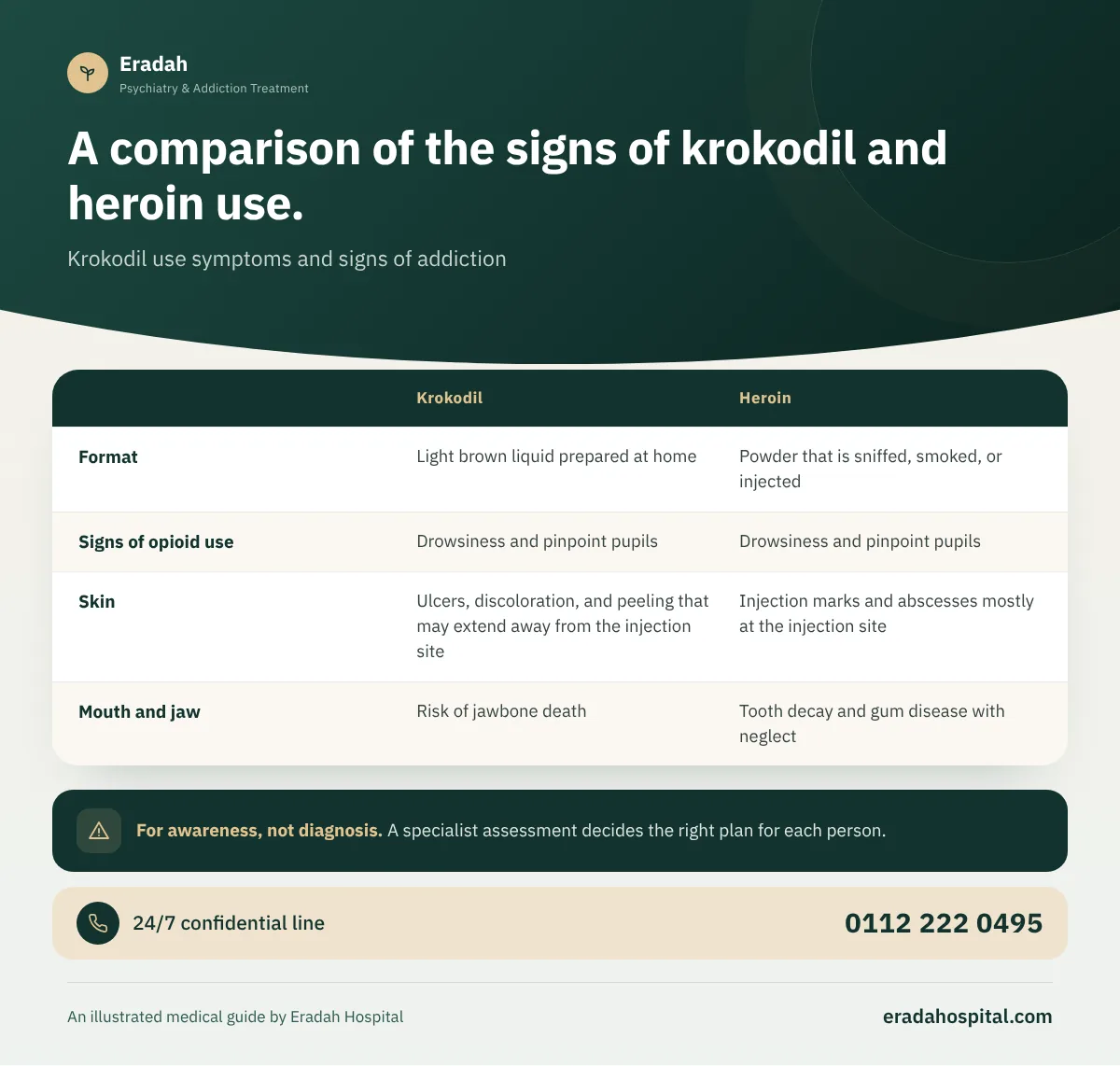
Remember that unsterile injecting of any substance can cause wounds and abscesses, and that diagnosis needs a doctor. So do not rely on images circulating online to judge.
When is use an addiction?
Desomorphine is described as highly likely to cause dependence, which is why use quickly becomes a daily pattern. Signs of addiction include needing more injections for the same effect, continuing despite wounds and pain, failing to stop, withdrawal symptoms similar to heroin withdrawal if an injection is late, and the decline of all other interests.
Signs that call for emergency care immediately
Shallow or stopped breathing, or no response when called.
It widens quickly, turns black, or gives off a foul smell.
With severe pain or swelling in a limb, a sign of infection that may spread into the blood.
Pain and swelling in the jaw with fever, or exposed bone in the mouth.
How do you talk to someone who uses krokodil?
- Start with the wounds and health, not accusation: “I'm worried about your leg, you need to see a doctor.”
- Go with them to the doctor to treat the wounds first; this is an acceptable doorway to conversation.
- Do not threaten them with the police or being thrown out; fear pushes them to hide it and delay treatment.
- Ask for testing for hepatitis viruses and HIV.
- Contact an addiction treatment center, and read how to persuade a person with addiction to get treatment.
Treatment is possible: supervised detox, then opioid addiction treatment with medications such as buprenorphine and psychological therapy, alongside surgical and skin treatment.
Danger signs after using krokodil: call an ambulance (123) immediately
- Slow, shallow, or stopped breathing, or no response when called
- Pinpoint pupils with blue lips and fingernails and cold skin
- A wound that is spreading quickly, turning black, or giving off a foul smell
- Fever and chills with severe pain or swelling in a limb
- Exposed bone in the mouth, or severe facial swelling with fever
Call an ambulance on 123 immediately. If the person is unconscious but breathing, place them on their side (recovery position) so they do not choke on vomit, stay with them and do not leave them alone, and give them nothing by mouth. Tell the paramedics that they injected a home-made substance and any other substances they used. Infected wounds cannot wait: seek medical care the same day.
Call the ambulance 123