Why is pregabalin compared with tramadol?
“Tramadol got hard to find, so I started taking Lyrica instead.” We hear this sentence in the clinic often, and it shows why people compare the two drugs: not because they are alike, but because the street has made one a substitute for the other, or used them together.
The difference between pregabalin and tramadol is large to begin with: the first is a nerve and epilepsy medication, the second an opioid painkiller. But both are misused, both are under controls in Egypt, and both cause withdrawal symptoms when stopped suddenly. This page explains the differences that matter to patients and families, and the dangers of combining them are covered in detail in the harms of pregabalin.
How does each work in the body?
Pregabalin binds to part of the calcium channels in nerves, which reduces the release of excitatory neurotransmitters, so it calms nerve pain, seizures and anxiety. Its official US leaflet says it is not known to be active at receptors linked to addictive substances, yet it causes euphoria in some people.
Tramadol works in two ways: it binds to opioid receptors and so relieves pain, and it blocks the reuptake of serotonin and norepinephrine. This combination explains why it causes addiction like other opioids, and why it is linked to seizures and serotonin syndrome more than other opioids. The tramadol guide explains this dual mechanism.
The difference between pregabalin and tramadol in a table
| Pregabalin | Tramadol | |
|---|---|---|
| Family | Gabapentinoids (a nerve and epilepsy medication) | Opioids |
| Medical use | Nerve pain, epilepsy and, in some countries, anxiety | Moderate to severe pain |
| US classification | Schedule V | Schedule IV |
| Most serious danger | Respiratory depression with opioids and sedatives | Addiction, seizures, respiratory depression and serotonin syndrome |
| Withdrawal | Insomnia, nausea, headache, anxiety, sweating and diarrhea | Opioid symptoms and sometimes atypical symptoms such as panic and hallucinations |
| Emergency antidote | There is no specific antidote | Naloxone may reverse only the opioid part |
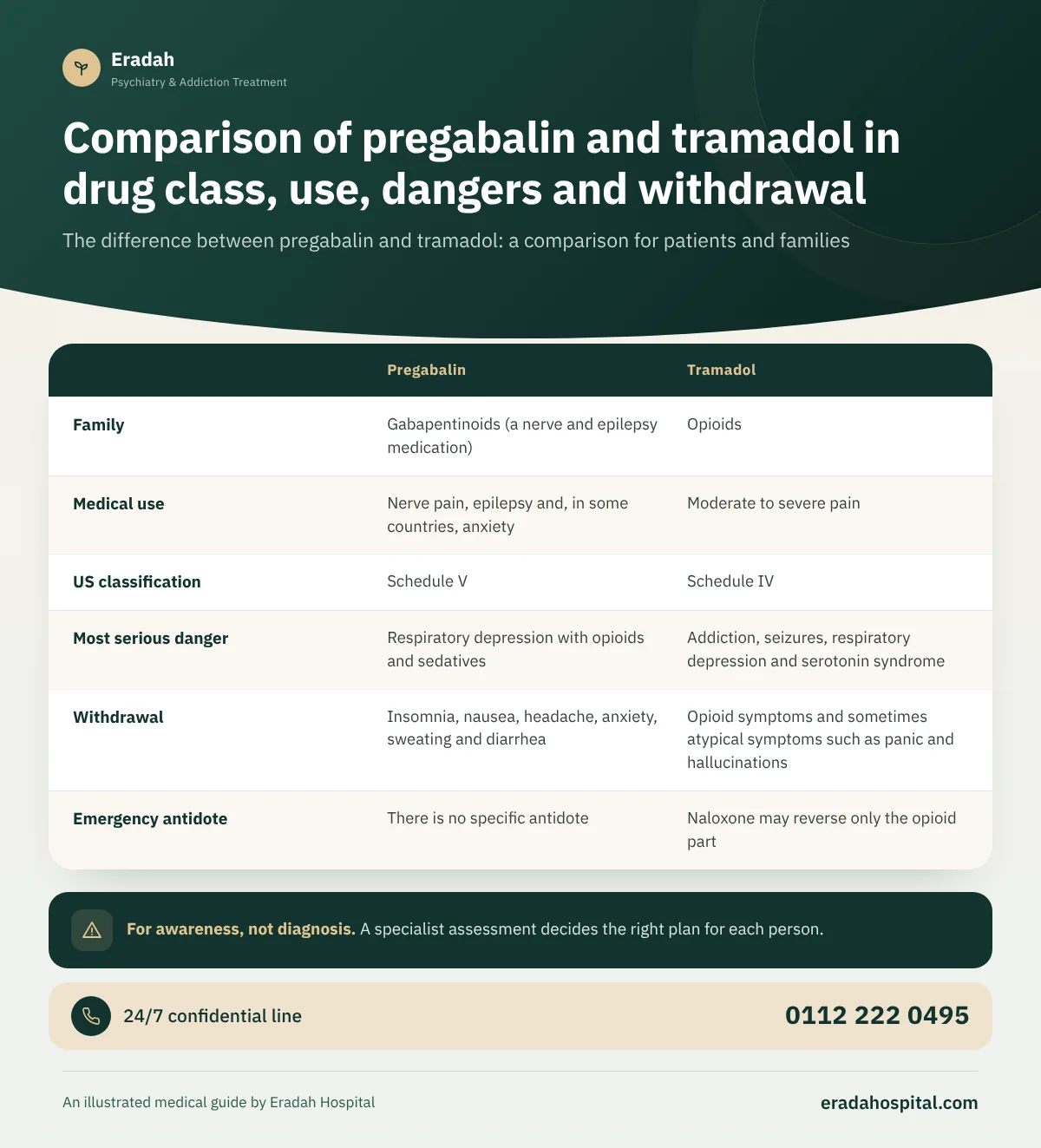
The difference in schedule in the US classification means that regulators judge the misuse risk of tramadol to be higher. But this does not make pregabalin safe to misuse, especially for someone with a history of opioid use.
Which is riskier for addiction?
The official tramadol leaflet carries a prominent warning about addiction and misuse, as with all opioids. For pregabalin, its leaflet says that 4% of those who took it in clinical trials reported euphoria versus 1% with placebo. A systematic review published in 2017 found that the prevalence of pregabalin and gabapentin misuse in the general population was about 1.6%, but ranged from 3% to 68% among people who misuse opioids.
That is, tramadol is the stronger drug for addiction in itself, while pregabalin gets much of its danger from its link to opioids: it is used to strengthen their effect or ease their withdrawal. The causes of pregabalin addiction page explains this relationship.
Overdose: where does the danger lie?
A tramadol overdose can cause respiratory depression, seizures and coma, and its leaflet notes that seizures can occur even within recommended doses, with the risk rising at higher amounts and with some medications. Pregabalin alone is less deadly, but its official US leaflet warns of serious, potentially life-threatening respiratory depression when it is combined with nervous system depressants, including opioids, or in people with impaired breathing.
The difference in withdrawal symptoms
The Lyrica leaflet states that stopping pregabalin suddenly may cause insomnia, nausea, headache, anxiety, sweating and diarrhea, and may increase seizures in people with epilepsy. Tramadol withdrawal resembles opioid withdrawal, with aches, sweating, diarrhea, anxiety and insomnia, and some patients may have atypical symptoms such as panic and hallucinations because of its effect on serotonin and norepinephrine. People who combine them often go through a compound withdrawal that needs a careful medical plan.
The pages on pregabalin withdrawal symptoms and tramadol withdrawal symptoms set out the timeline for each.
Is it appropriate to use pregabalin as a substitute for tramadol?
No, neither as a substitute for use nor as self-treatment for withdrawal. Moving from tramadol to pregabalin without a doctor shifts the dependence to another substance, and it often ends in combining the two. In treating opioid withdrawal, specific medications and plans are used that the doctor decides after assessment, as the tramadol addiction treatment page explains.
If a family member uses both
This pattern is common, and it needs a specialist assessment, not an angry confrontation. Stopping both together at home can be exhausting and dangerous, and a withdrawal plan set by the doctor is better, which may be through medically supervised detox depending on the amount and duration. The dealing with someone addicted to tramadol page offers practical steps for the family. At Eradah the first consultation is free and confidential, and do not start or stop any medication without a doctor.
Danger signs after pregabalin, tramadol or both: call an ambulance (123) immediately
- Deep drowsiness or no response when called.
- Slow or irregular breathing, or bluish lips.
- Seizures.
- Agitation, fever, sweating and tremor, which are possible signs of serotonin syndrome.
Call ambulance (123) immediately. If the person is unconscious but breathing, place them on their side so they do not choke on vomit. Stay with them and do not leave them alone. Do not give them food or drink, and tell the paramedics everything they took or used, and the amount and time if you know them.
Call the ambulance 123