Why do pethidine withdrawal symptoms occur?
The nervous system adapts to the repeated presence of pethidine until it becomes part of its daily balance. The FDA label states that this physical dependence may not be clearly evident until days to weeks of continued use, and then symptoms appear on sudden discontinuation or a large reduction.
MedlinePlus advises anyone who has used pethidine for more than a few weeks not to stop it without talking to their doctor, who will usually reduce the dose gradually. Withdrawal in itself is not proof of addiction; it can happen to a patient who followed the prescription exactly, but it needs medical management in both cases.
What are the symptoms of pethidine withdrawal?
| Type | Symptoms |
|---|---|
| Early symptoms | Restlessness, tearing, a runny nose, yawning, sweating and chills. |
| Body aches | Muscle and back aches. |
| Psychological symptoms | Nervousness, tension and irritability. |
| Digestive system | Stomach pain and upset, vomiting, loss of appetite and diarrhea. |
| Vital signs | Rapid breathing and a racing heart. |
Approximate timeline of pethidine withdrawal
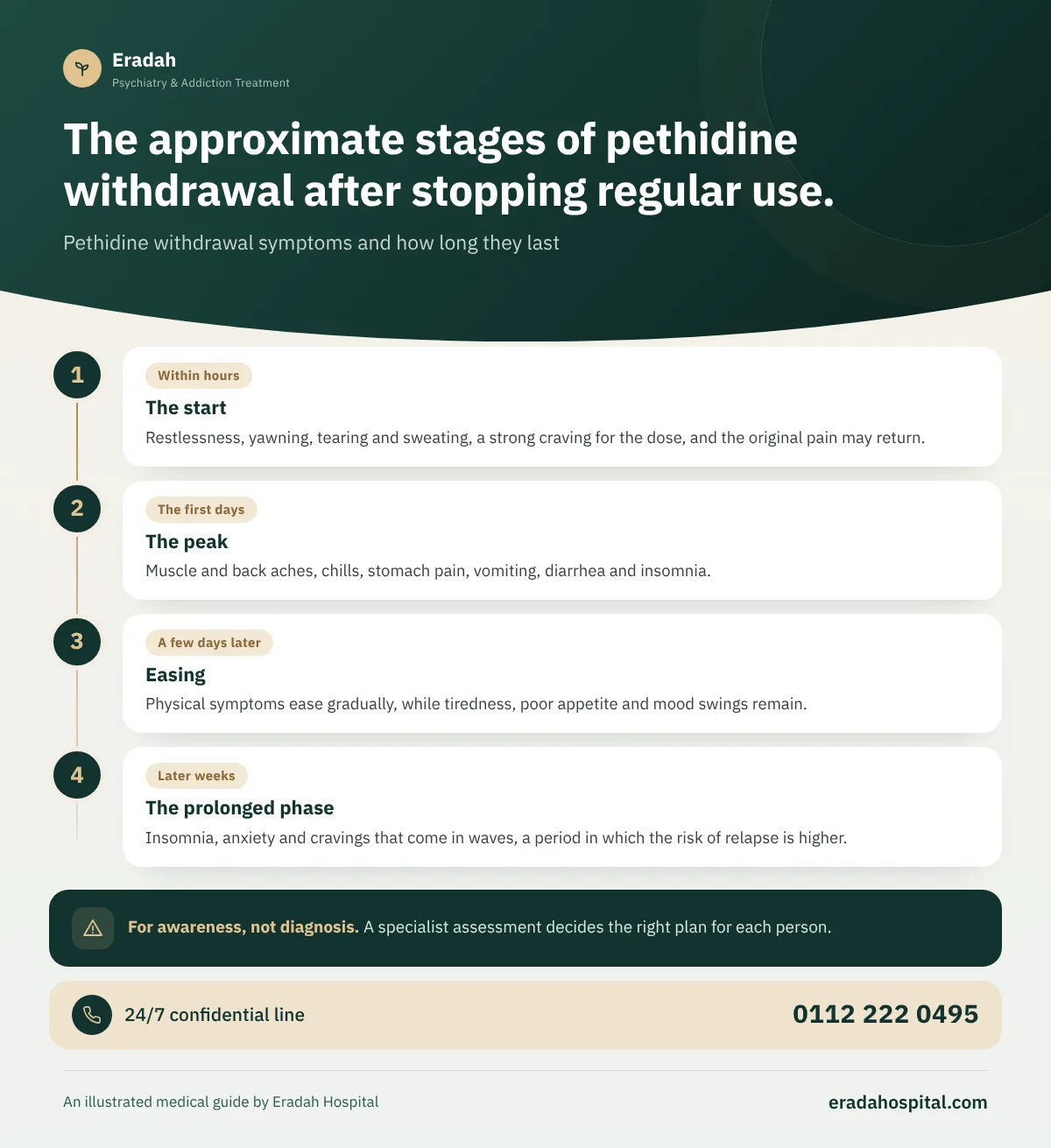
Official sources do not give a precise timeline specific to pethidine, but its short half-life, 3 to 8 hours according to the FDA label, means symptoms may start early. NIDA notes that withdrawal from prescription opioids may begin a few hours after the last dose. The course below is approximate:
- Within hoursThe start
Restlessness, yawning, tearing and sweating, a strong craving for the dose, and the original pain may return.
- The first daysThe peak
Muscle and back aches, chills, stomach pain, vomiting, diarrhea and insomnia.
- A few days laterEasing
Physical symptoms ease gradually, while tiredness, poor appetite and mood swings remain.
- Later weeksThe prolonged phase
Insomnia, anxiety and cravings that come in waves, a period in which the risk of relapse is higher.
Return of pain: the other face of pethidine withdrawal
The FDA label notes that rapid reduction of pethidine in someone who is physically dependent may cause a withdrawal syndrome and a return of pain together. It adds that rapid discontinuation in people dependent on opioids has been associated with serious withdrawal symptoms, uncontrolled pain and serious psychological risks, and with seeking other sources of painkillers. That is why a good stopping plan always includes an alternative pain plan, psychological support and close follow-up. If thoughts of harming yourself come to you while stopping, call the mental health support line 16328 or get help immediately.
Sudden withdrawal caused by another painkiller
The FDA label warns against giving mixed-action painkillers such as nalbuphine and pentazocine, or partial-action ones such as buprenorphine, to someone receiving pethidine regularly, because they can weaken pain relief or trigger sudden withdrawal symptoms. That is why any emergency doctor must know that the patient is taking pethidine before giving another painkiller.
Is pethidine withdrawal dangerous?
MedlinePlus describes opioid withdrawal as painful but not usually life-threatening, and lists among its complications inhaling vomit into the lungs, dehydration and salt imbalance from vomiting and diarrhea.
Stopping suddenly compared with gradual reduction
| Stopping suddenly | Gradual reduction with a doctor | |
|---|---|---|
| Symptom severity | Higher and faster | Milder and more tolerable |
| Pain | May return strongly without a plan | An alternative pain plan from the start |
| Risk of relapse | High | Lower with follow-up and support |
| Follow-up | Often none | Monitoring symptoms and adjusting the plan as needed |
Why isn't it advisable to withdraw from pethidine at home without a doctor?
MedlinePlus stresses that withdrawing from opioids on your own can be very hard and can be dangerous, and that treatment usually combines medication, counseling and support. With pethidine there are two additional points: the possible presence of an accumulated toxic metabolite that needs assessment, and its interactions with antidepressants the doctor may prescribe later. That is why, in moderate and severe cases, stopping takes place within a medical detox program.
How can the family support someone going through pethidine withdrawal?
- Believe their pain, and do not treat the symptoms as an act.
- Help them stick to the doctor's plan and not look for a “last” injection.
- Provide fluids and rest, and watch for signs of dehydration.
- Contact the medical team if symptoms intensify or worrying thoughts appear.
- Remember that withdrawal is the start of treatment, and the next step is in pethidine addiction treatment.
Danger signs after taking pethidine: call an ambulance on 123 immediately
- Severe, persistent vomiting or diarrhea with signs of dehydration: intense thirst, passing little urine and dizziness
- Deep drowsiness or slow breathing after going back to injecting, especially after several days of stopping
- Seizures, severe confusion or hallucinations
- Chest pain or a very rapid pulse
- Thoughts of self-harm: also call the mental health support line 16328
Call an ambulance on 123 immediately. If the person is unconscious but breathing, place them on their side (recovery position) so they do not choke on vomit, stay with them and do not leave them alone, and do not give them anything by mouth. Tell the paramedics that the person took pethidine and about all other medicines they take, especially antidepressants and sedatives, and keep the packaging or ampoule.
Call the ambulance 123