Short-term harms of pethidine
The harms of pethidine do not need years of use to appear; some occur with the first doses, and some creep in within days of repeated injections as its metabolite builds up in the body without the person noticing.
The FDA label states that the most commonly observed effects are lightheadedness, dizziness, drowsiness, nausea, vomiting and sweating, and that they appear more in people who are up and about and in those who are not in severe pain. Other effects include dry mouth, constipation, urinary retention, facial flushing and itching.
Respiratory depression: the first danger
MedlinePlus warns that pethidine can cause serious or life-threatening breathing problems, especially in the first 24 to 72 hours of treatment and with each increase in dose. The FDA label states that the risk is higher in older adults, people with chronic lung disease and those who are severely debilitated, and that accidental ingestion by children can be fatal.
Normeperidine: the toxic metabolite that builds up
The liver converts pethidine into normeperidine, which according to the FDA label is its only active metabolite, with an average half-life of 20.6 hours compared with 3 to 8 hours for pethidine itself. Because the kidneys excrete both, repeated use or poor kidney function lets this metabolite accumulate. The label describes the picture of buildup as an “excitatory syndrome” that includes:
Involuntary muscle trembling and twitching, and exaggerated reflexes.
Transient hallucinations, confusion, delirium and visual disturbances.
They can occur in people with no history of epilepsy, and the risk rises with long-term use.
Unlike the small pupils usually seen with opioids.
The label adds that drugs that induce the CYP3A4 enzyme may increase this buildup, and that some drugs, such as phenytoin and ritonavir, raise normeperidine levels. This is why the doctor must know everything the patient takes.
The fatal interaction with MAO inhibitors and serotonin syndrome
The FDA label prohibits using pethidine with MAO inhibitors, a class of antidepressants and other drugs, or within 14 days of stopping them. Therapeutic doses have sometimes caused severe, unpredictable reactions, some fatal: coma, severe respiratory depression, cyanosis and low blood pressure, or agitation, fever, diarrhea, a fast pulse, sweating, tremor and altered consciousness. The label also warns of serotonin syndrome when it is combined with other antidepressants that raise serotonin. Learn the signs of excess serotonin.
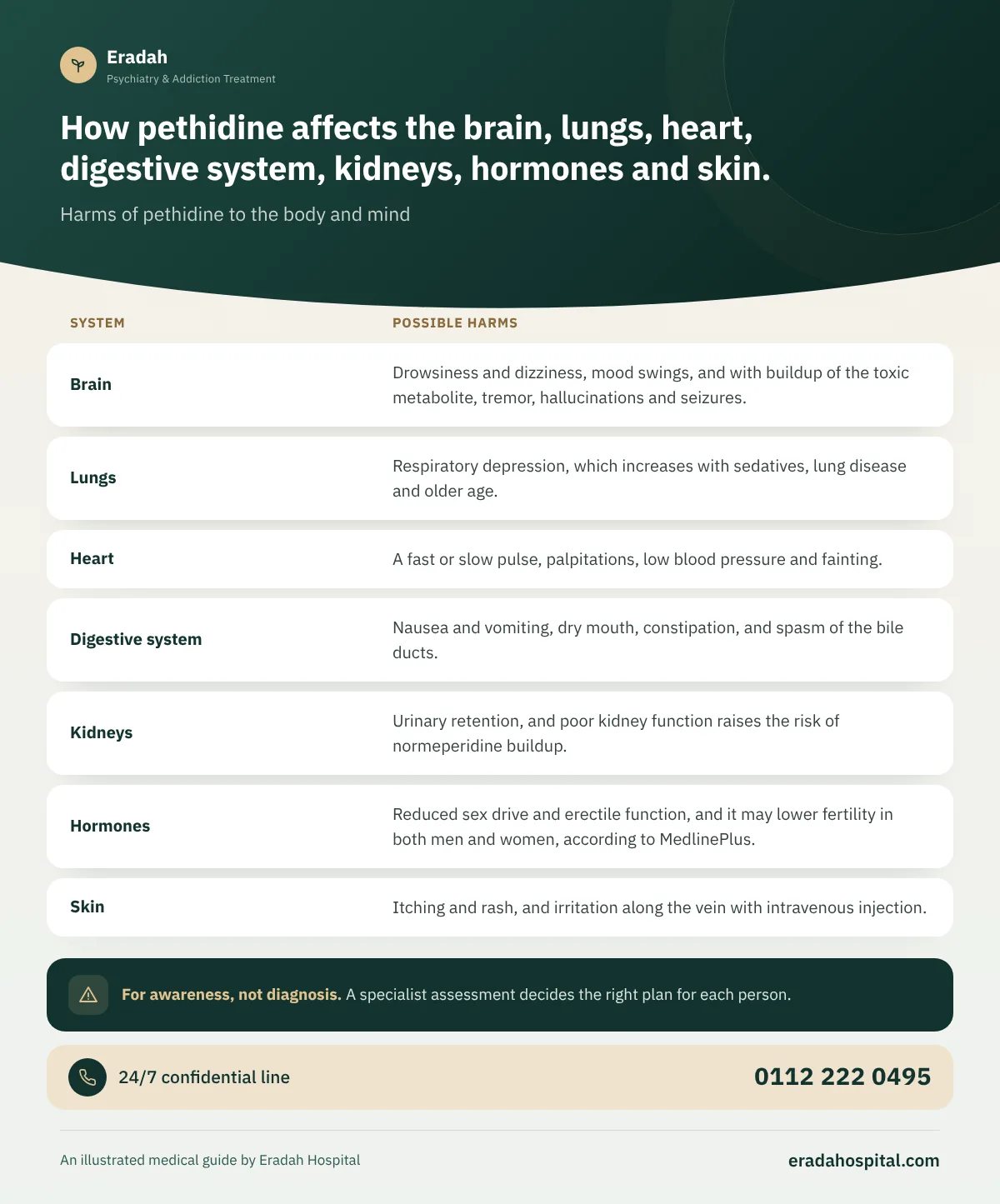
Harms of pethidine to the body's systems
| System | Possible harms |
|---|---|
| Brain | Drowsiness and dizziness, mood swings, and with buildup of the toxic metabolite, tremor, hallucinations and seizures. |
| Lungs | Respiratory depression, which increases with sedatives, lung disease and older age. |
| Heart | A fast or slow pulse, palpitations, low blood pressure and fainting. |
| Digestive system | Nausea and vomiting, dry mouth, constipation, and spasm of the bile ducts. |
| Kidneys | Urinary retention, and poor kidney function raises the risk of normeperidine buildup. |
| Hormones | Reduced sex drive and erectile function, and it may lower fertility in both men and women, according to MedlinePlus. |
| Skin | Itching and rash, and irritation along the vein with intravenous injection. |
When a painkiller increases pain
It may seem strange that a strong painkiller can increase pain, but the FDA label warns of “opioid-induced hyperalgesia,” and MedlinePlus asks you to tell your doctor if new pain appears or sensitivity to pain increases, even from a light touch or combing your hair. In this case the solution is not to raise the dose on your own, but to review the whole plan with the doctor.
Psychological harms of pethidine
- Mood swings between euphoria and distress, and agitation or confusion, as the official label states.
- Transient hallucinations and disturbed perception, especially with buildup of the toxic metabolite.
- Psychological dependence that keeps the mind occupied with the next injection.
- Anxiety, depression and insomnia between doses in those who have developed dependence.
When dependence coincides with a prior psychiatric disorder, treatment needs a single plan that deals with both, known as dual diagnosis.
Pethidine, pregnancy and childbirth
MedlinePlus warns that regular use of pethidine during pregnancy may cause life-threatening withdrawal symptoms in the newborn after birth. During labor, the NHS notes that giving it close to delivery may affect the baby's breathing, may interfere with the first feed, and may make the mother feel dizzy, nauseous and forgetful. The decision in all of this belongs to the medical team.
Why is pethidine a particular risk for older adults?
The FDA label states that older adults eliminate pethidine more slowly, are more sensitive to its effects, and that respiratory depression is their first danger. In the Canadian study that tracked pethidine prescriptions for people over 65 between 2001 and 2014, 96.7% of prescriptions exceeded the two-day duration recommended by safety guidelines.
Do the harms of pethidine go away after stopping?
Most harms improve after stopping under supervision, the toxic metabolite gradually clears from the body, and hormones, sleep and mood improve within weeks to months. Most importantly, stopping should not be sudden after regular use, and the original pain should be treated with an alternative plan. Details are in pethidine addiction treatment.
Danger signs after taking pethidine: call an ambulance on 123 immediately
- Slow, shallow, or stopped breathing, or unusual snoring during sleep
- Extreme drowsiness and not responding when called, or loss of consciousness
- Cold, clammy skin, bluish lips and nails, and a slow pulse
- Tremors, muscle twitching, seizures, or hallucinations, especially after repeated use
- High temperature, agitation, heavy sweating, and muscle rigidity if taken with antidepressants
Call an ambulance on 123 immediately. If the person is unconscious but breathing, place them on their side (recovery position) so they do not choke on vomit, stay with them and do not leave them alone, and do not give them anything by mouth. Tell the paramedics that the person took pethidine and about all other medicines they take, especially antidepressants and sedatives, and keep the packaging or ampoule.
Call the ambulance 123