Physical signs of pethidine use
“Every few days he says the cramps are back, goes to a different emergency room, and comes home asleep.” This sentence may not look like a sign of addiction, but its repetition in the same pattern is what draws the attention of both doctors and families.
- Drowsiness, heaviness and slowed movement after the dose, with dizziness on standing.
- Small pupils and flushed, itchy skin, signs MedlinePlus lists for opioid use.
- Sweating, nausea, dry mouth and constipation.
- Marks from injections into muscle or vein if he injects outside the hospital.
- When a dose is late: yawning, a runny nose, tears, sweating and body aches.
Behavioral signs
The FDA label describes drug-seeking behaviors common in people with substance use disorder, and MedlinePlus lists similar signs that doctors notice in people receiving opioid painkillers:
- Visits or calls to the emergency room near closing time, and asking for pethidine by name.
- Moving between several doctors to get extra prescriptions.
- Repeatedly claiming to have lost a prescription or tampering with one.
- Refusing examination, tests or referral to a specialist.
- Asking for early refills or demanding higher doses.
- Complaining of pain that increases although the condition is not getting worse.
The same label notes that preoccupation with pain relief can be understandable behavior in a patient whose pain has not yet been controlled. For this reason a single sign is not enough to judge; it is the repeated pattern that counts.
Signs of toxic metabolite buildup: what sets pethidine apart
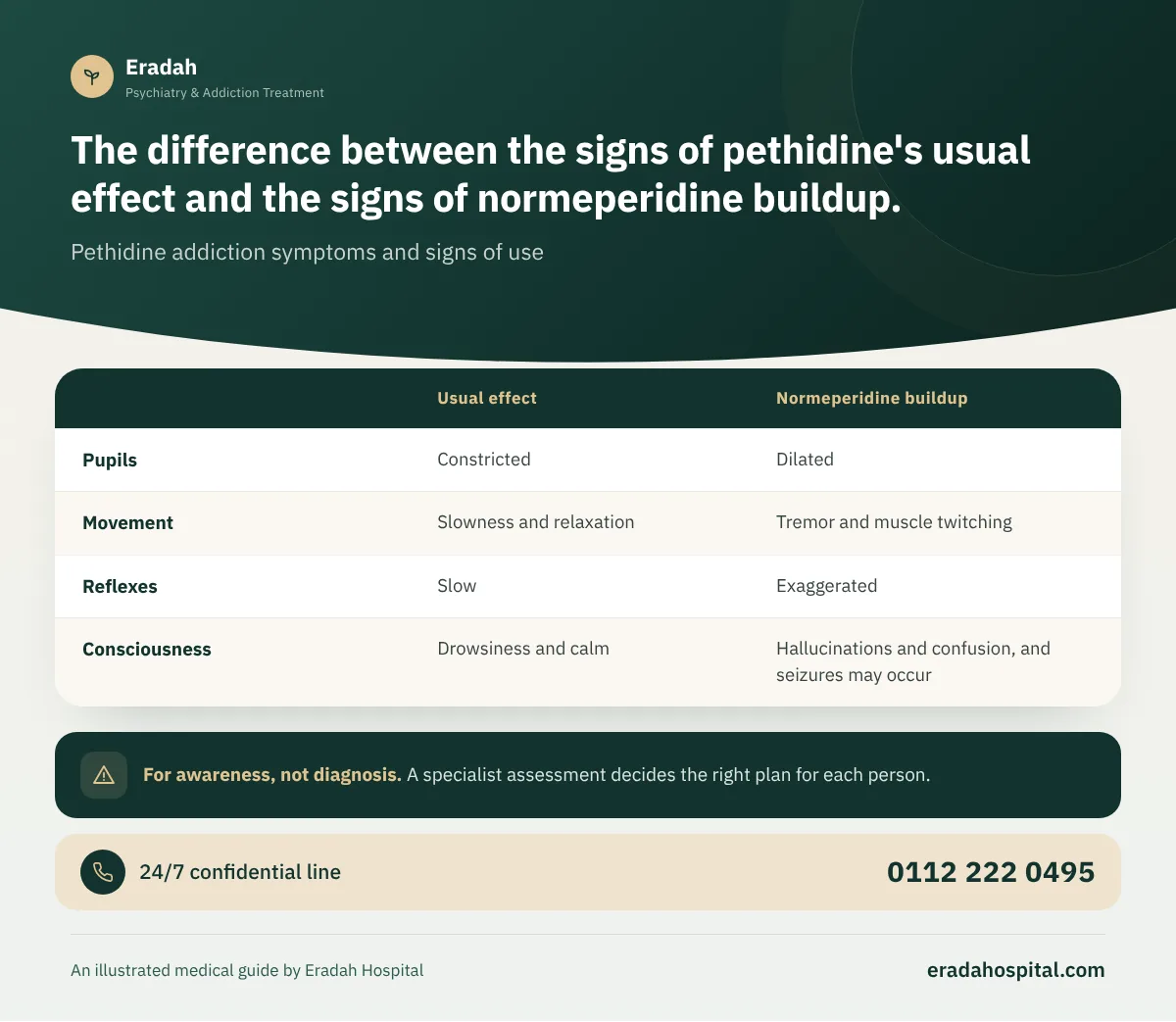
Pethidine is unusual among common opioids in that repeated doses can build up its metabolite normeperidine, producing signs different from the usual opioid picture. The FDA label describes this picture as an excitatory syndrome:
| Usual effect | Normeperidine buildup | |
|---|---|---|
| Pupils | Constricted | Dilated |
| Movement | Slowness and relaxation | Tremor and muscle twitching |
| Reflexes | Slow | Exaggerated |
| Consciousness | Drowsiness and calm | Hallucinations and confusion, and seizures may occur |
Psychological signs
- Constant preoccupation with the time and source of the next dose.
- Irritability, anxiety and insomnia between doses, then obvious relief afterward.
- Mood swings between euphoria and distress, and withdrawal from relationships.
- Denial or anger when the number of times of use is discussed.
A patient receiving pethidine on prescription: when should we worry?
Most patients who receive pethidine for short, acute pain do not develop addiction. But the FDA label states that the risk of addiction exists even with correct medical use, and that people with a history of opioids, alcohol or drugs are at higher risk. Concern grows when requests continue after the cause of the pain has gone, when the patient refuses any alternative painkiller, or when they get it from more than one source.
When does pethidine use become addiction?
NIDA defines addiction as a chronic disease characterized by compulsive seeking and use of a substance despite harmful consequences, with long-lasting changes in the brain. The signs a doctor assesses include:
- Using larger amounts or for longer than intended.
- Failed attempts to cut down or stop.
- A strong craving for the injection.
- Neglecting work or family because of the use.
- Continuing despite clear health or psychological problems.
- Tolerance and withdrawal symptoms on stopping.
Signs that call for emergency care immediately
Shallow or irregular breathing, or long pauses in breathing during sleep.
Deep drowsiness so that they do not wake to a call or touch.
Or increasing tremor and muscle twitching.
Heavy sweating, muscle rigidity and a fast pulse, especially with antidepressants.
How do you talk to someone who misuses pethidine?
- Start by acknowledging their pain, then talk about your concern over the pattern of use, not about “lying.”
- Suggest one doctor who follows the pain and the painkillers together.
- Focus on specific facts: the number of visits, the sources, and the changes you have noticed.
- Do not try to stop them on your own after regular use; stopping needs a medical plan.
- Ask for a confidential family consultation if they refuse at first.
If symptoms appear on stopping, read about pethidine withdrawal symptoms, and see the general signs of drug use.
Danger signs after taking pethidine: call an ambulance on 123 immediately
- Slow, shallow, or stopped breathing, or unusual snoring during sleep
- Extreme drowsiness and not responding when called, or loss of consciousness
- Cold, clammy skin, bluish lips and nails, and a slow pulse
- Tremors, muscle twitching, seizures, or hallucinations, especially after repeated use
- High temperature, agitation, heavy sweating, and muscle rigidity if taken with antidepressants
Call an ambulance on 123 immediately. If the person is unconscious but breathing, place them on their side (recovery position) so they do not choke on vomit, stay with them and do not leave them alone, and do not give them anything by mouth. Tell the paramedics that the person took pethidine and about all other medicines they take, especially antidepressants and sedatives, and keep the packaging or ampoule.
Call the ambulance 123