Stages of pethidine addiction treatment
Many people who become addicted to pethidine did not set out looking for a drug, but for relief from real pain. That is why their treatment must respect and address that pain, not just withdraw the drug.
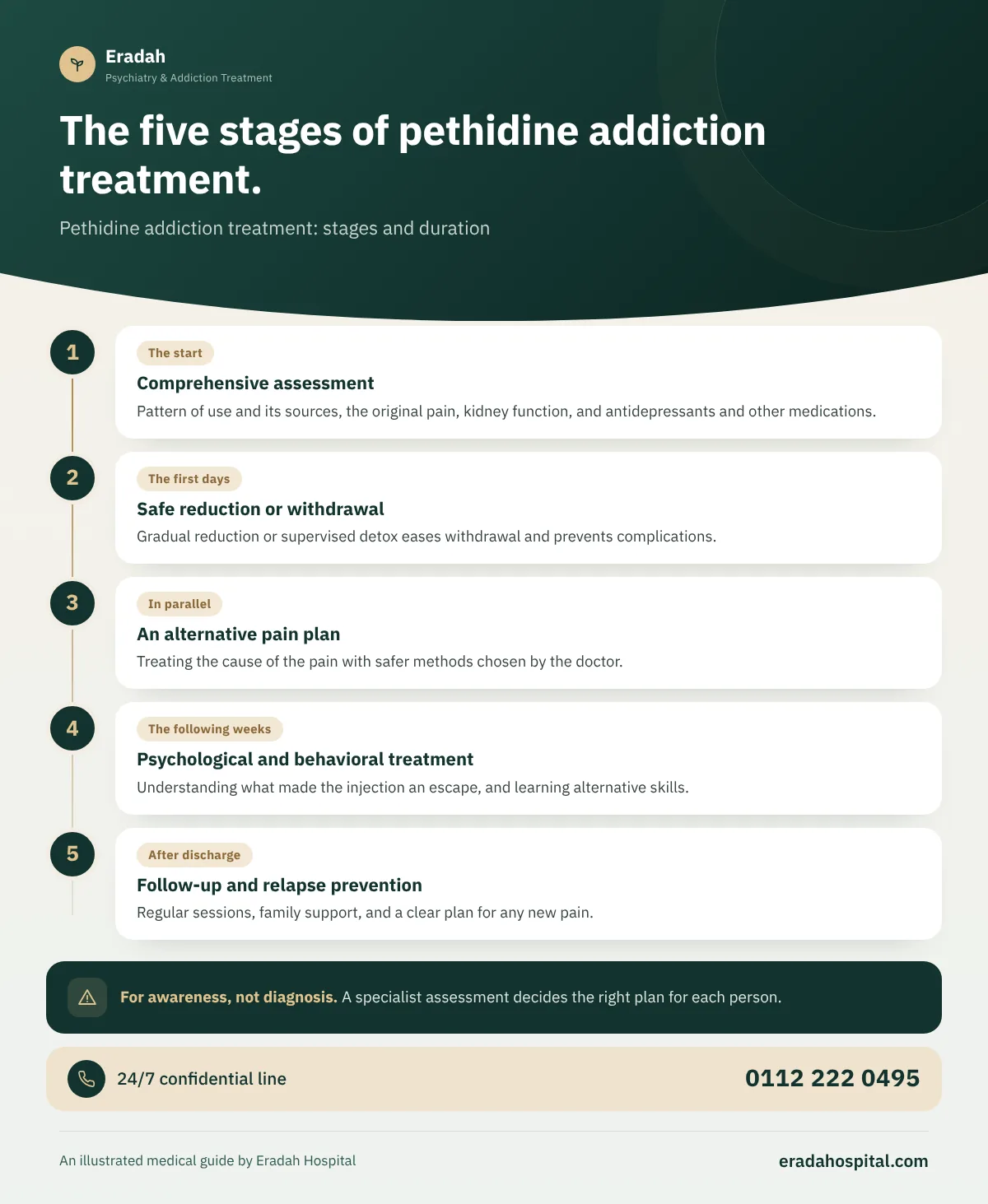
- The startComprehensive assessment
Pattern of use and its sources, the original pain, kidney function, and antidepressants and other medications.
- The first daysSafe reduction or withdrawal
Gradual reduction or supervised detox eases withdrawal and prevents complications.
- In parallelAn alternative pain plan
Treating the cause of the pain with safer methods chosen by the doctor.
- The following weeksPsychological and behavioral treatment
Understanding what made the injection an escape, and learning alternative skills.
- After dischargeFollow-up and relapse prevention
Regular sessions, family support, and a clear plan for any new pain.
What does assessment cover in a pethidine case?
- Pattern of use: the amount, frequency and duration, and whether he gets it from more than one source.
- Signs of toxicity: tremor, twitching or hallucinations that may point to normeperidine buildup.
- Kidneys and liver: because the kidneys excrete pethidine and its metabolite, and poor function changes the plan.
- Other medications: especially antidepressants and sedatives, to avoid dangerous interactions.
- Psychological state: MedlinePlus advises screening for depression and psychiatric disorders in people going through opioid withdrawal.
Gradual reduction or detox?
The FDA label recommends not stopping pethidine suddenly in someone who is physically dependent, and reducing it gradually under a plan that takes into account the dose, the length of treatment and the patient's physical and psychological condition. If the use is outside medical supervision or accompanied by other substances, detox inside a specialized facility may be safer. MedlinePlus notes that withdrawal may take place in dedicated detox centers or in the hospital if symptoms are severe.
Medications used in pethidine addiction treatment
| Medicine | How it helps |
|---|---|
| Methadone | A full agonist that eases withdrawal and craving, and is used for long-term maintenance in specialized programs. |
| Buprenorphine | A partial agonist that eases withdrawal and craving and may shorten the withdrawal period. |
| Naltrexone | Blocks the effect of opioids and helps prevent relapse, and is started after opioids have left the body. |
| Symptom-relief medications | Such as clonidine or lofexidine to ease withdrawal symptoms, along with medications for vomiting, diarrhea and sleep. |
NIDA describes these medications as safe, effective and life-saving, and notes that lofexidine is a non-opioid drug approved by the US Food and Drug Administration in 2018 to ease withdrawal symptoms. The choice among them depends on assessment, and some require a specialized program.
What about the original pain?
If there is real, recurring pain behind the use, such as renal colic, bone pain or chronic headache, leaving the pain without a plan pushes the patient to look for the injection again. The FDA label notes that rapid discontinuation without an alternative has been associated with seeking other sources of painkillers. For this reason the treatment team works with the doctor who specializes in the cause of the pain to treat it, choose safer painkillers, and use non-drug methods such as physical therapy when they suit the condition.
Psychological and behavioral therapy
Reshapes the thoughts that link relief with the injection, and trains stress and trigger management.
A safe space to understand what lies behind the use, such as anxiety, insomnia or work stress.
Recovery groups that help people keep going and reduce the feeling of isolation.
Teaching the family how to support without accusing, and what to do when relapse happens.
NIDA notes that behavioral therapies help patients modify their attitudes and behaviors related to drug use, increase their adherence to medication, and are more effective when combined with it.
How long does pethidine addiction treatment take?
| Stage | Approximate duration |
|---|---|
| Gradual tapering or detox | Days to weeks, depending on the dose, duration and how it is stopped. |
| Psychological rehabilitation | Weeks to months. |
| Follow-up | At least several months, and it may be longer with maintenance medication. |
Residential or outpatient treatment?
Outpatient treatment often suits someone whose dependence began with a medical prescription, who has family support and can stick to a gradual reduction plan. Residential treatment is preferred when injecting is daily, when pethidine is combined with sedatives or alcohol, when relapses have recurred, or when signs of toxicity from the toxic metabolite have appeared.
Relapse prevention after pethidine treatment
The riskiest moment after treatment is the first new acute pain. That is why a relapse prevention plan includes a prior agreement with the doctor on what happens with any injury or operation, telling any emergency doctor about the history of dependence, and knowing the psychological triggers. MedlinePlus notes that many overdose deaths occur right after detox because tolerance has dropped, so going back to the old dose is a real danger. Read the guide to relapse.
Pethidine addiction treatment at Eradah
At Eradah Hospital, treatment begins with a medical and psychiatric assessment, then safe detox or gradual reduction depending on the case, then residential treatment or outpatient treatment, with treatment of accompanying psychiatric disorders and follow-up after recovery. The first consultation is free and confidential on 01122220495.