Physical signs of Strox use
These signs appear while the drug is active, in the minutes and hours after use, and their severity varies a great deal from one occasion to the next depending on what the packet contains:
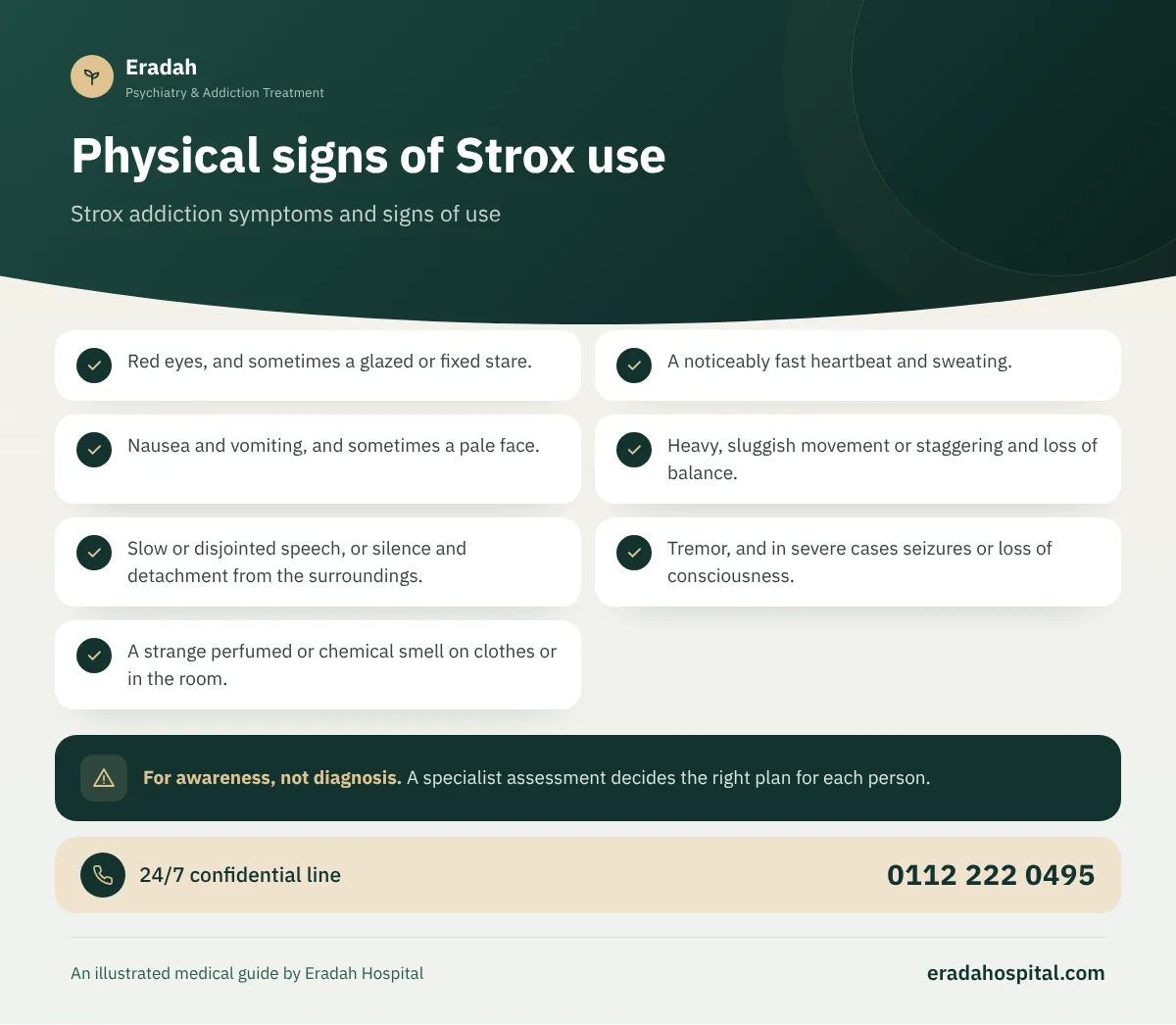
- Red eyes, and sometimes a glazed or fixed stare.
- A noticeably fast heartbeat and sweating.
- Nausea and vomiting, and sometimes a pale face.
- Heavy, sluggish movement or staggering and loss of balance.
- Slow or disjointed speech, or silence and detachment from the surroundings.
- Tremor, and in severe cases seizures or loss of consciousness.
- A strange perfumed or chemical smell on clothes or in the room.
Behavioral signs
With repeated use, behavioral changes begin, and these are often the first thing a family notices:
- Isolating in the bedroom for long periods and locking the door or phone.
- Changing the usual friends and going out at odd hours.
- Asking for money often, with changing excuses, or things going missing from the house.
- Slipping performance at school or work and frequent absences.
- Neglecting hygiene and appearance, and disrupted sleeping and eating patterns.
- Lying, secrecy and sharp defensiveness when asked.
Psychological signs: when should you be concerned?
The psychological effect of Strox may be its clearest sign, and it can appear suddenly:
Sudden intense fear, a feeling that they are going to die, palpitations and shortness of breath.
Seeing or hearing things that are not there, or seeming lost and not knowing where they are.
Feeling that people are watching them or want to harm them.
Extreme anger or unusual aggression over minor things.
Between episodes of use you may notice irritability, insomnia and mood swings. Symptoms that continue or worsen after stopping are covered on the page about Strox and Voodoo withdrawal symptoms.
How do the signs change as use continues?
| Stage | What the family may notice |
|---|---|
| While under the effect | Red eyes, vomiting, a fast pulse, confusion or panic, staggering, and sometimes sudden odd behavior. |
| Between episodes of use | Irritability, insomnia, poor appetite, boredom and restlessness, and an obvious wish to go out or be alone. |
| After months of use | Weight loss, declining school or work performance, a change of friends, debts or missing money, and persistent mood swings. |
Watching how this develops over time is more reliable than focusing on a single incident, so it helps if the family jots down what they notice, with approximate dates, before consulting a specialist.
How can you tell Strox use from hashish use?
Some signs may look alike, such as red eyes and increased or decreased appetite, but there are differences that help families and doctors:
| The sign | Strox | Hashish |
|---|---|---|
| Onset and duration of effect | Very fast and relatively short | Slower and longer |
| Repeated vomiting | Common | Less common with ordinary use |
| Seizures and loss of consciousness | Possible | Very rare |
| Severe agitation and violence | More common | Unusual |
| Very fast pulse and chest pain | More common and more severe | Usually a milder increase |
| Smell | Perfumed or chemical | The familiar cannabis smell |
| A standard cannabis test | Often negative | Positive |
Things that may point to use
Small bags holding chopped dry herbs that look like sheesha tobacco or bango, colorful packets with odd brand names, rolling papers, or an unfamiliar perfumed smell in the room are all signs worth noticing, without jumping to accusations.
Signs a school or university may notice
The first signs of Strox use in teenagers often appear outside the home, and observations from teachers and supervisors can help the family step in early:
- A sudden drop in grades or in concentration in class.
- Sleeping in lectures or frequent absences with no clear reason.
- Panic attacks, odd behavior or fainting at school or after going out with friends.
- A sudden change in the circle of friends or withdrawal from activities.
When do signs of use become an emergency?
Some signs cannot wait and are not the time for a conversation. They call for an immediate call to the ambulance on 123: seizures, loss of consciousness, chest pain or severe palpitations, extreme agitation or complete detachment from reality, and a very high body temperature. At these moments, do not think about punishment or blame; think first about saving their life, and tell the paramedics what you believe they took.
When does use become addiction? Diagnostic criteria
Doctors rely on the DSM-5 criteria for substance use disorders, which total eleven criteria over twelve months, including:
- Using larger amounts or for longer than intended.
- Failed attempts to cut down or stop.
- Spending a great deal of time getting the substance or recovering from its effects.
- A strong, urgent craving to use.
- Neglecting obligations at school, work or home.
- Continuing to use despite clear social, health or psychological problems.
- Tolerance, and symptoms when stopping.
| Number of criteria | Level |
|---|---|
| 2 to 3 | Mild |
| 4 to 5 | Moderate |
| 6 or more | Severe |
The final diagnosis is made by a specialist psychiatrist after a comprehensive assessment, which also looks for any co-occurring mental health condition.
How do you talk to someone you suspect is using Strox?
- Do not start the conversation while they are under the influence; they may be frightened, confused or aggressive.
- Gather your observations calmly, and talk about specific behaviors you have seen rather than making accusations.
- Express your concern for their health and safety before anything else.
- Listen more than you talk, and do not get drawn into an argument about how “mild” the substance is.
- Offer a clear, practical step, such as a confidential consultation or an assessment appointment.
- If they refuse, do not end the conversation, and seek specialist family consultation yourself.
Signs of acute Strox poisoning: call an ambulance (123) immediately
- Convulsions or violent shaking of the whole body
- Loss of consciousness or great difficulty waking the person
- Chest pain, a very rapid heartbeat or shortness of breath
- Severe agitation, violence, or hallucinations and complete detachment from reality
- A severe rise in body temperature with heavy sweating or hot, dry skin
Call an ambulance on 123 immediately, move dangerous objects away from the person, and do not restrain them by force or put anything in their mouth during a seizure. If they lose consciousness or the seizure ends, place them on their side in the recovery position, stay with them until the paramedics arrive, and tell them what was taken.
Call the ambulance 123