Why is gambling harm among the most severe of the behavioral addictions?
The World Health Organization describes the harms of gambling as including mental illness and suicide, relationship breakdown, domestic violence and financial hardship, as well as harm to work and study. These harms build up quickly, because a single loss can wipe out years of savings.
What makes this addiction so cruel is that it is hidden for a long time, so the harm comes to light all at once: huge debts, loans taken in family members' names, and a job at risk. That is why many people reach treatment at a moment of crisis, which calls for special care.
What are the financial harms of betting addiction?
| Stage | What often happens |
|---|---|
| The start | Spending pocket money or part of a salary, with occasional wins that give an impression of control |
| Getting deeper | Draining savings, late bills, and small loans from friends |
| The crisis | High-interest loans and multiple installments, and selling property or the family's gold |
| The crash | Inability to repay, legal claims, and possibly losing housing or work |
With each stage "chasing losses" intensifies, as the person sees the next bet as the only way to repay the debts, and so adds to them. The pressure may drive some people to acts they never imagined, such as taking money that is not theirs or using a family member's details, which adds serious legal and family dimensions to the problem.
How does gambling addiction destroy the family?
The family is the first and silent casualty. The addiction steals money, time and trust together:
Discovering repeated lies sometimes leaves a deeper wound than the financial loss itself.
Overdue rent, unpaid school fees, and constant worry about creditors.
Pressure and anger after losses can turn into verbal or physical abuse, and the World Health Organization lists domestic violence among the harms of gambling.
Some marriages end in divorce, and friends and relatives drift away after repeated borrowing.
Anxiety, depression and exhaustion in the spouse who carries the burden alone.
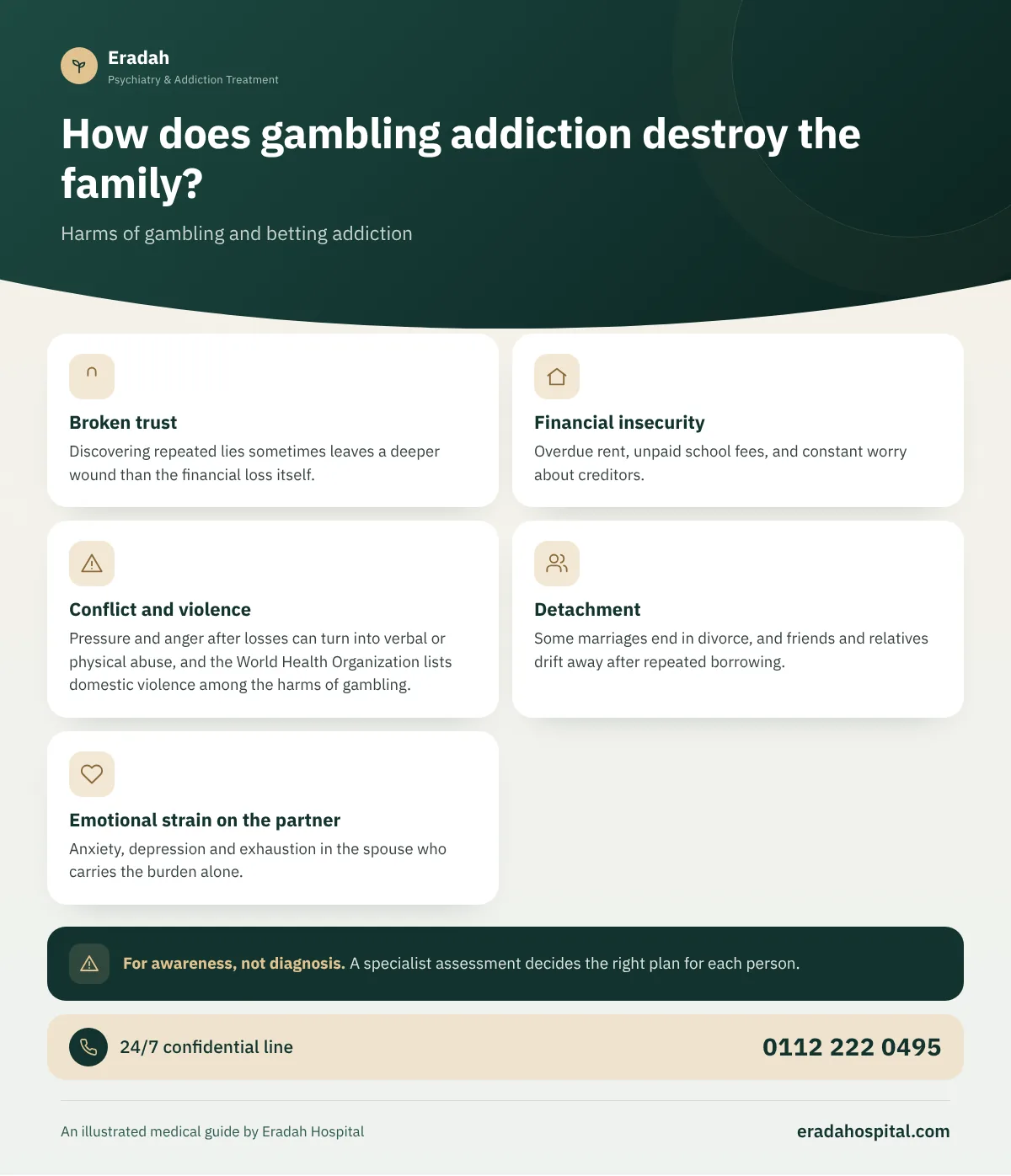
Because a gambler affects a number of the people around them, the guidance of the UK's National Institute for Health and Care Excellence (NICE) stresses that people affected by someone else's gambling need information and support in their own right, not just a role as supporter.
How does a parent's gambling addiction affect children?
- Anxiety and instability from repeated arguments and financial hardship.
- Going without basic needs, activities or education because the money is lost.
- Loss of trust in the parent, or a child taking on responsibilities beyond their age.
- Betting becoming normal in the child's eyes, which raises the chance they will repeat it in future.
- School and behavior problems that may reflect the tension at home.
Children need a simple, age-appropriate explanation that the problem is not their fault and that the adults are working to solve it, and they should be kept away from the details of debts and arguments as far as possible.
How does gambling addiction affect mental and physical health?
Gambling disorder is often accompanied by depression, anxiety and addiction to alcohol and other substances. Losses, secrets and debts create chronic stress, and guilt and shame isolate the person from sources of support.
- Sleep: insomnia from worrying about debts, and late nights following matches and bets.
- Body: headaches, digestive problems, exhaustion and raised blood pressure linked to chronic stress, and neglect of general health.
- Substances: more smoking and drinking, and sometimes stimulants to cope with long nights and tension.
- Self-esteem: a sense of failure and disgrace that may prevent asking for help.
Why is gambling addiction linked to suicide risk?
This is one of the most important things a family should know. The World Health Organization cites a study that found people with gambling disorder were about 15 times more likely to die by suicide than the general population. The risk rises when debts come to light, after a big loss, and when there is depression or alcohol addiction.
Asking directly about suicidal thoughts does not plant the idea in a person's mind; it gives them a chance to talk. NICE guidance stresses that assessing suicide risk is an essential part of caring for anyone experiencing gambling harm.
How does betting addiction affect work, study and legal standing?
- Reduced performance and concentration from constant preoccupation and late nights, and frequent absences.
- Betting by phone during work or study hours.
- Losing a job, especially if the problem extends to workplace money.
- Legal risks linked to unpaid debts, checks and loans, or to dealing with unlicensed platforms.
- For students: failing grades, dropping out and lost future opportunities.
This is general awareness information and not legal advice; consult a lawyer about any specific legal problem.
Why do shame and stigma add to the harms of gambling?
In our societies gambling is often seen as a moral or religious failing before it is seen as a disorder, so the person hides the problem for fear of scandal, and the family sometimes hides it to protect its "reputation". The result is that debts grow in the shadows and treatment is delayed for months or years.
Recognizing gambling as a treatable disorder does not remove responsibility for the harm done, but it opens a door to repair instead of punishment alone. Someone asking for help needs to hear that recovery is possible, and that many before them have rebuilt their lives and relationships and repaid their debts gradually after treatment.
| Harm | Why it is overlooked |
|---|---|
| Lost time | Hours every day on the phone, taken from family, work and sleep without being counted |
| Lost opportunities | Projects, education and marriage put off because of debt |
| The partner's health | Anxiety, depression and insomnia in the person who carries the burden in silence |
| Friendships | Gradual estrangement after repeated borrowing and non-repayment |
Can the harms of gambling be limited before they get worse?
Yes, and the earlier the intervention, the smaller the losses. Protecting money early, speaking frankly within the family, and asking for a specialist assessment prevent the slide from the "getting deeper" stage into collapse. The practical steps and ways to protect money are on the gambling addiction treatment page.
Despair over debts or thoughts of self-harm? Get help now
- Talk about death being the “only solution” to the debts, or that the family would be better off without him
- Severe despair after a big loss or the exposure of the debts to the family
- Saying goodbye to loved ones, writing a will, or suddenly putting affairs in order
- Complete withdrawal, or a sudden unexplained calm after a period of intense distress
- Outbursts of anger or threats of violence at home, or a major increase in use of alcohol or drugs
Do not leave the person alone, ask them calmly and openly about their thoughts, and listen without blame or talk of money at this moment; debts have solutions, and life matters more. Call the ambulance on 123 or take them to the nearest emergency room, or call the mental health support line 16328 (24 hours), and keep medications and anything they could harm themselves with out of their reach. If there is a risk of violence, move away with the children to a safe place.
Ambulance 123 Mental health support line 16328