Does quitting porn have real benefits?
"I read that after 90 days you become a different person, and I passed 90 days and felt no miracle." Many people start quitting with expectations created by internet forums, then end up disappointed. The truth is that the benefits of quitting porn are real for people whose use was compulsive, but they come as gradual improvements in daily life, not a magical transformation.
A systematic review published in Clinical Psychology Review in 2020 examined 47 studies on the effect of short-term abstinence from six potentially addictive behaviors. It concluded that abstinence looks promising as an intervention for some of them, including pornography use, gaming, phone use and social media, while cautioning that its possible adverse effects have not been studied enough. We explain when use becomes a problem in the guide to pornography addiction.
Benefits of quitting pornography in daily life
Hours that used to be lost to searching and watching return to work, study and family.
Use is often tied to staying up late, and stopping brings sleep back to a regular pattern.
Fewer mental interruptions and less preoccupation with planning and hiding.
Openness and closeness in the marital relationship improve over time.
The risk of blackmail, scams and harmful websites falls.
The conflict between values and behavior eases, and self-blame lessens.
These gains stand against the harms we explain on the harms of pornography addiction page. Their size depends on how heavy the earlier use was: someone who spent hours a day will notice the difference far more than someone whose use was occasional.
Peace with your values: a benefit not to be underestimated
A meta-analysis published in Archives of Sexual Behavior in 2019 found that many people's feeling of being "addicted" is strongly linked to what is called moral incongruence, meaning the gap between what a person believes and what they do. So one of the most important benefits of stopping for religious people is less of this inner conflict and the anxiety and shame that come with it. But what matters most is that stopping comes from choice and a wish for a better life, not from fear and self-blame, which make distress worse if a slip happens.
Does sexual performance improve after quitting porn?
It is widely claimed that pornography "causes" erectile dysfunction and that quitting cures it. The evidence is more complicated: a paper published in the Journal of Sexual Medicine in 2019 studied three samples of men and found a concurrent link between problematic use and erectile difficulties, but no consistent relationship with use alone, and no clear causal relationship over a one-year follow-up. In short, some men may notice better desire toward their partner and more closeness after stopping, but persistent erectile dysfunction deserves a medical check for other causes such as diabetes, blood pressure, medications, anxiety and substance use.
What happens when you quit porn? The first weeks
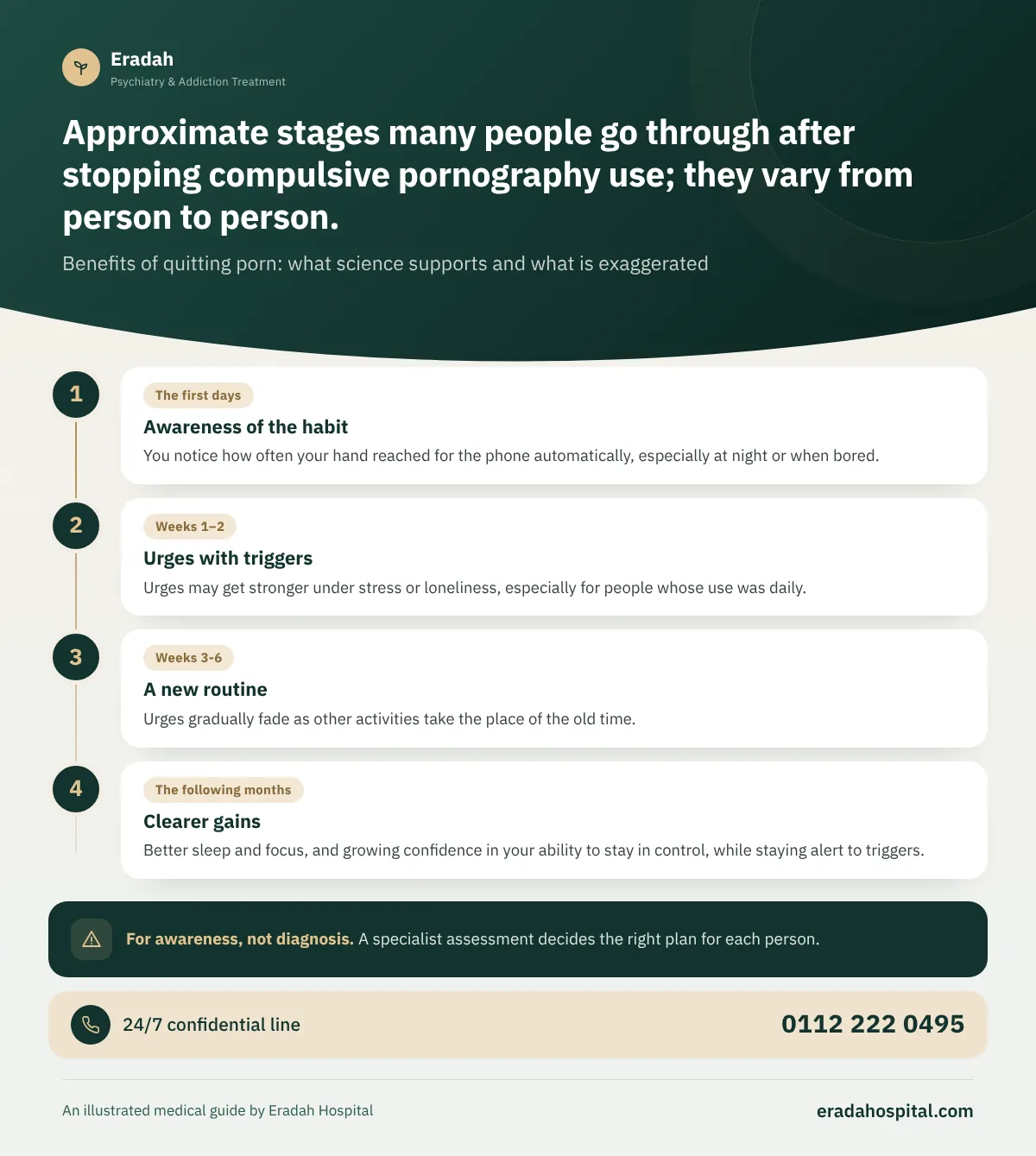
- The first daysAwareness of the habit
You notice how often your hand reached for the phone automatically, especially at night or when bored.
- Weeks 1–2Urges with triggers
Urges may get stronger under stress or loneliness, especially for people whose use was daily.
- Weeks 3-6A new routine
Urges gradually fade as other activities take the place of the old time.
- The following monthsClearer gains
Better sleep and focus, and growing confidence in your ability to stay in control, while staying alert to triggers.
A randomized trial published in Archives of Sexual Behavior in 2023 on 176 regular users is reassuring: it found no clear withdrawal symptoms in those who abstained for 7 days compared with those who carried on. But an exploratory analysis suggested that cravings may appear during abstinence in people who combine daily use with severe problematic use, so do not be surprised if the first days are harder for you.
Common myths about the benefits of quitting
- "After 90 days your brain is completely reset": there is no proven magic number, and change is gradual and differs between people.
- "You'll become more attractive and your energy will double": there is no scientific evidence for this; the real gains are quieter and longer lasting.
- "A relapse puts you back at zero": not true; the skills you learned stay with you, and returning quickly to your plan matters most.
- "Willpower alone is enough": for people whose use was compulsive, willpower needs a plan and support.
How do you keep the gains of stopping pornography?
- Know your triggers: the time, place and emotional state that come before use.
- Change your digital environment: take the phone out of the bedroom at night, and use blocking tools as a helper, not the only solution.
- Fill the time with real activity: exercise, company or a goal you are working toward.
- Deal with stress and loneliness directly, since they are the real fuel of the habit.
- If you slip, treat it as information about a new trigger, not as proof of failure.
You will find the full treatment plan in the guide to treating pornography addiction. And if the problem extends to other out-of-control sexual behaviors, read about sex addiction and its treatment. At Eradah the first consultation is free and confidential, and we offer outpatient treatment with cognitive behavioral therapy, especially when use is accompanied by depression, anxiety or substance use.
Severe hopelessness, blackmail or thoughts of self-harm? Get help now
- Talk of death or of life not being worth living after the matter is exposed or after a relapse
- Online blackmail using photos or chats, with a threat of exposure
- Harming or punishing oneself because of guilt and shame
- Risky sexual behavior combined with drug or alcohol use, or exposure to infection
- Violence or threats within the marriage after the problem is discovered
Stay with the person and listen without preaching or belittling, since intense shame increases the risk. Calmly remove medications and dangerous objects. Call an ambulance on 123 or go to the nearest emergency room if the danger is imminent, and contact the mental health support line 16328, available around the clock. In blackmail, do not pay and do not send anything, keep the evidence, and report it to the competent authorities.
Ambulance 123 Mental health support line 16328