Short-term harms of amphetamine
These harms begin within minutes to hours of use, and get worse with large amounts or repeated use on consecutive days:
- A faster heartbeat, high blood pressure, and irregular heart rhythm.
- High body temperature, with greater danger in crowded, hot places and with physical exertion.
- Insomnia lasting a night or more, loss of appetite, intense thirst, and dry mouth.
- Anxiety, tension, and impulsivity, which may reach aggression or a panic attack.
- Headache, tremor, jaw muscle clenching, and teeth grinding.
- Poor judgment of risk, which raises the chances of accidents and risky behavior.
How does amphetamine harm the heart and blood vessels?
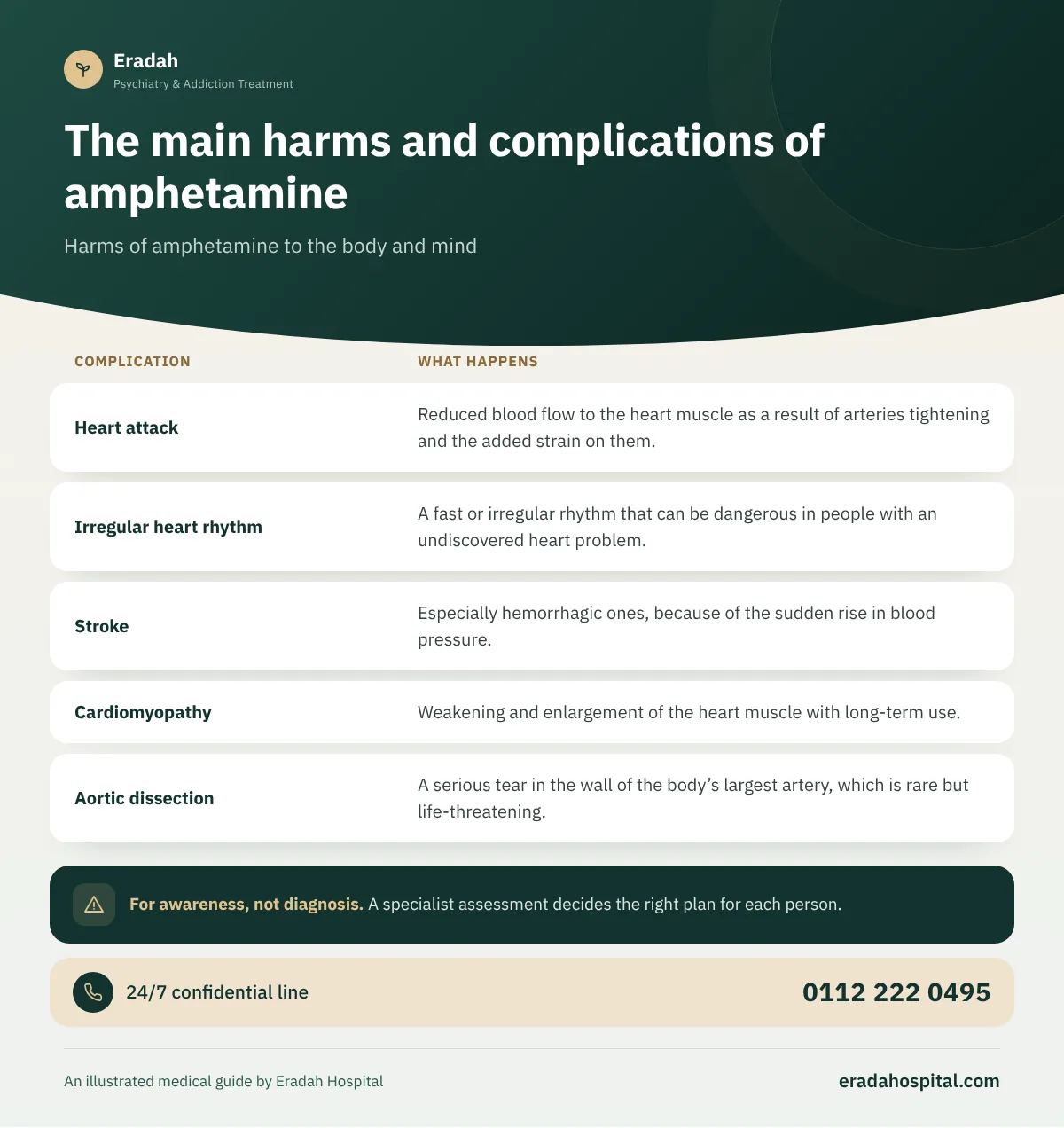
Amphetamine works as if it keeps pressing the body’s emergency pedal: it narrows blood vessels, raises blood pressure, and forces the heart to work faster. Medical references list the following among its serious complications:
| Complication | What happens |
|---|---|
| Heart attack | Reduced blood flow to the heart muscle as a result of arteries tightening and the added strain on them. |
| Irregular heart rhythm | A fast or irregular rhythm that can be dangerous in people with an undiscovered heart problem. |
| Stroke | Especially hemorrhagic ones, because of the sudden rise in blood pressure. |
| Cardiomyopathy | Weakening and enlargement of the heart muscle with long-term use. |
| Aortic dissection | A serious tear in the wall of the body’s largest artery, which is rare but life-threatening. |
Harms of amphetamine on the brain and mental health
Amphetamine floods the brain with dopamine and norepinephrine, and with repetition the circuits of reward, attention, and emotional control change. The psychological harms appear in several forms:
Suspicion, persecutory beliefs, and auditory or visual hallucinations resembling the symptoms of schizophrenia, which may appear with heavy use or prolonged sleep deprivation.
A sharp drop in mood after the effect wears off, and anxiety and panic attacks that may last for periods.
Quick irritability and anger that may turn into verbal or physical violence.
Chronic insomnia that worsens all the other psychological harms and weakens memory and concentration.
The page on drug-induced psychosis explains this condition in detail. It is more dangerous in people with a genetic predisposition or a previous mental health condition, which is known as dual diagnosis.
Why does amphetamine poisoning happen?
Poisoning happens when the amount of stimulant exceeds what the body can tolerate, and pulse, blood pressure, and temperature rise to dangerous levels. The risk grows with pills of unknown composition, with repeated use within a few hours to regain the effect, with physical exertion, heat, and dehydration, and with mixing several stimulants. Very high temperature is among the most dangerous signs, because it can lead to muscle breakdown, kidney failure, and rapid disruption of all body functions.
Long-term harms of amphetamine on the body
- Malnutrition and weight loss: Because of loss of appetite lasting weeks and months.
- Teeth and mouth: Dry mouth, teeth grinding, and neglected hygiene speed up decay and tooth erosion.
- Skin: Itching and repeated sores, especially with the false sensation of insects under the skin.
- Immunity: Weakened resistance to infection because of lack of sleep and poor nutrition.
- Muscles and kidneys: With severe poisoning, muscle breakdown can occur, straining the kidneys and possibly causing acute kidney failure.
Harms of mixing amphetamine with other substances
Many people who use stimulants mix them with other substances to soften the crash or boost the effect, and this multiplies the risk in unexpected ways:
| The mix | The main risk |
|---|---|
| Amphetamine + alcohol | The stimulant masks the feeling of drunkenness so the person drinks more, with double strain on the heart. |
| Amphetamine + another stimulant | Such as cocaine or large amounts of energy drinks: doubled load on the heart and a higher risk of overheating. |
| Amphetamine + sedatives | A cycle of stimulation then calming wears the body down, hides the signs of poisoning, and raises the risk of dependence on both substances. |
| Amphetamine + some antidepressants | May cause dangerous interactions such as serotonin syndrome and severe high blood pressure. |
Harms of amphetamine on pregnancy and the fetus
Amphetamine narrows blood vessels, which reduces blood flow to the placenta, and use during pregnancy is linked to low birth weight, premature birth, and complications such as placental abruption. The mother’s own health also suffers from poor nutrition and lack of sleep. It is best for a pregnant woman who uses to go to a doctor right away, without fear, to make a safe plan for herself and her baby.
Harms of amphetamine on teenagers and students
The brain keeps developing until the mid-twenties, especially the areas responsible for planning and impulse control, which is why teenagers are more prone to addiction and psychological harm. Many students use stimulants during exam days and enter a cycle of staying up, then crashing, then needing the stimulant again, with a real decline in achievement, sleep, and mental health.
Do the harms of amphetamine go away after stopping?
Many harms improve after stopping and treatment: sleep and appetite return gradually, the body regains its weight, and blood pressure and heart rate settle. Brain function and mood also improve over months, although some take longer. Heart damage or the effects of a stroke need separate medical follow-up, and recurrent psychosis may need prolonged psychological treatment. The earlier treatment starts, the greater the chances of full recovery.
Signs of poisoning from amphetamine and stimulants: call the ambulance on 123 immediately
- A very high body temperature with hot skin or heavy sweating
- Chest pain or pressure, or a very fast or irregular pulse
- Seizures, muscle stiffness or an uncontrollable tremor
- Severe agitation, hallucinations, or confusion and loss of awareness of place and time
- A sudden severe headache, weakness on one side of the body, difficulty speaking, or loss of consciousness
Call the ambulance on 123 immediately, move the person to a quiet, cool place away from crowds, and talk to them calmly without violent restraint. If they lose consciousness, place them on their side and stay with them until help arrives, and do not give them any other substance or stimulating drinks.
Call the ambulance 123
19Social, financial, and legal harms