Why do nalbuphine withdrawal symptoms happen?
With repeated injections the body adapts to the presence of nalbuphine, and the nervous system works “normally” while it is there. When the person suddenly stops or sharply cuts the amount, this temporary balance is lost and withdrawal symptoms appear.
The FDA label states that physical dependence may not become clearly apparent until days to weeks of continued use, and that nalbuphine must not be reduced rapidly or stopped suddenly in someone who has become dependent on it. The DEA confirms that sudden stopping after long use may cause signs of opioid withdrawal.
Two different kinds of withdrawal
Happens to someone used to injecting nalbuphine who then stops or cuts down, and it develops over hours.
Happens to someone dependent on another opioid such as tramadol or heroin who then injects nalbuphine; it begins within minutes and is severe.
The second kind is what sets nalbuphine apart from most opioids. In a study in 1989 on volunteers dependent on methadone, nalbuphine produced withdrawal symptoms that could not be told apart from those caused by naloxone. This explains why some people who use tramadol go through acute and bewildering withdrawal attacks after a nalbuphine injection.
What are the symptoms of nalbuphine withdrawal?
| Type | Symptoms |
|---|---|
| Early symptoms | Restlessness, watery eyes, runny nose, sweating, chills, muscle aches, and dilated pupils. |
| Psychological symptoms | Irritability, anxiety, and insomnia. |
| Body aches | Pain in the back and joints, and general weakness. |
| Digestive system | Abdominal cramps, nausea, loss of appetite, vomiting, and diarrhea. |
| Vital signs | Raised blood pressure, and faster breathing and pulse. |
MedlinePlus describes opioid withdrawal symptoms in general as very unpleasant but usually not life-threatening, and adds yawning and goosebumps to the list of symptoms.
Approximate timeline of nalbuphine withdrawal
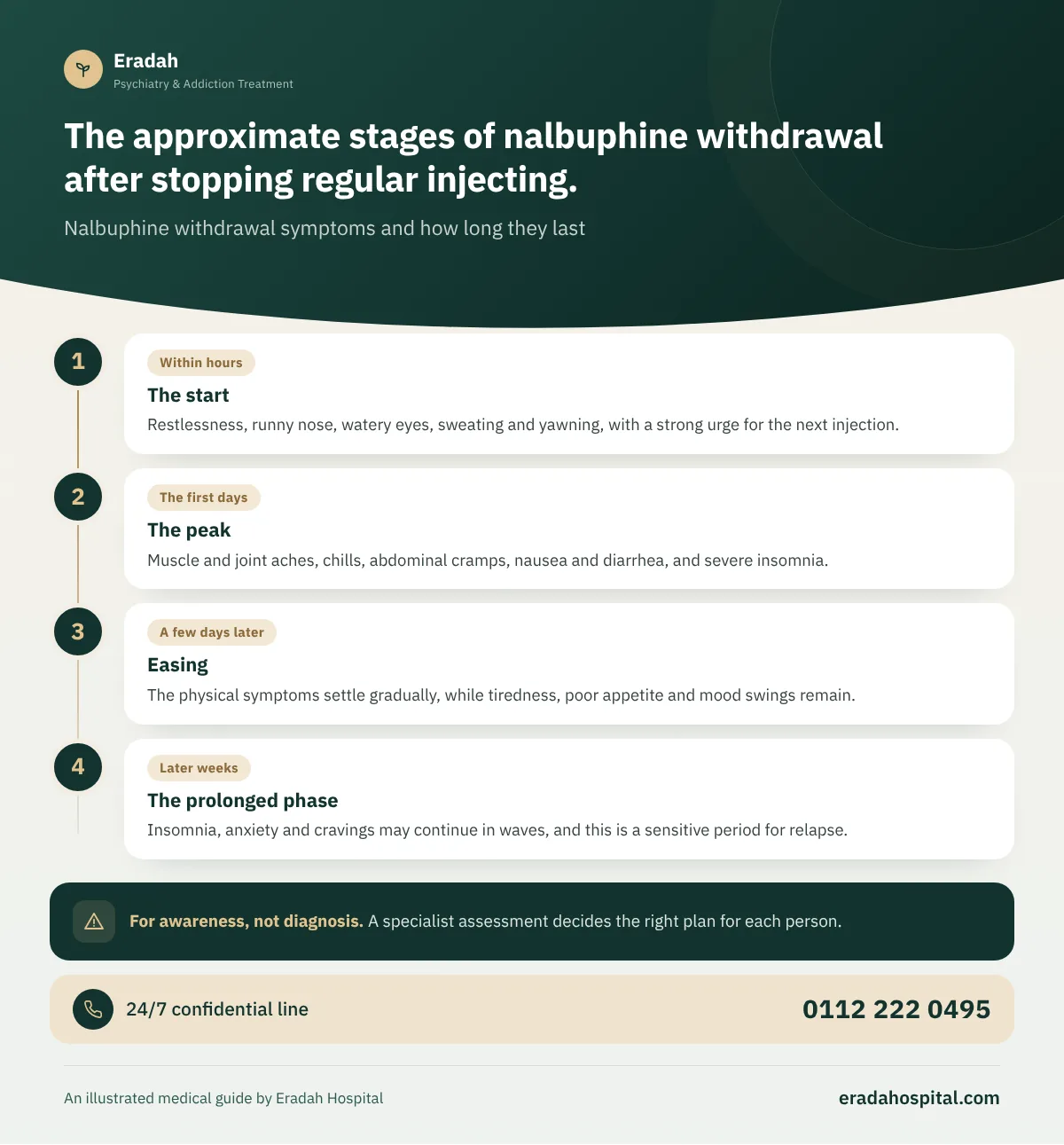
There are no large studies that draw up a timeline specific to nalbuphine withdrawal. The estimate below is based on the short duration of its effect, since its half-life is about 5 hours according to the FDA label, and on what is known about withdrawal from short-acting opioids:
- Within hoursThe start
Restlessness, runny nose, watery eyes, sweating and yawning, with a strong urge for the next injection.
- The first daysThe peak
Muscle and joint aches, chills, abdominal cramps, nausea and diarrhea, and severe insomnia.
- A few days laterEasing
The physical symptoms settle gradually, while tiredness, poor appetite and mood swings remain.
- Later weeksThe prolonged phase
Insomnia, anxiety and cravings may continue in waves, and this is a sensitive period for relapse.
Is nalbuphine withdrawal dangerous?
According to MedlinePlus, complications of opioid withdrawal include inhaling vomit into the lungs, and dehydration and salt imbalance from vomiting and diarrhea. But the biggest complication is going back to use.
If you receive nalbuphine by prescription
Most people who receive nalbuphine in the hospital for a short time do not go through any significant withdrawal. But if treatment continues for days or weeks, do not stop it yourself, and ask the doctor for a gradual reduction plan. Tell them about all the other medicines you take, especially opioid painkillers and sedatives. And do not start or stop anything without a doctor.
Why is it not advisable to withdraw from nalbuphine at home?
- MedlinePlus stresses that withdrawing from opioids on your own can be very hard and can be dangerous.
- Nalbuphine itself is not suitable for treating withdrawal, as a scientific review published in 2018 explains, so using it to “ease” symptoms prolongs the problem.
- Many people who use it combine other substances with it, and withdrawal from sedatives, for example, has its own dangers.
- The medicines that ease symptoms are chosen by the doctor according to the case, not on a friend’s or pharmacist’s advice.
That is why stopping usually takes place within a medical detox program that monitors vital signs, treats dehydration and insomnia, and prevents early relapse.
How can a family support a person going through nalbuphine withdrawal?
- Treat the symptoms as a temporary medical stage, not as weak willpower.
- Help them drink fluids and rest, and watch for signs of dehydration.
- Keep ampoules, syringes and sedatives out of their reach.
- Contact the medical team right away if the vomiting becomes severe or thoughts of self-harm appear.
- Plan ahead for after withdrawal; it is the start of nalbuphine addiction treatment, not its end.
Danger signs after using Nalufin: call an ambulance (123) immediately
- Severe, continuous vomiting or diarrhea with signs of dehydration: intense thirst, passing little urine, and dizziness on standing
- Severe drowsiness or difficulty waking after a return to injecting, especially after days without it
- Slow or irregular breathing, or blue lips and nails
- Seizures or severe confusion
- Thoughts of self-harm: also call the mental health support line 16328
Call an ambulance on 123 immediately. If the person is unconscious but breathing, place them on their side (recovery position) so they do not choke on vomit, stay with them and do not leave them alone, and do not give them food or drink. Tell the paramedics what the person took and any other substances used with it, such as sedatives, alcohol or tramadol, and keep the ampoule or packaging if you find it.
Call the ambulance 123