Stages of nalbuphine addiction treatment
Nalbuphine addiction is no less deserving of treatment because it is a “medicine.” Dependence on it is a real illness, and it often comes with things that make it more complicated: anabolic steroids, chronic pain, shared needles, or other opioids.
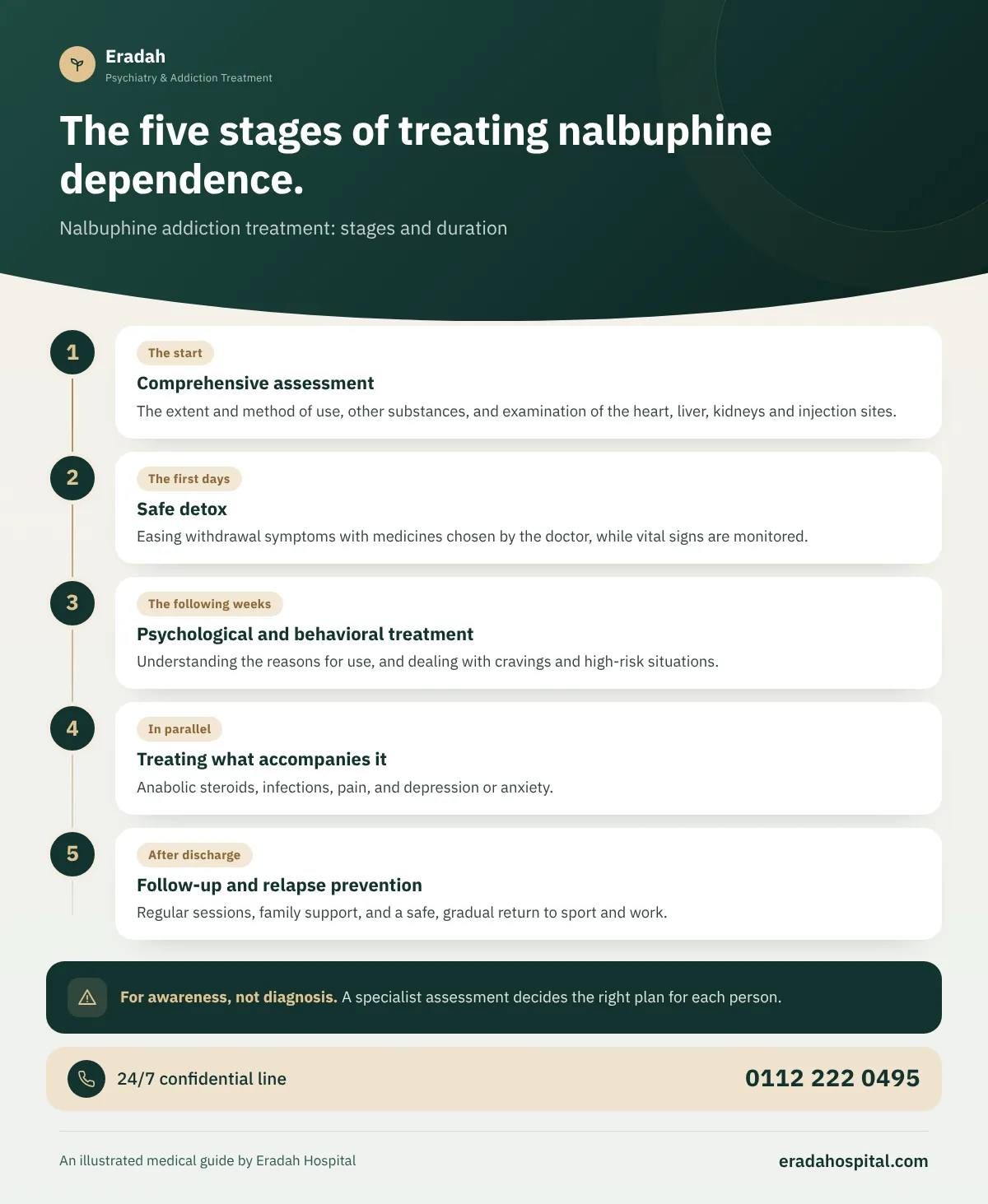
- The startComprehensive assessment
The extent and method of use, other substances, and examination of the heart, liver, kidneys and injection sites.
- The first daysSafe detox
Easing withdrawal symptoms with medicines chosen by the doctor, while vital signs are monitored.
- The following weeksPsychological and behavioral treatment
Understanding the reasons for use, and dealing with cravings and high-risk situations.
- In parallelTreating what accompanies it
Anabolic steroids, infections, pain, and depression or anxiety.
- After dischargeFollow-up and relapse prevention
Regular sessions, family support, and a safe, gradual return to sport and work.
Why does treatment start with an assessment?
Because the treatment plan varies a great deal depending on what the assessment finds. Someone who injects nalbuphine alone differs from someone who combines it with tramadol or sedatives, and someone who uses it for real pain differs from someone who started in a gym. MedlinePlus advises screening people going through opioid withdrawal for depression and other mental health conditions, because treating them lowers the risk of relapse, and among the tests that may be requested it lists liver function and tests for hepatitis C and HIV, because many people who use opioids are infected with them.
Nalbuphine withdrawal: the first step, not the last
The FDA label states that sudden stopping in someone who is physically dependent may cause withdrawal symptoms, so stopping is managed under supervision that monitors pulse, blood pressure, fluids and sleep. Symptoms are treated with medicines chosen by the doctor, such as medicines that ease anxiety, sweating and cramps, and others for vomiting, diarrhea and sleep.
Medicines used in treating nalbuphine addiction
MedlinePlus and NIDA describe the medicines used in treating opioid dependence in general. And because nalbuphine blocks mu receptors, choosing any of them and its timing is a delicate medical decision based on the assessment:
| Medicine | Its role |
|---|---|
| Symptom-relief medications | Such as clonidine to ease anxiety, sweating and cramps, along with medicines for vomiting, diarrhea and sleep. |
| Buprenorphine | Eases withdrawal and craving, and may be used for long-term maintenance. |
| Methadone | Eases withdrawal and craving, and is used for maintenance in specialized programs. |
| Naltrexone | Blocks the effect of opioids and helps prevent relapse after withdrawal is over. |
There are no large treatment studies specific to nalbuphine addiction in particular, so doctors rely on the principles of treating opioid dependence, taking into account its dual nature.
Psychological and behavioral therapy
Changes the expectations linked to the injection and trains people to manage stress and triggers.
Sharing the experience with others on the same journey.
Repairing trust and teaching the family how to support without stifling surveillance.
Safe exercise, regular sleep, and work or study that fills the free time.
NIDA notes that cognitive behavioral therapy helps change the patient’s expectations and behaviors linked to the drug and manage triggers and stress, and that behavioral therapies are more effective when combined with medications. You can read more about cognitive behavioral therapy.
Treating what accompanies nalbuphine: steroids, pain and infection
Studies have documented nalbuphine and anabolic steroids occurring together in gym-goers, and found a high rate of accompanying mental health disorders in them. So treatment needs to follow up on the steroids and their hormonal effects, deal with body image and performance-related pressures, test for hepatitis viruses and HIV in anyone who injected with shared equipment, and set an alternative pain plan if the pain is real.
How long does nalbuphine addiction treatment take?
| Stage | Approximate duration |
|---|---|
| Detox | Days, and longer if other substances are involved. |
| Intensive psychological rehabilitation | Weeks to months, depending on severity. |
| Follow-up and relapse prevention | At least several months after discharge. |
Residential treatment or outpatient treatment?
| Residential treatment | Outpatient treatment | |
|---|---|---|
| Suits | Daily injecting, combining with other substances, or previous relapses | Less intense use with strong family support |
| Advantage | A safe environment away from the source, and continuous monitoring | Continuing work and study |
| Challenge | Temporary time away from daily life | Triggers and sources stay close by |
Preventing relapse after nalbuphine treatment
Relapse is a possibility in any addiction, and preparing for it is part of treatment: knowing triggers such as the atmosphere of a particular gym or particular friends, a clear plan for what to do when cravings come, and regular follow-up sessions. Remember that tolerance falls after stopping, so going back to the old amount, especially with sedatives, can be fatal.
Nalbuphine addiction treatment at Eradah
Treatment at Eradah Hospital begins with a comprehensive assessment, then medical detox, then residential treatment or outpatient treatment depending on the severity of the case, with a plan for follow-up after recovery. The first consultation is free and confidential on 01122220495.