Physical signs of nalbuphine use
“He kept saying it was a muscle shot after training, until we started finding empty ampoules in every pocket.” Many families do not even know the name nalbuphine, so they treat the signs as athletic exhaustion. But these signs repeat in a clear pattern for those who know what to look for.
- Drowsiness and heavy eyelids shortly after the injection, which is its most common effect in clinical studies.
- Constricted pupils; the FDA label states that it narrows the pupils even in complete darkness.
- Sweating and cold, clammy skin, or nausea, dizziness and a dry mouth.
- Repeated puncture marks or bruises on the arms, thighs or buttocks.
- Redness, swelling or abscesses at the injection site.
Behavioral signs
The FDA label describes common “drug-seeking” behaviors in people with substance use disorder, and the family or doctor can notice many of them:
- Going to more than one doctor or pharmacy to get more.
- Repeatedly claiming the prescription was lost, or tampering with it.
- Urgently asking for injections at inappropriate times on the pretext of pain.
- Refusing examination, tests or referral to a specialist.
- Spending money out of proportion to income, or repeated unexplained borrowing.
- Getting ampoules from unofficial sources, as British reports have described.
Signs specific to gym settings
In the US study published in 1999, most participants described nalbuphine being widespread in the gyms they attend. So the signs may be linked to training: a gym bag with ampoules and syringes, an injection “after training” that becomes a daily habit, and talk of a “muscle painkiller” that no one knows who prescribed, along with rapid physical changes that may point to anabolic steroid use at the same time.
Psychological signs
- Irritability, tension and insomnia if the injection is late, then a sudden calm afterward.
- Mood swings between relief and distress, and withdrawal from family gatherings.
- Depression or loss of interest in things they used to love.
- Constant denial or justification such as “it’s medicine, not a drug.”
When the person using it is a healthcare worker
The DEA points to reports of nalbuphine misuse among healthcare workers because of their easy access to it. A French study in 2007 described a nurse who first came under suspicion after two ampoules went missing from the delivery ward, and a hair test then showed repeated nalbuphine use. Signs in the workplace include repeated stock shortages, a determination to be alone in medicine storage areas, and changes in performance and mood. The goal here is to protect the patient and the worker together through assessment and treatment, not punishment alone.
How do you tell nalbuphine use from other substances?
| Nalbuphine | Heroin | Tramadol | |
|---|---|---|---|
| Usual form | Ampoules and vials for injection | Powder that is snorted, injected or smoked | Mostly tablets |
| Source | A hospital medicine that leaks out of the medical channel | Illicit market | Pharmacies or the illicit market |
| Pupils | Constricted | Constricted | Usually constricted |
| Effect of combining with another opioid | May trigger acute withdrawal | Increases the effect and the risk | Increases the effect and the risk of seizures |
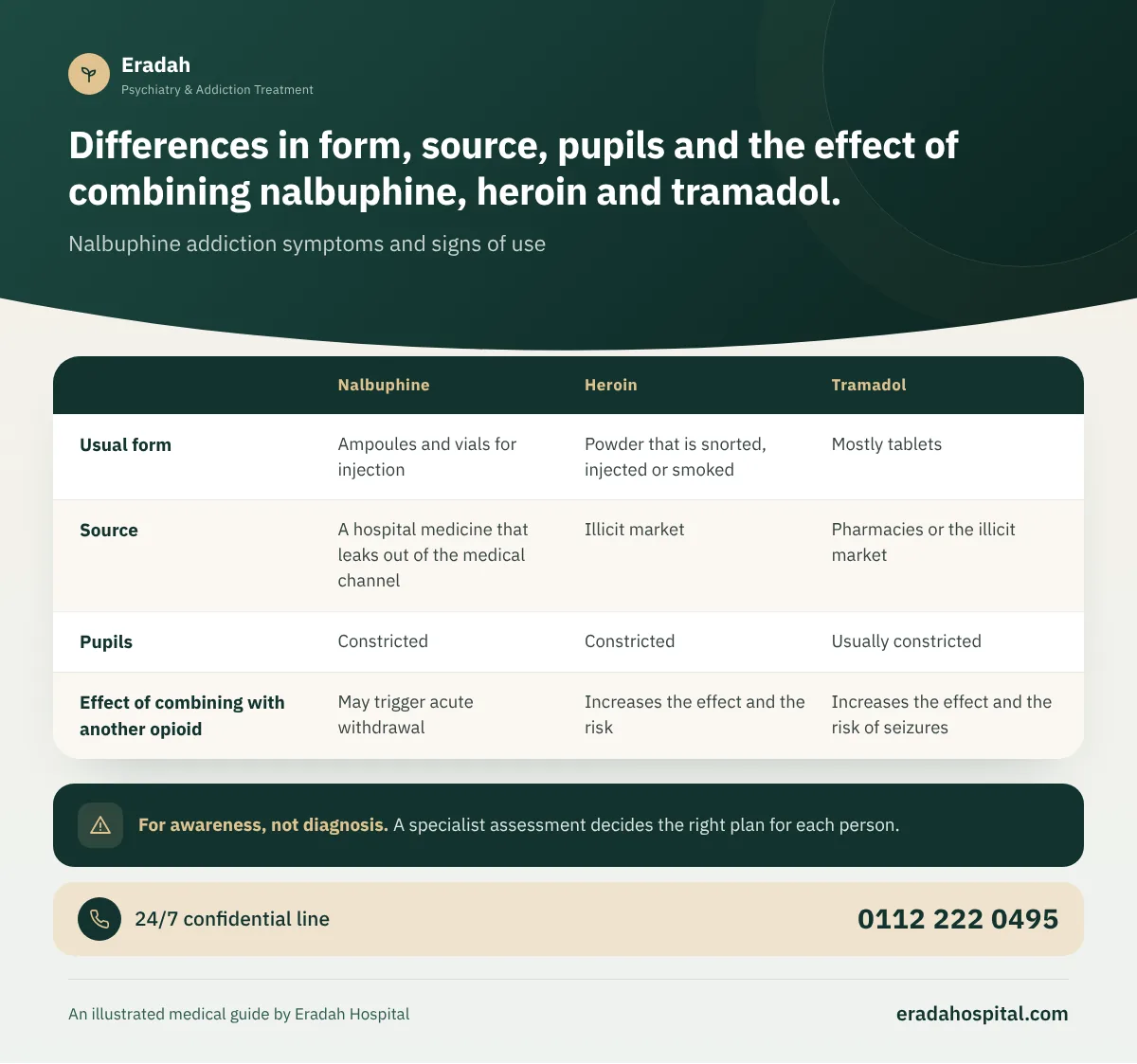
Remember that constricted pupils and drowsiness appear with many opioids, and that a person may combine more than one substance. So do not rely on a single sign, and also read about the general signs of drug use.
When is nalbuphine use an addiction?
The FDA label defines addiction as a group of behavioral, cognitive and physical phenomena, which may include:
- A strong desire to get nalbuphine.
- Difficulty controlling the amount or the number of injections.
- Continuing despite harm to health, family or work.
- Putting it ahead of work, study and other responsibilities.
- Tolerance, meaning needing more for the same effect.
- Withdrawal symptoms on stopping or cutting down.
In the US study, 8 of 11 users were clinically dependent on it, and 7 of those asked admitted to tolerance and withdrawal. The details of the symptoms on stopping are on the page about nalbuphine withdrawal symptoms.
Signs that call for emergency care immediately
Deep drowsiness in which the person does not respond to being called or touched.
Shallow or irregular breathing or strange snoring, especially with sedatives or alcohol.
Especially in someone with a history of epilepsy.
Vomiting, sweating and agitation after the injection in someone who uses other opioids.
How do you talk to someone who uses nalbuphine?
- Choose a quiet time when they are not under the effect or tense while waiting for the next injection.
- Start with the specific facts you have noticed, not with judgments and labels.
- Ask about pain, training and steroids; the problem may be wider than nalbuphine.
- Offer a doctor’s visit or a confidential consultation, and make clear that treatment is possible.
- If they refuse, ask for a consultation for the family itself, and read how to persuade a person with addiction to accept treatment.
Danger signs after using Nalufin: call an ambulance (123) immediately
- Severe drowsiness that makes it hard to wake the person, or loss of consciousness and no response to calling or touch
- Slow, shallow or irregular breathing, or unusual snoring during sleep
- Very small pupils, or blue lips and nails with cold, clammy skin
- Seizures, especially in someone with a history of epilepsy
- Vomiting, sweating, shaking and sudden agitation after the injection in someone who uses other opioids
Call an ambulance on 123 immediately. If the person is unconscious but breathing, place them on their side (recovery position) so they do not choke on vomit, stay with them and do not leave them alone, and do not give them food or drink. Tell the paramedics what the person took and any other substances used with it, such as sedatives, alcohol or tramadol, and keep the ampoule or packaging if you find it.
Call the ambulance 123