Why do Night Calm withdrawal symptoms happen?
Night Calm withdrawal symptoms are the price of adaptation. After weeks of nightly use, the brain gets used to a medication that strengthens the calming effect of GABA, so it lowers its own natural “brakes.” When the medication suddenly disappears, the brain stays for a while in a state of excess alertness.
The medication leaflet defines this adaptation as “physical dependence,” explains that it is different from addiction, and says it can appear with sudden discontinuation, rapid reduction, or a drop in the level of the drug in the blood. The risk rises with a higher dose, a longer duration, and the use of other psychoactive substances alongside it.
Night Calm withdrawal timeline
This is an approximate timeline of what may happen on sudden discontinuation after long daily use, which we do not recommend:
- The first and second nightRebound insomnia
Severe difficulty sleeping and frequent waking, with anxiety as the usual tablet time approaches.
- Within 48 hoursPhysical symptoms
Anxiety, unpleasant dreams, nausea and stomach upset, and sometimes sweating and tremor.
- The first weekEasing
The physical symptoms gradually ease, while sleep remains broken and lighter.
- The following weeksRebuilding sleep
Sleep improves gradually, especially with behavioral therapy for insomnia, though a few hard nights may remain here and there.
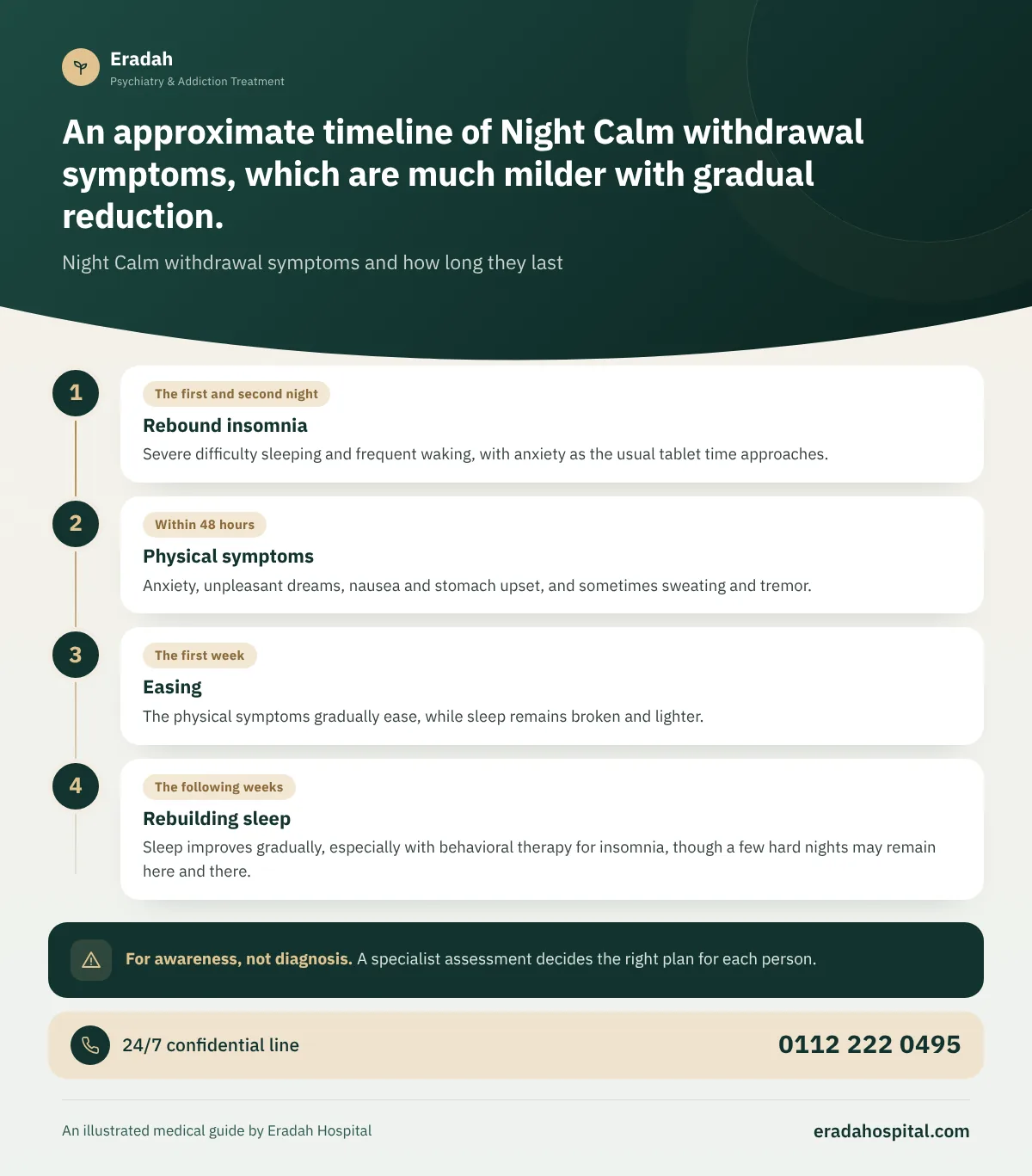
The 48-hour timing comes from the US medication leaflet. The other time frames are approximate and vary widely from person to person.
What are Night Calm withdrawal symptoms?
| Type | Symptoms |
|---|---|
| Sleep | Rebound insomnia worse than the original, and unpleasant or unusual dreams. |
| Psychological | Anxiety, tension and irritability, and preoccupation with thoughts of the medication. |
| Physical | Nausea and stomach upset, cramps in the stomach or muscles, sweating and tremor, and sometimes vomiting. |
| Rare and dangerous | Seizures, especially after high doses or when combined with sedatives or alcohol. |
These symptoms were compiled from the medication leaflet and the MedlinePlus encyclopedia. The leaflet states that clinical trials did not show a serious withdrawal syndrome, and that anxiety, abnormal dreams, nausea and stomach upset appeared within 48 hours of stopping in 2% or fewer of people.
Does everyone who stops Night Calm have withdrawal?
No. In short trials, symptoms were few. But the picture is different with long-term use: in a Japanese study in which people with insomnia took eszopiclone at the usual therapeutic dose for 24 weeks and then stopped abruptly, clinically significant withdrawal symptoms appeared in 8 of 76 patients who completed the study, about 10.5%, and they were more common in those who showed signs of problematic use and poor adherence to the dose. In other words, the pattern of use itself predicts how hard stopping will be.
Rebound insomnia or the original insomnia coming back?
The hardest part of Night Calm withdrawal is that its clearest symptom is insomnia itself, so the person thinks the medication was treating a permanent problem. The difference is that rebound insomnia is worst in the first nights and then gradually improves, while the original insomnia stays in its usual pattern and needs its cause treated. Knowing this difference stops many people from going back to the box on the third night.
Two or three nights of poor sleep after stopping a sleeping pill do not mean you will never sleep again. They mean your brain is relearning how to sleep on its own.
When is Night Calm withdrawal dangerous?
The risk is higher if the person uses doses far above the prescribed amount, combines it with Xanax or other sedatives, drinks alcohol, or has a history of seizures. In these cases the withdrawal from more than one substance can overlap, and stopping at home without supervision becomes a gamble.
How does medical supervision ease Night Calm withdrawal?
A gradual reduction plan set by the doctor according to the dose and duration, instead of stopping suddenly.
Sessions of behavioral therapy for insomnia begin before stopping, not after.
Telling withdrawal apart from the return of anxiety or depression, which needs its own treatment.
Closer supervision or a short stay if the medication is combined with alcohol or other sedatives.
You will find the full plan on the Night Calm addiction treatment page, and details of detox in the guide to medically supervised detox.
How can the family help someone going through Night Calm withdrawal?
- Expect hard nights at the start, and do not offer “half a tablet” to help them rest.
- Help them keep a fixed wake-up time, even after a bad night.
- Reduce noise and screens at night, and cut back on caffeine at home after the afternoon.
- Watch for any seizure or severe confusion and call ambulance (123) immediately.
- Remind them that temporary insomnia is part of the road, not proof of failure.
Danger signs after using Night Calm: call an ambulance (123) immediately
- Deep drowsiness from which the person cannot be woken by calling or shaking.
- Slow or weak breathing or unusual snoring, or blue lips.
- Severe confusion, agitation or hallucinations after taking a large number of tablets.
- Taking it with alcohol or an opioid painkiller such as tramadol, or with another sedative.
- An injury, fall or accident during sleep behavior the person does not remember.
Call ambulance (123) immediately and do not wait for them to “sleep it off.” If the person is unconscious but breathing, place them on their side in the recovery position, stay with them and watch their breathing until the paramedics arrive, and do not give them any sedative, stimulant or food. Tell the paramedics what they took, the approximate amount and the time, bring the medicine box if you find it, and tell them if the person also drank alcohol or took an opioid painkiller.
Call the ambulance 123