What are e-cigarettes (vapes)?
“I quit cigarettes and now I vape constantly, but I feel like I’m pulling on it even more than on the cigarettes.” This sentence sums up the confusion of many people: is vaping a way out of smoking or a new door to addiction? The answer depends on who uses it and why.
The World Health Organization defines e-cigarettes as systems that heat a liquid to form an inhaled aerosol; the liquid may or may not contain nicotine, but it contains no tobacco, and usually includes additives, flavorings, and chemicals that may harm health. The NHS explains that the liquid usually contains propylene glycol, vegetable glycerin, flavorings, and nicotine in varying concentrations. We present the picture of smoking in all its forms in the Smoking & Nicotine Addiction guide.
Vaping compared with an ordinary cigarette
| Ordinary cigarette | Vaping | |
|---|---|---|
| How they work | Burning tobacco and producing smoke | Heating a liquid and producing an aerosol |
| Nicotine | Always present | Present in most liquids, in varying concentrations |
| Tar and carbon monoxide | Present in large amounts | No combustion, but the aerosol contains toxic substances |
| Long-term harms | Known and well documented | Not yet fully known |
| Role in quitting | None | May help an adult smoker as part of a quit plan |
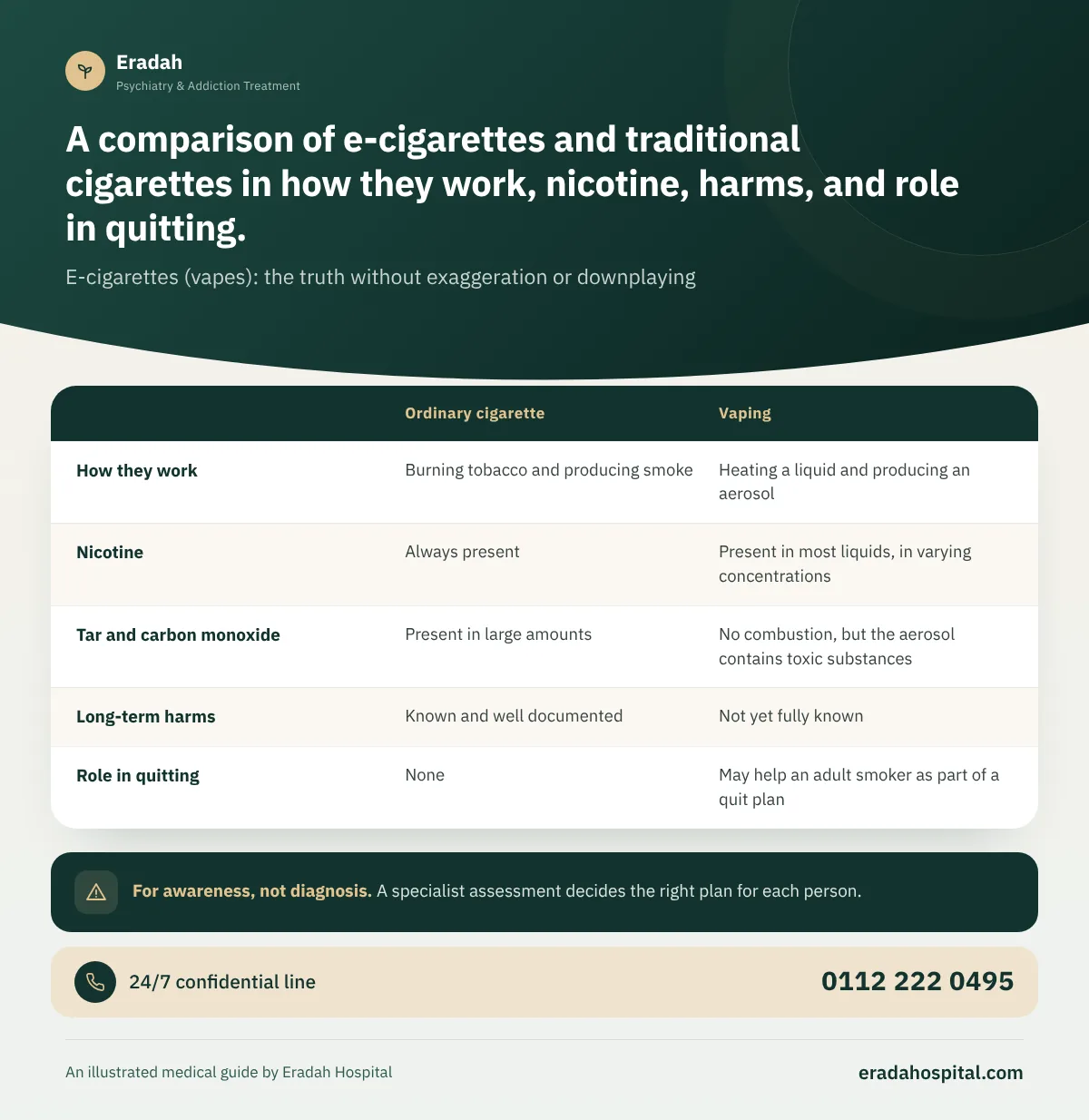
The NHS says nicotine is highly addictive but does not contain the toxic substances found in tobacco smoke, and that most of the harm from smoking comes from combustion. The World Health Organization, however, notes that vaping generates toxic substances, some known to cause cancer and some that raise the risk of heart and lung disease.
Harms of vaping: what do we know so far?
- Addiction: Nicotine is highly addictive and harmful especially to children, adolescents, and young adults whose brains are still developing, according to the World Health Organization.
- Lungs: Irritation, cough, and recorded cases of acute lung injury. In the 2019 outbreak in the United States, the CDC recorded 2,807 hospitalizations or deaths, including 68 deaths, mostly linked to THC-containing vape products from informal sources and the additive vitamin E acetate.
- Accidents: Burns from devices exploding or malfunctioning, especially those that do not meet standards or have been modified.
- Poisoning: A child swallowing the liquid, or it leaking from the device, is a serious risk.
- Aerosol on bystanders: The US National Cancer Institute (NCI) notes that vaping exposes those around to secondhand aerosol.
Do e-cigarettes help with quitting smoking?
This is disputed among health bodies. A Cochrane review updated in 2026, a living review of randomized trials, found with high-certainty evidence that nicotine-containing vapes raise quit rates compared with traditional nicotine replacement such as patches and gum, with a risk ratio of 1.61 in 11 studies involving 4,114 participants, which is about 4 additional quitters per 100. The NHS considers it one of the more effective tools for quitting.
By contrast, the World Health Organization says e-cigarettes as consumer products have not been proven effective for quitting at the population level, and recommends that countries where they are used for quitting first exhaust the proven aids and regulate them as medicines, not consumer goods. The practical bottom line: if you smoke and want to quit, start with the proven methods in the smoking treatment guide, and discuss with your doctor whether vaping has a temporary role in your plan, with the aim of stopping it too later on.
Vaping and teenagers: why is the concern greater?
The World Health Organization warns that e-cigarettes are aggressively marketed to young people through social media and influencers, with more than 16,000 attractive flavors, and that 88 countries set no minimum age to buy them. The NHS stresses that children and nonsmokers should never vape. Because the device is small, may look like a pen or USB drive, and leaves no smoke smell, parents may not notice it, and we explain its signs on the signs of nicotine addiction page.
Vaping, pregnancy, and the home
Nicotine passes to the fetus, and it is best for a pregnant woman not to use any nicotine product without consulting a doctor. At home, keep devices and liquids completely out of children’s reach, and do not charge batteries with non-original chargers or leave them charging overnight unattended.
How do you quit vaping itself?
- Identify why you use it: is it to quit cigarettes, or has it become a habit of its own?
- Reduce the nicotine strength gradually with a clear plan instead of stopping randomly.
- Watch for triggers: coffee, stress, and sitting with other users.
- Expect withdrawal symptoms such as irritability, difficulty concentrating, and insomnia in the first weeks.
- Ask for behavioral support, since combining support with helpful medications raises the chances of success.
At Eradah we offer a free, confidential first consultation for anyone who wants to quit nicotine, especially when it comes together with anxiety, depression, or other substance use, as part of outpatient treatment or dual diagnosis depending on the case.
Vape liquid poisoning or severe shortness of breath? Get help now
- A child swallowed vape liquid or had it on their skin in quantity, with vomiting, dizziness, drowsiness, or a seizure
- Severe shortness of breath, chest pain, or a persistent cough with fever after vaping
- Severe palpitations, fainting, or cold sweats
- Burns or injury from a device battery exploding
Remove the device and liquid immediately, wash the skin with water if the liquid touched it, and do not try to make the child vomit. Call the ambulance (123) or go to the nearest emergency room and bring the liquid container with you so the doctors know what it contains. If use is linked to severe distress or thoughts of self-harm, contact the mental health support line, 16328.
Ambulance 123 Mental health support line 16328