Signs of khat use during a session
Khat is hard to hide during a session, yet it is easily hidden in plain sight: families see a long gathering and a lot of talking, and do not connect it with a stimulant. The following signs usually appear during the hours of chewing:
- An obvious bulge in one cheek from stored leaves, and slow, continuous chewing.
- Talkativeness, enthusiasm, excess confidence, and exaggerated elation.
- Alertness and the ability to stay up late, with little sense of hunger or tiredness.
- Sweating and palpitations, and drinking a lot of fluids because of a dry mouth.
- A session that stretches for hours in the same place and with the same people.
Signs after the session
The Toxins review and the UK's FRANK service describe what follows once the effect wears off, which families often notice in the evening or the next morning:
- Lethargy, loss of energy, and a wish to be alone.
- Insomnia and trouble sleeping at night despite exhaustion.
- Disturbing dreams and a slight tremor in the hands.
- Low mood, or irritability and a short temper.
- Persistent loss of appetite and constipation.
Physical signs of regular chewing
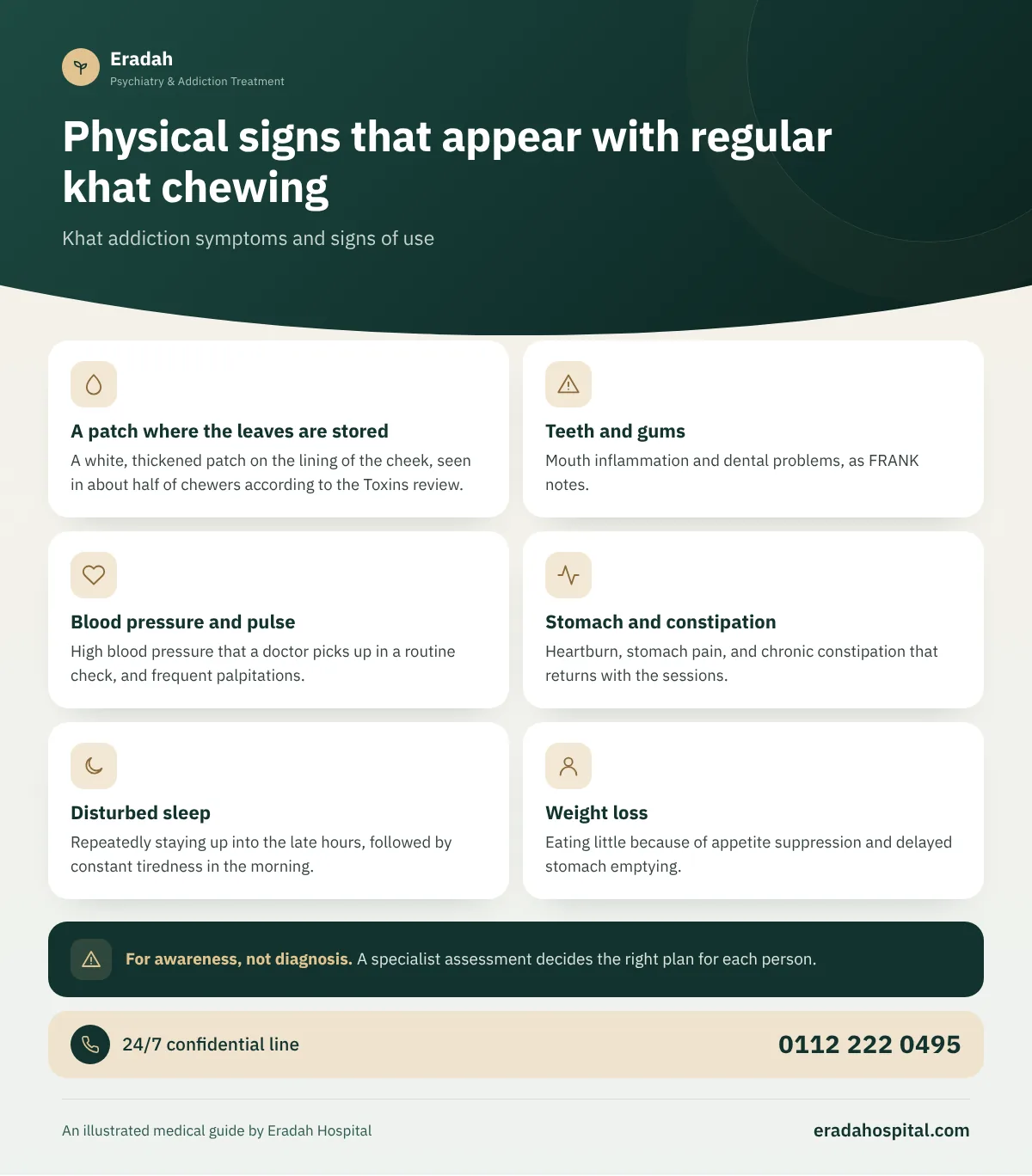
A white, thickened patch on the lining of the cheek, seen in about half of chewers according to the Toxins review.
Mouth inflammation and dental problems, as FRANK notes.
High blood pressure that a doctor picks up in a routine check, and frequent palpitations.
Heartburn, stomach pain, and chronic constipation that returns with the sessions.
Repeatedly staying up into the late hours, followed by constant tiredness in the morning.
Eating little because of appetite suppression and delayed stomach emptying.
Behavioral signs
- The session becomes a daily priority that appointments and work are arranged around.
- Regular unexplained spending, or asking for money with varying excuses.
- Frequent absence from home during session hours, or arriving late to work in the morning.
- Bundles of wrapped twigs and green leaves, or leftover leaves in the car or the room.
- Sharp defense of khat as “just a habit” or “not a drug” whenever it is discussed.
When is khat use an addiction? Diagnostic criteria
The same substance use disorder criteria in the DSM-5 diagnostic manual are applied to khat. A study of 400 khat users in Ethiopia, published in the journal Addiction in 2016, tested them and found they measure a real, coherent disorder similar to other substance use disorders. The Toxins review cites another study of khat chewers for the following rates for some of the criteria:
| Criterion | Share who reported it |
|---|---|
| Withdrawal symptoms when stopping | 94% |
| Continued use despite health problems | 93٫9% |
| Wanting to cut down or stop | 78٫8% |
| Chewing more than intended | 72٫7% |
| Tolerance and needing a larger amount | 66٫7% |
These are rates within a sample of users, not rates in the general population. Severity is counted by the number of criteria met within a year: two or three is a mild disorder, four or five moderate, and six or more severe, the same rule the US National Institute on Drug Abuse describes for stimulants in general.
How do khat signs differ from other substances?
| Substance | What usually distinguishes it |
|---|---|
| Khat | Bulging cheek and leftover leaves, long sessions, and a calmer effect followed by lethargy. |
| Amphetamine and Captagon | Staying up late and stronger energy with no leaves, tablets or powder, and more obvious irritability. |
| Crystal meth (shabu) | Days without sleep and rapid weight loss, with suspiciousness and hallucinations more common. |
| Hashish | Red eyes, increased appetite, and slowed movement, the opposite of khat's effect. |
Telling them apart precisely is a doctor's job; khat is often combined with smoking or other stimulants, and specialized testing may be needed because rapid tests do not always detect khat, as we explain in how long khat stays in the body.
Signs of khat use in young people and teenagers
The Toxins review notes that chewing often starts at a young age and then becomes a regular pattern. Watch for repeated late returns home with unusual late nights and little eating, new friends who gather for hours in one particular place, or a drop in school performance with constant morning exhaustion. An early conversation is far more helpful than waiting until the habit becomes part of the person's identity.
Why is help sought late?
In the same Addiction study, only about a third of people with khat use disorder had ever sought help in their lives, and nearly all of them turned to friends and relatives rather than a specialist. The social nature of khat makes the person the last to see the problem. For this reason the family may be the one to take the first step, and you will find practical guidance in how to persuade someone to get treatment.
What should you do if you notice these signs?
- Do not bring it up during a session; choose a calm time on another day.
- Note what you observe about sleep, money, absences, and health, without searching their things or shaming them.
- Suggest a blood pressure check and a mouth and dental exam; this is a health step many people accept.
- If unfounded suspicions, hallucinations, or talk of self-harm appear, seek an urgent psychiatric assessment.
- Offer a practical alternative, such as a confidential consultation or a supervised reduction plan, and find the options in khat addiction treatment.
Danger signs after using khat: call ambulance (123) immediately
- Chest pain or tightness, or a very fast or irregular heartbeat
- A sudden severe headache, weakness or numbness on one side of the body, or difficulty speaking
- Severe agitation or suspicions and hallucinations that push the person to harm themselves or others
- Fainting or seizures
- Thoughts of suicide or self-harm after stopping or during depression
Call ambulance (123) immediately. If the person is unconscious but breathing, place them on their side so they do not choke on vomit. Stay with them and do not leave them alone, do not give them food, drink or any medicine from the house, and tell the paramedics everything they took, especially if khat was taken with stimulants or other medications.
Call the ambulance 123