Physical signs of tramadol use
These signs appear while the drug is active, and they may differ from person to person depending on the amount and duration of use:
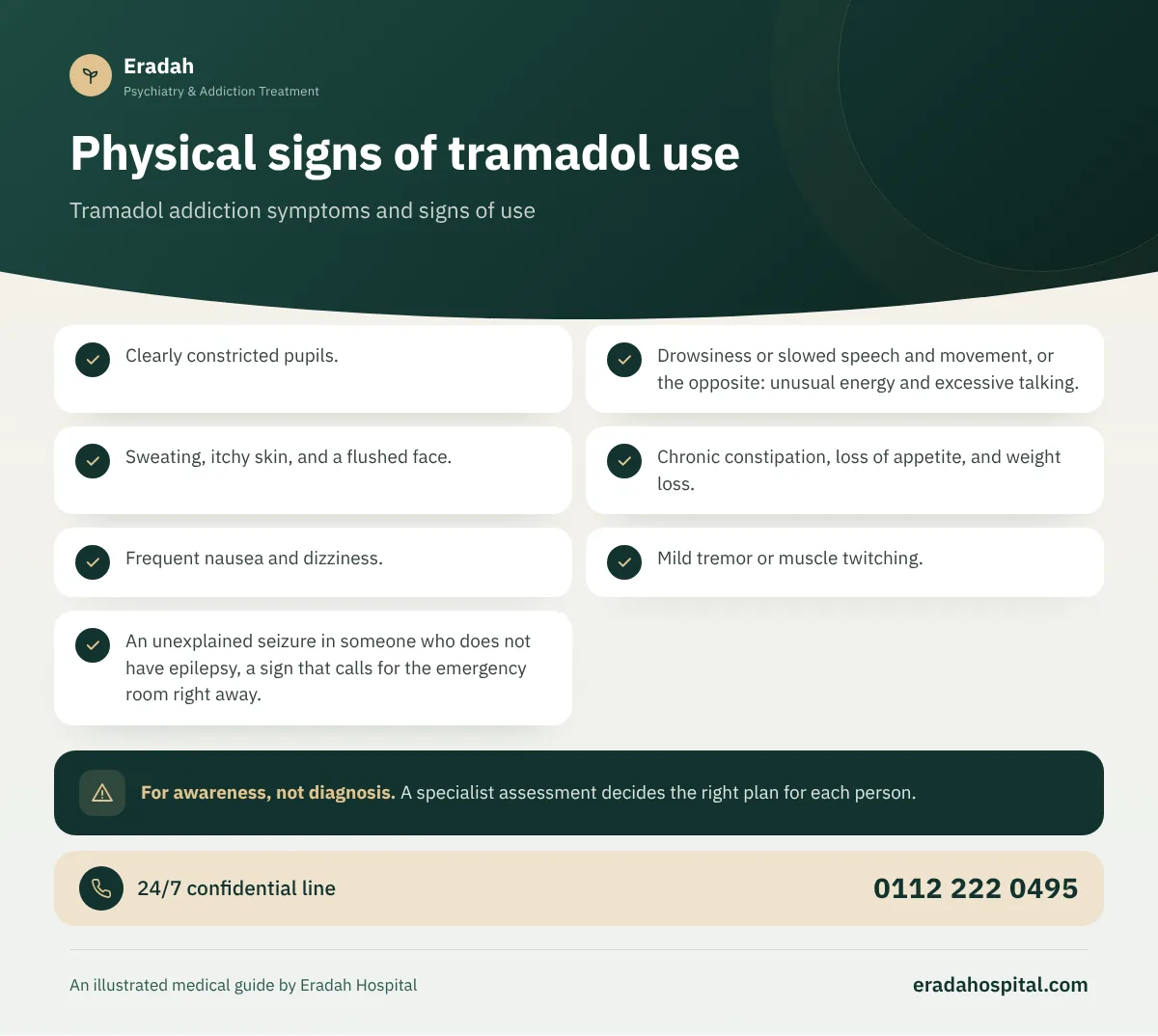
- Clearly constricted pupils.
- Drowsiness or slowed speech and movement, or the opposite: unusual energy and excessive talking.
- Sweating, itchy skin, and a flushed face.
- Chronic constipation, loss of appetite, and weight loss.
- Frequent nausea and dizziness.
- Mild tremor or muscle twitching.
- An unexplained seizure in someone who does not have epilepsy, a sign that calls for the emergency room right away.
Behavioral signs
Families and coworkers often notice behavioral changes before physical ones:
- Needing a “pill” to start the workday or to endure physical effort.
- Multiple prescriptions from more than one doctor, or going to different pharmacies.
- Keeping pills in scattered places, or many empty medicine strips.
- Asking for money often or spending that cannot be explained.
- Lying about pain or exaggerating it to get the medicine.
- Extreme irritability or falling apart when the pills run out.
- Neglecting work or family, and a change in usual friends.
Psychological signs
- Mood swings between excessive energy and confidence and depression and lethargy.
- Irritability and quick temper, especially near the time of the next pill.
- Loss of interest in hobbies and relationships.
- Constant anxiety and poor concentration and memory.
Signs that may show up at work or school
Because many people take tamol to cope with work, signs may appear first at work or school:
- A marked swing in performance between days of excess energy and days of lethargy and lateness.
- Dozing off or zoning out at work or while driving.
- Repeated minor accidents, or unusual mistakes in work the person does well.
- Sudden absence, especially on days when the pills run out.
- Declining grades or attendance in students, with unexplained late nights.
Things that may catch a family's attention
Finding certain things among a person's belongings can be an indicator worth noting, without being conclusive evidence: many empty medicine strips, pills without packaging or in unfamiliar packaging, multiple prescriptions from different doctors, or pills hidden in unusual places.
How do you tell tramadol use from other substances?
The signs of some substances are similar, but there are differences that help with observation, bearing in mind that confirmation comes only through medical assessment and testing:
| Substance | Pupils | Activity | Distinguishing sign |
|---|---|---|---|
| Tramadol | Constricted | Drowsiness or excess energy | Tremor or seizure, and sweating |
| Heroin | Very small | Severe drowsiness and dozing off | Sometimes injection marks |
| Pregabalin | Usually normal | Unsteadiness and dizziness | Slurred speech and loss of balance |
| Stimulants | Dilated | Hyperactivity and severe insomnia | Loss of appetite, irritability and staying up late |
A patient who takes tramadol by prescription: when should we worry?
Not everyone who takes tramadol is addicted; many take it for real pain under medical supervision. But there are signs that use has gone out of control:
- Continuing after the pain is over or after the period the doctor set.
- Increasing the amount or number of doses without consulting the doctor.
- Using it to improve mood, sleep, or energy rather than to relieve pain.
- Getting it from sources other than the pharmacy or the treating doctor.
Signs that call for emergency care immediately
Some of what you may notice in a person using tramadol cannot wait or be discussed, and needs an immediate ambulance:
Any seizure or fainting after taking tramadol, even if they regain consciousness quickly.
Difficulty waking them with slow or irregular breathing or bluish lips.
High temperature with heavy sweating, muscle stiffness, and confusion may mean serotonin syndrome.
In these cases, call the ambulance on 123 immediately, and tell them everything you know about the substances the person took.
When does use become addiction? Diagnostic criteria
Doctors use the criteria of the DSM-5 diagnostic manual to diagnose opioid use disorder, which include eleven criteria within a year, among them:
- Using in larger amounts or for longer than intended.
- A persistent desire, or failed attempts, to cut down.
- Spending a long time obtaining the drug.
- A strong craving for it.
- Neglecting responsibilities at work or at home.
- Continuing despite clear health or social problems.
Tolerance and withdrawal symptoms are not counted among the criteria in a patient who takes the medicine under proper medical supervision, because they are an expected physical adaptation and not addiction in themselves.
| Number of criteria | Level |
|---|---|
| 2 to 3 | Mild |
| 4 to 5 | Moderate |
| 6 or more | Severe |
How do you talk to someone who misuses tramadol?
- Choose a quiet time when they are not under the influence.
- Start with your concern and love, not accusation: “I've noticed you're tired and tense and I'm worried about you.”
- Do not argue with them that it is “just a painkiller”; focus instead on the changes you notice.
- Offer a clear step: seeing a doctor or a confidential consultation.
- Do not encourage them to stop suddenly on their own, especially if they mix it with other substances.
The symptoms that follow stopping are covered on the page on tramadol withdrawal symptoms.
Signs of tramadol overdose: call an ambulance (123) immediately
- Convulsions or a sudden epileptic seizure, even in someone who does not have epilepsy
- Very slow, irregular or stopped breathing
- Pupils that are extremely small, like pinpoints
- Blue lips and fingernails and cold skin
- Loss of consciousness, with no response to calling or touch
Call an ambulance on 123 immediately. If the person is convulsing, place them on their side away from hard objects, do not put anything in their mouth, and stay with them until help arrives. Emergency doctors use naloxone to reverse respiratory depression, while being ready to manage seizures.
Call the ambulance 123