Short-term harms of oxycodone
Some harms of oxycodone appear from the first days even with medical use, and then multiply when the amount increases, tablets are crushed, or it is mixed with other substances.
- Nausea, vomiting and headache, weakness and fatigue, as MedlinePlus notes.
- Drowsiness, confusion and slowed thinking that raise the risk of accidents, as NIDA notes.
- Constipation that becomes chronic with continued use, and small pupils.
- Difficulty sleeping in some people.
- Respiratory depression, the most dangerous of these effects.
Respiratory depression and lack of oxygen
MedlinePlus warns that oxycodone can cause serious or life-threatening breathing problems, especially in the first 24 to 72 hours of treatment and with each increase in dose. NIDA explains that slowed breathing can reduce the oxygen reaching the brain, a condition that can have short- and long-term psychological and neurological effects, including coma, permanent brain damage and death.
Why is crushing extended-release tablets dangerous?
Tablets such as OxyContin are designed to release the drug slowly over 12 hours. MedlinePlus warns that chewing, breaking, crushing or dissolving them can release the whole amount at once, causing serious problems including overdose and death. NIDA notes that some people who misuse them crush the tablets and snort or inject them, and that sharing injection equipment raises the risk of infectious diseases such as HIV.
Percocet and the liver: a double harm
The DEA notes that taking oxycodone combination products with acetaminophen adds a risk of liver toxicity with chronic misuse. Someone who raises the number of tablets to chase the effect of oxycodone raises the amount of acetaminophen without noticing, and may damage the liver before the signs of addiction are clear. The same applies to combination hydrocodone products such as Vicodin.
Counterfeit pills: a harm you do not expect
The CDC warns that illicit fentanyl is increasingly pressed into counterfeit pills that often look like oxycodone tablets, and that it cannot be seen, tasted or smelled. Someone who buys “oxy” from outside a pharmacy may be taking something far stronger than they think, and their breathing can stop from a single pill. Read about the harms of fentanyl.
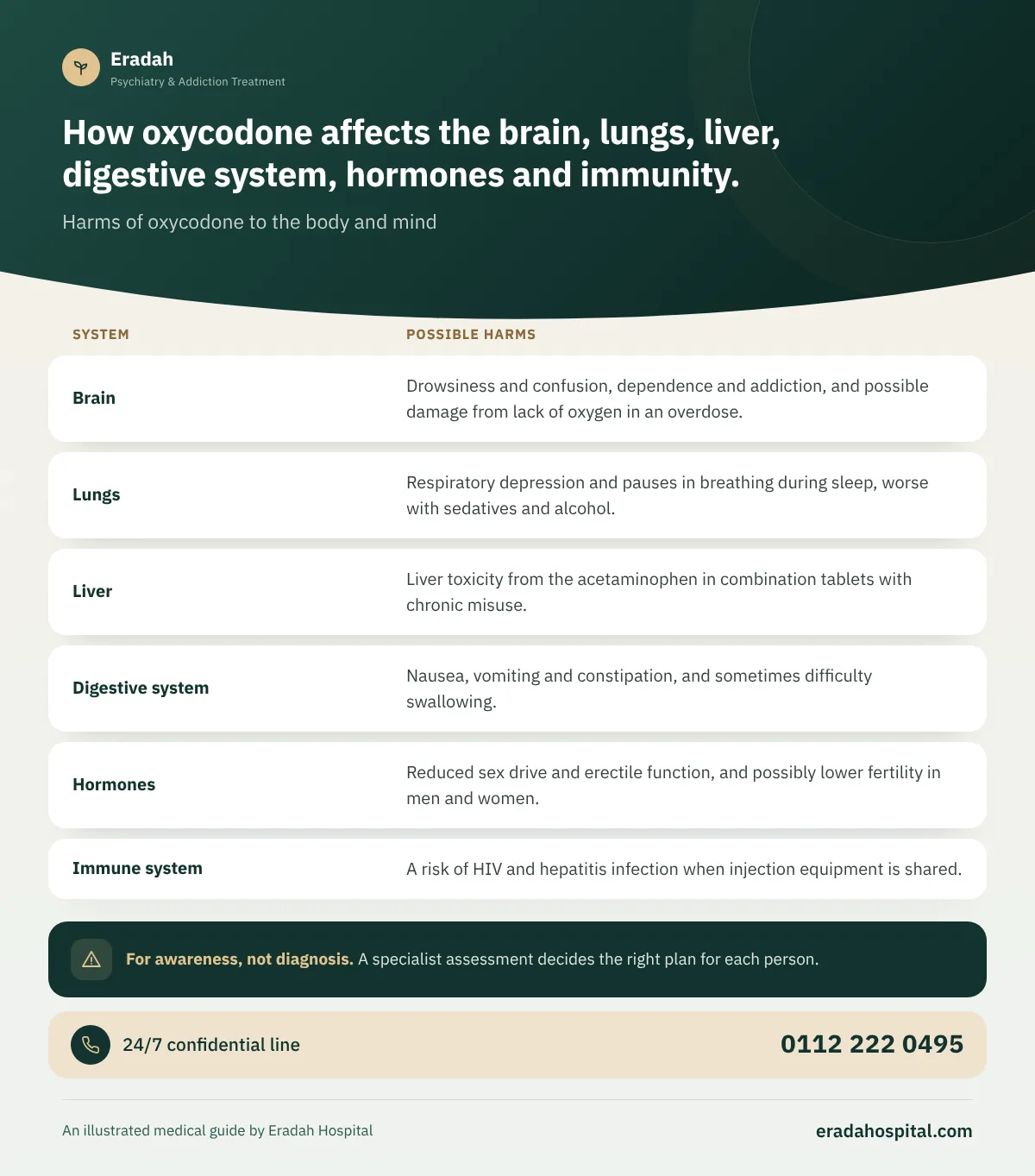
Harms of oxycodone to the body’s systems
| System | Possible harms |
|---|---|
| Brain | Drowsiness and confusion, dependence and addiction, and possible damage from lack of oxygen in an overdose. |
| Lungs | Respiratory depression and pauses in breathing during sleep, worse with sedatives and alcohol. |
| Liver | Liver toxicity from the acetaminophen in combination tablets with chronic misuse. |
| Digestive system | Nausea, vomiting and constipation, and sometimes difficulty swallowing. |
| Hormones | Reduced sex drive and erectile function, and possibly lower fertility in men and women. |
| Immune system | A risk of HIV and hepatitis infection when injection equipment is shared. |
When the painkiller becomes a cause of pain
MedlinePlus asks you to tell your doctor right away if you develop new pain, if pain increases, or if a light touch becomes painful during oxycodone treatment. These may be signs of increased sensitivity to pain caused by opioids, and the answer is to review the plan with the doctor, not to raise the dose on your own.
Psychological harms and the move to heroin
With continued use, use turns into dependence and then into a substance use disorder, and the world narrows around getting the tablets. NIDA notes that 2011 data indicated that 4 to 6% of people who misuse prescription opioids move on to heroin, and that about 80% of people who used heroin misused prescription painkillers first, while cautioning that more recent data show heroin has increasingly become the first opioid used. If dependence comes together with depression or anxiety, treatment needs dual diagnosis care.
Oxycodone and pregnancy
MedlinePlus warns that regular use of oxycodone during pregnancy can cause life-threatening withdrawal symptoms in the newborn. NIDA adds that using opioid painkillers in pregnancy may be linked to miscarriage and low birth weight, and that pregnant women who seek treatment have better outcomes than those who stop suddenly. That is why a pregnant woman should not stop the medication on her own, but see her doctor immediately.
Older adults and children
NIDA notes that older adults are more prone to accidental misuse because they take multiple medications, have chronic illnesses and slower metabolism. MedlinePlus warns that oxycodone can harm or kill someone who takes it without a prescription, especially children, which is why it should be kept in a safe place out of their reach.
Do oxycodone’s harms go away after stopping?
Most improve after stopping and treatment: sleep, appetite, hormones and mood gradually return. But brain damage from lack of oxygen or advanced liver damage may not fully go away, which is why early intervention is better. Treatment begins with a safe, supervised withdrawal, as in a detox program.
Danger signs after using oxycodone: call an ambulance (123) immediately
- Slow, shallow or stopped breathing, or long pauses and strange snoring during sleep
- Severe drowsiness and being unable to wake the person or get a response
- Pinpoint pupils, blue lips and nails, and cold, clammy skin
- A slow pulse and limp muscles
- Any deep drowsiness after a pill of unknown source, since it may contain fentanyl
Call an ambulance on 123 immediately. If the person is unconscious but breathing, place them on their side (recovery position) so they do not choke on vomit, stay with them and do not leave them alone, and do not give them anything by mouth. Tell the paramedics what they took and any sedatives or alcohol taken with it, and keep the packaging or the remaining pills.
Call the ambulance 123