What happens if generalized anxiety disorder is not treated?
Chronic anxiety does not usually disappear on its own; it fluctuates, easing at times and intensifying with stress. Over the years without treatment, a person adapts to a narrower life, and their body and relationships pay a cumulative price.
StatPearls describes the course of the condition without treatment as chronic and fluctuating, with repeated relapses and a decline in quality of life. This course changes a great deal with diagnosis and treatment.
- The first monthsFatigue and insomnia
The person lives in a state of alert, so sleep is disturbed, they tire quickly and their ability to concentrate falls.
- The first and second yearLife narrows
Avoidance of situations and responsibilities begins, and visits to doctors for physical complaints become frequent.
- In the long termAccumulated complications
The risk of depression and of dependence on sedatives or alcohol rises, and relationships and work are affected.
How does chronic anxiety affect the body?
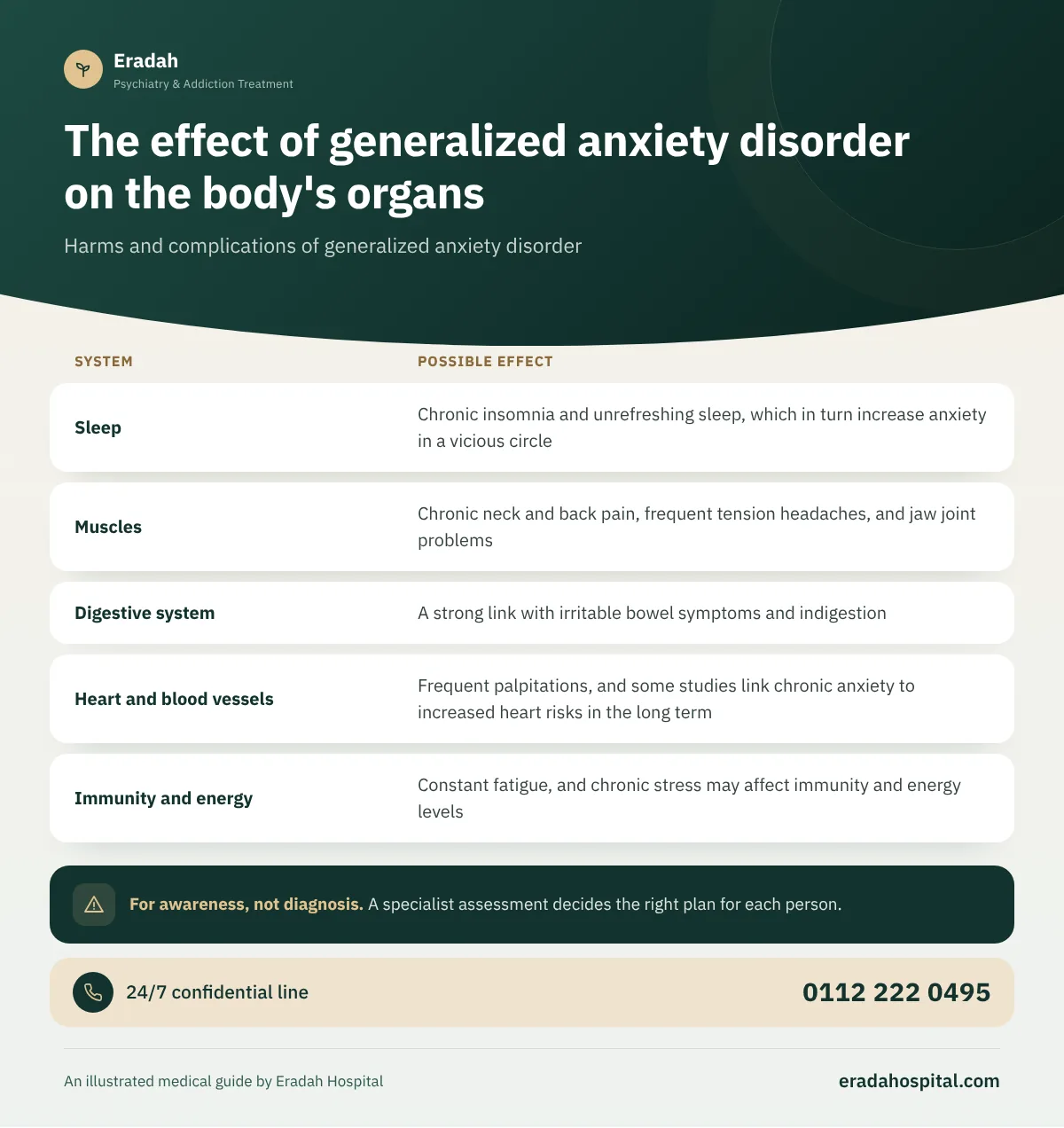
The body is designed to endure alertness for short periods, but constant alertness wears down many systems:
| System | Possible effect |
|---|---|
| Sleep | Chronic insomnia and unrefreshing sleep, which in turn increase anxiety in a vicious circle |
| Muscles | Chronic neck and back pain, frequent tension headaches, and jaw joint problems |
| Digestive system | A strong link with irritable bowel symptoms and indigestion |
| Heart and blood vessels | Frequent palpitations, and some studies link chronic anxiety to increased heart risks in the long term |
| Immunity and energy | Constant fatigue, and chronic stress may affect immunity and energy levels |
Does chronic anxiety lead to depression?
Yes, depression is the most common psychological complication. Living in constant anxiety wears a person down until they lose hope and energy, and the two disorders often occur at the same time. When they occur together the condition is more severe and needs a treatment plan that covers both.
Generalized anxiety may also be accompanied by other anxiety disorders, such as panic attacks or social phobia, and preoccupation with health may grow into health anxiety. Read about depression.
How does generalized anxiety affect work and study?
- Poor concentration and forgetfulness reduce productivity even with great effort.
- Indecision and procrastination for fear of error, or excessive checking until tasks are delayed.
- Frequent absences because of exhaustion and physical complaints.
- Avoiding promotions or new opportunities for fear of responsibility.
- In students: exam anxiety that hinders performance despite good study.
NIMH data show that most people with the disorder in a given year experience moderate or severe impairment in areas of life, which makes chronic anxiety one of the causes of declining performance that is often misunderstood as laziness.
How does generalized anxiety affect relationships and family?
A spouse and children live with the effect of anxiety every day: repeated questions, a need for reassurance, quick irritability, and attempts to control the details of others' lives to feel reassured about them. Over time family members may feel exhausted or frustrated, and the patient feels like a burden.
- With a partner: Tension and arguments because of overprotection, irritability, or less desire for shared activities.
- With children: Children may learn that the world is a dangerous place, or live under excessive restrictions.
- Socially: Gradual withdrawal from gatherings because of exhaustion or worry about surprises.
Does chronic anxiety have a financial cost?
Yes, often without anyone noticing. Repeated visits to different doctors, repeated tests and scans looking for a physical cause, painkillers and sleeping medication, and lost work days all add up. A correct, early diagnosis saves much of this spending.
Anxiety may also push some people into overly cautious financial decisions, or hasty ones under pressure, or into turning down better job opportunities for fear of the unknown, so they pay an indirect price in the long run.
Does anxiety push people toward sedatives, alcohol or cannabis?
This is one of the most serious complications. Sedatives in the benzodiazepine class, such as Xanax and Rivotril, relieve anxiety quickly, but with continued use they can cause physical dependence, and anxiety returns stronger when trying to stop. The same applies to pregabalin when used without medical supervision, and to alcohol and cannabis.
Is generalized anxiety linked to suicide risk?
Medical references indicate that anxiety disorders, especially when accompanied by depression or substance use, are linked to a higher risk of suicidal thoughts. This does not mean every anxious person is at risk, but it does mean that severe despair or talk of death should always be taken seriously.
Help is available and effective: if you have thoughts of hurting yourself, or notice them in someone close, call the mental health support line (16328), open around the clock, or the ambulance (123), or go to the nearest emergency room. Many people have reached this moment and moved past it with treatment and support.
What about generalized anxiety during pregnancy?
Anxiety may intensify during pregnancy and after childbirth, affecting the mother's sleep, comfort and ability to enjoy this stage. A mother here needs support, not an accusation of falling short. A pregnant or breastfeeding woman should not stop or start any psychiatric medication without consulting her doctor, as the decision weighs the benefits of treatment against its risks for her and the baby.
Can the complications of generalized anxiety be avoided?
- Seek an assessment early rather than waiting for it to “pass.”
- Treat accompanying depression or insomnia alongside the anxiety, not after it.
- Avoid using sedatives or sleeping pills without a prescription and follow-up.
- Limit alcohol and stimulants, and stay away from cannabis.
- Involve the family in understanding the condition and how to support.
- Stay with the treatment plan even after improvement to reduce relapse.
You can read about the available treatment options.
Suicidal thoughts or severe hopelessness along with anxiety? Get help now
- Talking about wanting to die or being a "burden" on those around them
- Severe hopelessness and a feeling that the anxiety will never end and there is no way out
- Suddenly saying goodbye to family or giving away things that are dear to them
- Complete withdrawal from people and work with severe sleeplessness for consecutive days
- Overusing sedatives or alcohol, or mixing them, in search of relief
Stay with the person and do not leave them alone. Listen calmly, without judgment or blame, and ask them directly about their thoughts; asking does not plant the idea, it opens the door to help. Keep medications and dangerous objects out of their reach as far as possible, and call the ambulance (123) or go to the nearest emergency room, or call the mental health support line 16328, available around the clock.
Ambulance 123 Mental health support line 16328