Why are you looking for a tramadol alternative?
“Without tramadol I can't even stand on my feet.” Many people started tramadol for real pain in the back, knee, or nerves, and then found they could not do without it. Asking about an alternative to tramadol is a legitimate question, and the answer is usually a plan to treat the pain itself, not “another pill.”
Tramadol is an opioid painkiller that is effective in certain situations, but it carries warnings about dependence, respiratory depression, and seizures, and it interacts with many medicines. For chronic pain in particular, current guidelines recommend starting with non-opioid options. The UK's National Institute for Health and Care Excellence (NICE) guideline on neuropathic pain does not recommend starting tramadol for long-term use and limits it to short-term rescue treatment when needed.
What does the evidence say about opioid alternatives?
In the SPACE randomized trial, published in JAMA in 2018, 240 patients with chronic back pain or knee or hip osteoarthritis were divided into two groups for 12 months: one received opioids, the other non-opioid medicines starting with paracetamol (acetaminophen) or anti-inflammatories. The result was that opioids were no better at improving daily function, while pain intensity was slightly lower in the non-opioid group and side effects were more common in the opioid group.
The 2022 guideline from the US Centers for Disease Control and Prevention likewise recommends carefully weighing the benefits and risks of each pain treatment option, and offering non-opioid treatments when they are appropriate.
Tramadol alternatives your doctor may choose
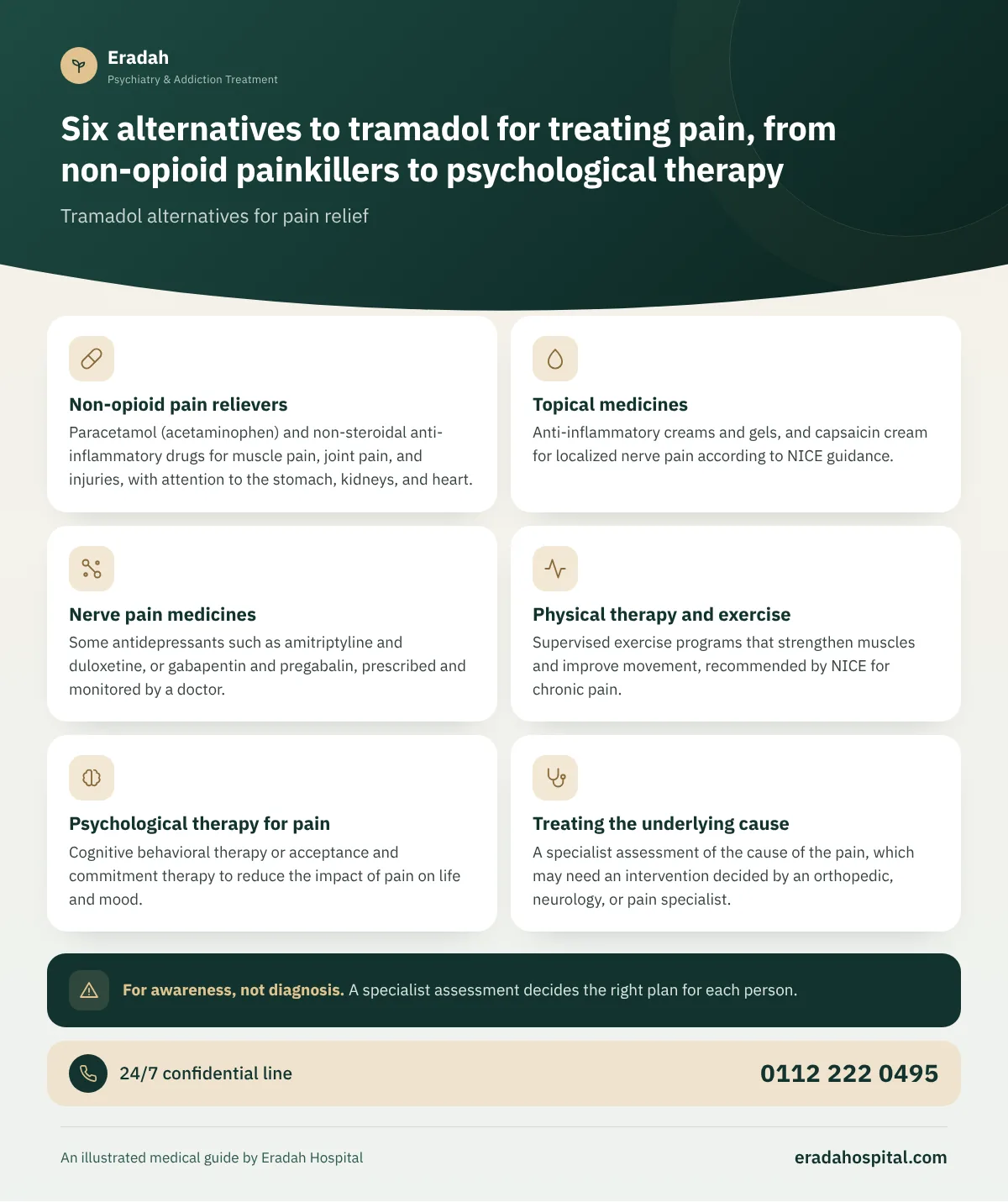
Paracetamol (acetaminophen) and non-steroidal anti-inflammatory drugs for muscle pain, joint pain, and injuries, with attention to the stomach, kidneys, and heart.
Anti-inflammatory creams and gels, and capsaicin cream for localized nerve pain according to NICE guidance.
Some antidepressants such as amitriptyline and duloxetine, or gabapentin and pregabalin, prescribed and monitored by a doctor.
Supervised exercise programs that strengthen muscles and improve movement, recommended by NICE for chronic pain.
Cognitive behavioral therapy or acceptance and commitment therapy to reduce the impact of pain on life and mood.
A specialist assessment of the cause of the pain, which may need an intervention decided by an orthopedic, neurology, or pain specialist.
The alternative depends on the type of pain
| Type of pain | What the doctor may consider |
|---|---|
| Muscle pain or acute injury | Non-opioid painkillers and relative rest, then gradual movement |
| Osteoarthritis and chronic back pain | Exercise and physical therapy, with non-opioid or topical painkillers |
| Nerve pain, such as diabetic neuropathy | Amitriptyline, duloxetine, gabapentin, or pregabalin as a starting point, according to NICE |
| Chronic primary pain with no clear cause | Group exercise and psychological therapy, and an antidepressant may be considered, according to NICE |
Notably, NICE guidance for chronic primary pain, such as widespread pain not explained by a specific disease, does not recommend starting opioids, anti-inflammatories, paracetamol, or gabapentin and pregabalin for it. It favors exercise and psychological therapy, with the possible use of some antidepressants after discussing the benefits and harms.
Do not replace one addictive substance with another
Some people turn to pregabalin or sedatives as a “milder alternative” to tramadol without supervision. But a systematic review published in 2017 noted growing reports of misuse of gabapentin and pregabalin, especially among people with a history of opioid addiction. Combining pregabalin with tramadol also multiplies the risk of respiratory depression. Nerve-pain medicines are useful treatment when a doctor prescribes them for the right kind of pain and monitors them, not a way to escape tramadol withdrawal.
If you are dependent on tramadol and have pain
- Tell the doctor honestly how much tramadol you take, for how long, and where you get it; this changes the plan.
- Do not stop suddenly on your own, because tramadol withdrawal can worsen pain and cause distressing symptoms.
- Ask for a plan that combines safe discontinuation with treatment of the real pain at the same time.
- Treat accompanying anxiety, depression, and insomnia, since they amplify the sensation of pain.
- If the dependence is severe, you may need a tramadol addiction treatment program with follow-up by a pain doctor.
Questions to ask your doctor
- What exactly is causing my pain, and does it need further tests?
- Is my pain muscular, joint-related, or nerve-related?
- Which non-opioid options suit me, and what are their side effects?
- Would physical therapy or an exercise program help me?
- Could psychological therapy help me cope with chronic pain?
- How will we track the result, and when do we change the plan?