Why is bipolar disorder divided into types?
The shape of the illness varies a great deal from person to person: some go through loud manic episodes that require hospitalization, and others never experience full mania but live through years of depression broken by short periods of activity. That is why medical classifications such as DSM-5 and ICD-11 divide the illness into types that help the doctor understand the case and set the right plan.
Identifying the type depends on the complete history of episodes, not on the state on a single day. A person may be diagnosed with bipolar II and later have a full manic episode, at which point the diagnosis changes to bipolar I.
What is the difference between the types of bipolar disorder?
| Type | High episodes | Depressive episodes | Key feature |
|---|---|---|---|
| Bipolar I | At least one full manic episode, which may come with psychosis | Common but not required for diagnosis | Mania can severely disrupt life and require hospitalization |
| Bipolar II | At least one hypomanic episode, and never full mania | At least one major depressive episode is required for diagnosis | Depression is the dominant face, and hypomania may go unnoticed |
| Cyclothymic disorder | Periods of hypomanic symptoms that do not meet full criteria | Periods of depressive symptoms that do not meet full criteria | Milder but chronic mood swings for at least two years in adults |
| Other specified types | High episodes that are shorter or have fewer symptoms than required | May be present | Conditions that resemble the illness but do not meet the full criteria |
| Caused by a substance, medication or medical condition | A mania-like state caused by a substance, medication or physical illness | May be present | Linked in time to the cause, and the cause must be assessed first |
What is bipolar I disorder?
A diagnosis of bipolar I requires at least one full manic episode, lasting a week or more for most of the day, or less if hospitalization is needed. Most people also have depressive episodes, but these are not required for the diagnosis.
In this type, mania may come with psychosis, such as delusions of grandeur or hearing voices, and the condition may reach the point of needing to protect the person from his own decisions. It is the type people most often call “manic depression.”
What is bipolar II disorder?
Bipolar II is diagnosed when there has been at least one hypomanic episode and at least one major depressive episode, without a full manic episode ever occurring. Hypomania lasts at least four consecutive days and is noticed by others, but it does not severely disrupt life and is not accompanied by psychosis.
People with bipolar II are often diagnosed with depression alone for years, because they seek help during depression and do not mention the periods of activity when they felt at their best.
What is cyclothymic disorder?
Cyclothymic disorder, also called “cyclothymia,” is a chronic condition of mood swings between periods of hypomanic symptoms and periods of depressive symptoms, without the criteria for a hypomanic episode or a major depressive episode being fully met. It must last at least two years in adults, and one year in children and teenagers, with no long symptom-free stretches.
The person may seem “moody by nature,” but these swings cause real suffering and affect relationships and work, and in some people they may later develop into bipolar I or II. They therefore deserve follow-up, not dismissal.
What are the other specified and unspecified types?
Doctors use this label when there are clear symptoms from the bipolar spectrum that cause distress but do not quite fit the previous types. Examples include:
- Hypomanic episodes shorter than four days that recur alongside depressive episodes.
- Hypomanic episodes with fewer symptoms than required.
- A hypomanic episode without a previous major depressive episode.
- Mood swings resembling cyclothymia but shorter than the required duration.
There is also “substance- or medication-induced bipolar disorder,” when mania-like symptoms appear because of stimulants or cortisone, for example, and “bipolar disorder due to another medical condition,” such as some thyroid or brain disorders.
What do rapid cycling and mixed features mean?
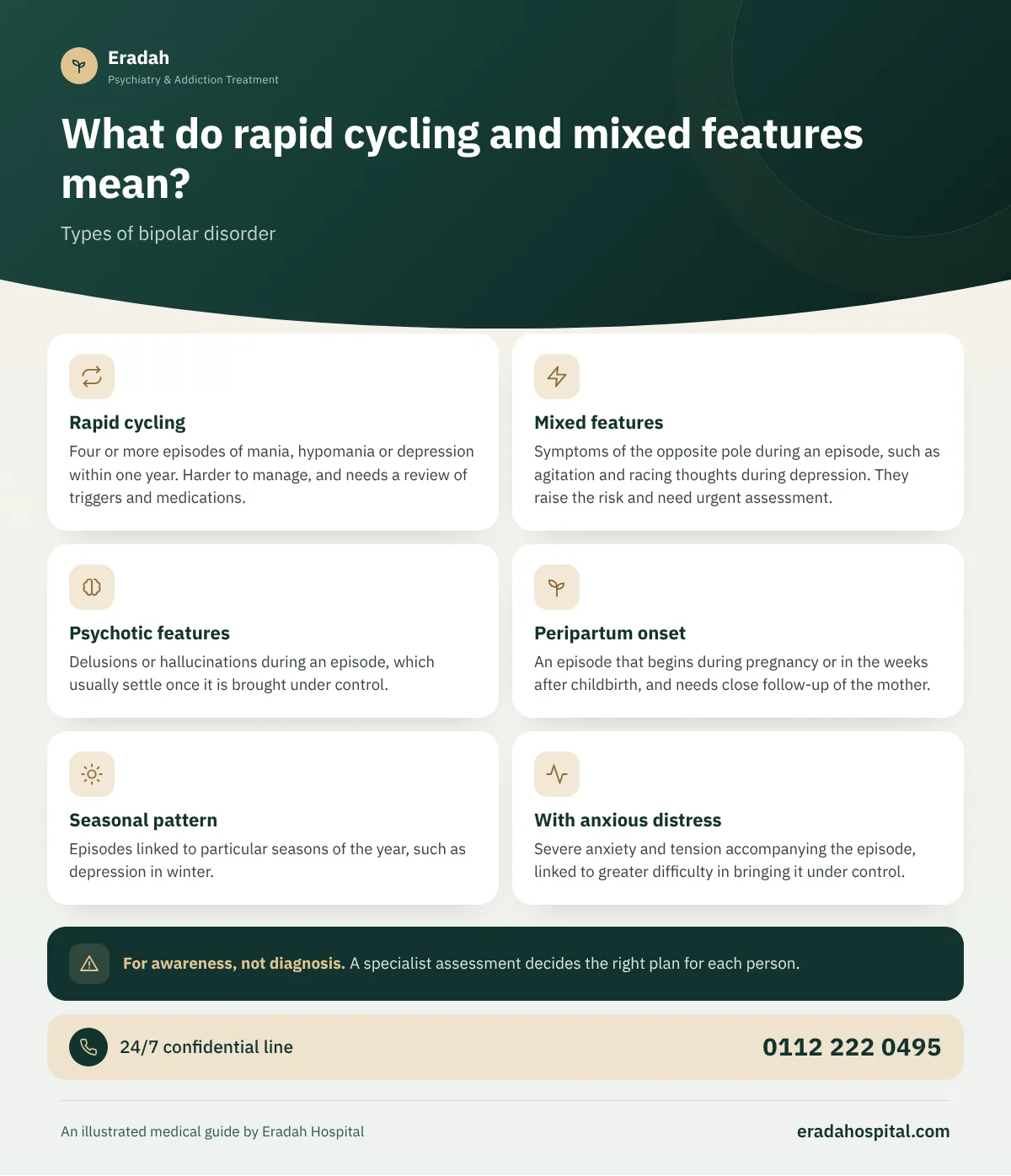
These are “specifiers” the doctor adds to the type to describe the shape of the illness more precisely, not separate types, because they affect the choice of plan and the extent of follow-up:
Four or more episodes of mania, hypomania or depression within one year. Harder to manage, and needs a review of triggers and medications.
Symptoms of the opposite pole during an episode, such as agitation and racing thoughts during depression. They raise the risk and need urgent assessment.
Delusions or hallucinations during an episode, which usually settle once it is brought under control.
An episode that begins during pregnancy or in the weeks after childbirth, and needs close follow-up of the mother.
Episodes linked to particular seasons of the year, such as depression in winter.
Severe anxiety and tension accompanying the episode, linked to greater difficulty in bringing it under control.
Which types of bipolar disorder are more dangerous?
There is no “safe” type, and each has its own risks. Bipolar I can cause acute crises and destructive decisions during mania, bipolar II can steal years through prolonged depression, and cyclothymic disorder may be overlooked until it develops. The type alone does not determine the outlook; what matters most is early diagnosis, regular follow-up and staying away from drugs.
Can the type change over time?
Yes. The illness may begin with a depressive episode, so the person is diagnosed with depression, and then a hypomanic episode appears and the diagnosis changes to bipolar II, or a full manic episode appears and it becomes bipolar I. That is why the doctor reviews the diagnosis whenever new information appears, helped by mood diaries and the family’s observations. Learn the steps in the page on how the assessment is done.