Why is OCD one of the most disabling disorders?
Because OCD does not just bother the person; it takes over their time, energy and decisions. An hour in the bathroom, an hour of checking, an hour of mental reviewing, and over the days what is left for life itself shrinks.
World Health Organization estimates have ranked OCD among the conditions that cause the most disability and loss of quality of life, and the vast majority of patients also have another mental disorder at some point, which multiplies the burden.
How does OCD steal time and energy?
Exhaustion in OCD is not only physical; constant resistance to thoughts and mental checking drain concentration, so the patient feels tired before the day begins, and puts off tasks because they know each task will take many times as long.
How does OCD affect school and work?
- Slow completion of tasks: rereading, rewriting and reviewing until it is “perfect.”
- Repeated lateness: because of morning rituals or checking before leaving home.
- Falling grades: despite intelligence, because the exam may not be finished due to redoing answers.
- Avoiding jobs or places: such as hospitals or restaurants in people with contamination OCD.
- Losing a job or leaving school: in severe cases that consume most of the day.
How does OCD affect marriage and relationships?
At home, rituals often turn into rules that everyone lives by: the husband or wife is required to take off their clothes a certain way, not touch certain things, or answer the same questions again and again. Over time the partner becomes exhausted and angry, the patient feels guilty, and repeated arguments may threaten the stability of the relationship.
The emotional and intimate side can also be affected, especially in people with contamination obsessions or intrusive thoughts, so the patient pulls away from their partner without being able to explain why. Here, involving the partner in understanding the illness and treatment is an important protective step.
How are family members and children affected?
The International OCD Foundation calls family participation in rituals “family accommodation,” and its forms include: joining in washing or checking, answering reassurance questions, changing household routines, and cutting work hours or giving up activities to stay with the patient.
- Children: may live in a home ruled by strict rules, or learn patterns of anxiety and avoidance.
- Siblings: may feel neglected because the family's attention is all directed to the patient.
- Caregivers: are at risk of exhaustion, anxiety and depression from the constant burden.
Does OCD have physical harms?
| Harm | How it happens |
|---|---|
| Skin inflammation and cracking | Excessive washing and using strong disinfectants and cleaners on the hands and body |
| Sleep disorders | Long nighttime rituals and constant thinking delay and interrupt sleep |
| Nutrition problems | Some patients avoid foods or eating places they consider contaminated |
| Neglecting health care | Avoiding hospitals and tests for fear of contamination, so other illnesses are treated late |
| Muscle aches and headaches | Chronic tension and resisting thoughts for long hours |
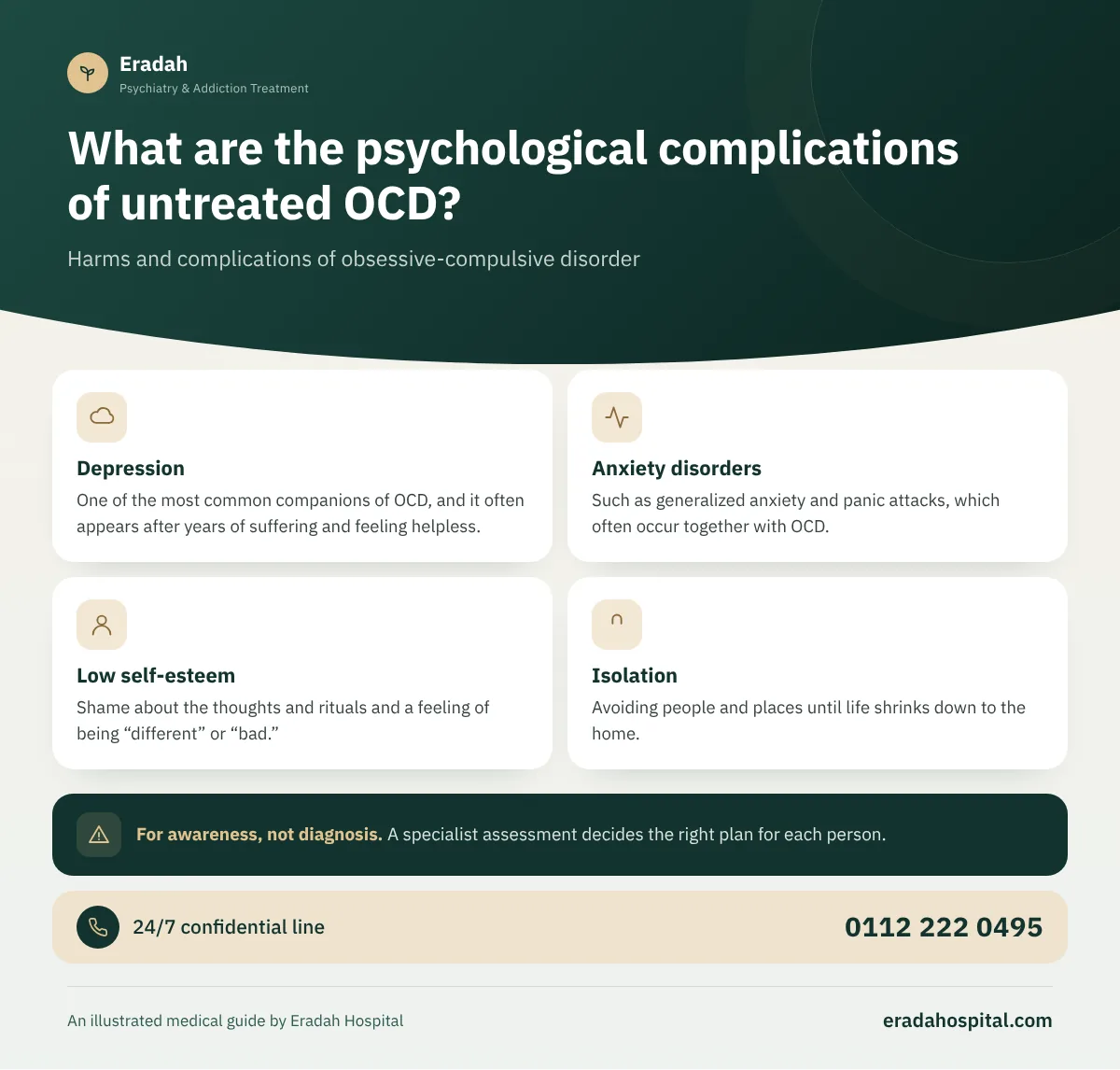
What are the psychological complications of untreated OCD?
One of the most common companions of OCD, and it often appears after years of suffering and feeling helpless.
Such as generalized anxiety and panic attacks, which often occur together with OCD.
Shame about the thoughts and rituals and a feeling of being “different” or “bad.”
Avoiding people and places until life shrinks down to the home.
Does OCD increase the risk of suicidal thoughts?
Research indicates that the risk of suicidal thoughts rises in some people with OCD, especially when depression comes with it, after many years of severe symptoms without treatment, or when the patient feels helpless and hopeless about improving. These thoughts are a sign of great pain, not of weakness.
And the hope is real: treating the OCD and the accompanying depression clearly eases these thoughts. If you or someone you know has thoughts of death or self-harm, call the mental health support line (16328), available around the clock, or an ambulance (123) if the danger is imminent.
Do people with OCD turn to drugs?
The link with addiction is weaker in OCD than in other anxiety disorders, but it exists. Some patients turn to alcohol or sedatives to ease the anxiety that comes with the thoughts, or to numb themselves after a tiring day of rituals, and over time this can turn into dependence that deepens depression and complicates treatment. If that happens, the doctor must be told honestly so they can treat both problems together.
How does religious OCD harm the patient's spiritual life?
One of the cruelest forms of OCD is the one that attacks the relationship with worship: the patient may spend hours on ablution or repeating prayers, or avoid prayer and going to the mosque or church for fear of not performing it “correctly,” or live in constant guilt over thoughts they do not want. Instead of being a source of peace, worship becomes a source of torment. This is a symptom of an illness that needs treatment, and it has nothing to do with religion.
Can the complications of OCD be avoided?
Yes. The earlier treatment starts, the less the patient loses of their time, studies, work and relationships, and the less likely depression is to appear. Treatment with exposure and response prevention and suitable medication can break the cycle even after many years.
- Don't wait for OCD to reach hours a day before consulting a psychiatrist.
- Talk to the doctor honestly about the content of your thoughts however embarrassing; they have heard many like them.
- Watch for persistent sadness or loss of hope and seek help quickly.
- Don't turn to alcohol or sedatives without a prescription to ease anxiety.
- Involve your family in understanding the illness so they can support you in a way that doesn't feed the OCD.
Suicidal thoughts or danger to self? Get help now
- Talking about death or saying that life with OCD is “unbearable”
- Severe despair and a conviction that things will never get better
- Complete isolation, or giving up eating or sleeping because of rituals or fear
- Saying goodbye to family or writing farewell messages
- A sudden change to strange calm after a period of intense suffering
Stay with the person and listen calmly without blame, and don't dismiss what they say. Call an ambulance (123) or go to the nearest emergency room if the danger is imminent, contact the mental health support line 16328, and keep medications and dangerous objects out of their reach.
Ambulance 123 Mental health support line 16328