What happens if schizophrenia is left without follow-up?
Doctors call the period between the onset of psychosis and the start of treatment the duration of untreated psychosis, and studies link a longer duration to worse outcomes: slower response, more residual symptoms, and greater difficulty returning to study and work. In many countries, including ours, this period can stretch to months or years because of stigma and fear.
Each new relapse can also leave a mark: a longer time to improve, losses at work or in study, and more tension within the family. That is why relapse prevention is a basic part of reducing harm, and not only treating the current episode.
Source: World Health Organization, Schizophrenia fact sheet.
How does schizophrenia affect physical health?
It may seem strange that a mental illness shortens life, but the causes are mostly physical and preventable. The illness itself reduces attention to health, negative symptoms reduce activity, some medications cause weight gain, smoking is very common among patients, and doctors sometimes do not take their physical complaints seriously enough.
| Problem | Why does it happen? |
|---|---|
| Heart and blood vessel disease | Smoking, inactivity, obesity and abnormal blood fats, which are the leading cause of early death among them. |
| Diabetes and metabolic syndrome | Weight gain and lifestyle, and the effect of some antipsychotics on blood sugar and fats, which is why regular tests are needed. |
| Lung disease | Smoking rates far higher than in the general population, with greater difficulty quitting. |
| Teeth and mouth | Neglect of personal care, and the dry mouth that some medications cause. |
| Infections and neglect | Delay in seeking physical treatment, or being unable to describe pain and complaints clearly. |
How does schizophrenia affect thinking and mood?
Besides psychotic symptoms, many patients suffer from depression and anxiety, especially after the first episode, when the person realizes what they have been through and fears for their future. Cognitive difficulties with concentration and memory may continue, hindering learning and work even after the hallucinations have calmed.
Many people also live with what is called self-stigma: they believe the negative image society paints of the illness, so they stop trying and lower their dreams. This effect is no less harmful than the symptoms themselves, and it can be eased through rehabilitation, support and meeting people who have recovered.
How does schizophrenia affect study and work?
Schizophrenia often begins at the age when a young person is completing their education and starting work, which is why its effect on a career path is large. They may drop out of university, or lose their job through absences, difficulty concentrating or misunderstandings with colleagues. Returning gets harder the longer the break.
But global experience shows that many patients are able to work, especially with supported employment programs that help them find a suitable job and stay in it, and with flexibility in hours and tasks at the start.
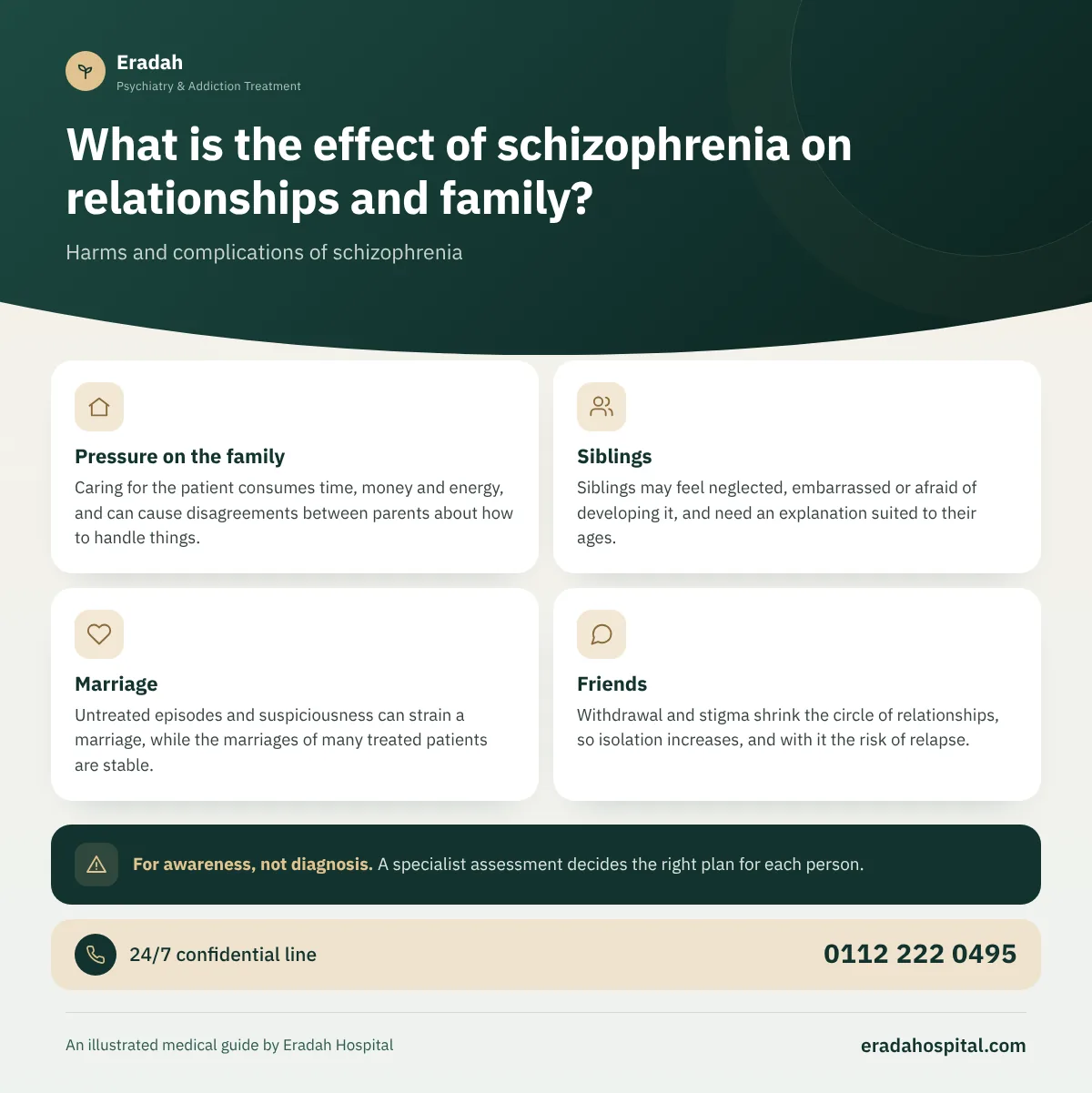
What is the effect of schizophrenia on relationships and family?
Caring for the patient consumes time, money and energy, and can cause disagreements between parents about how to handle things.
Siblings may feel neglected, embarrassed or afraid of developing it, and need an explanation suited to their ages.
Untreated episodes and suspiciousness can strain a marriage, while the marriages of many treated patients are stable.
Withdrawal and stigma shrink the circle of relationships, so isolation increases, and with it the risk of relapse.
In our society, mothers often carry the largest share of the caregiving, with the exhaustion and chronic worry that come with it. That is why supporting the family itself, through education and counseling, is part of preventing complications.
Are people with schizophrenia more likely to be harmed?
Yes. Evidence indicates that people with schizophrenia are more likely to be victims of violence, theft and exploitation than the general public, because of isolation, difficulty defending themselves and sometimes poverty. They may also face bullying in the street or at work, or financial exploitation by those around them.
Aggressive behavior, on the other hand, is linked mainly to lack of treatment during an acute episode, to alcohol and drug use, and to a prior history of violence, not to the diagnosis itself. The UK's National Health Service (NHS) stresses that most people who go through psychotic episodes pose no danger to others.
Why does the risk of addiction rise with schizophrenia?
A large share of people with schizophrenia use tobacco, cannabis, alcohol or other substances, sometimes to ease anxiety, boredom or side effects. But these substances increase relapses, weaken the effect of treatment and raise the risk of violence and suicide. This subject is central to Eradah's work, and we explain it on the page about schizophrenia and addiction.
Is schizophrenia linked to a risk of suicide?
Yes, the risk of suicide in people with schizophrenia is higher than in the general population, and rises at particular times: the first years after diagnosis, the weeks following discharge from hospital, and with accompanying depression, command voices, drug use, and a sense of hopelessness about the future.
Regular treatment, careful follow-up after leaving the hospital, treating accompanying depression, staying away from drugs, and having someone close to talk to are all real protective factors. And hope is not just a general phrase; many people who have had these thoughts went on to live stable lives.
What is the effect of schizophrenia on pregnancy and after birth?
Pregnancy is possible for many women with schizophrenia, but it needs advance planning with the psychiatrist and the obstetrician. A relapse during pregnancy or after birth can affect the mother's care of herself and her baby, and the postpartum period in particular is a sensitive time. Treatment must not be stopped suddenly when pregnancy is discovered; instead the doctor should be consulted immediately to weigh benefits against risks.
Can the complications of schizophrenia be avoided?
- Reaching a psychiatrist early at the first signs of psychosis, and not waiting for the person to "come to their senses on their own."
- Staying on treatment and not stopping it without consulting the doctor, even when things improve.
- Regularly monitoring weight, blood sugar, blood pressure and blood fats, and quitting smoking.
- Staying completely away from cannabis, stimulants and alcohol.
- A written plan for the signs of relapse that the patient and family both know.
- Rehabilitation and supported employment programs that return the person to their role gradually.
Details of the medication and rehabilitation options are on the page about schizophrenia treatment.
Acute psychotic episode or suicidal thoughts? Get help now
- Hearing voices that command the person to harm themselves or others, or acting on them
- Severe agitation, threats, or behavior that puts them or those around them in danger
- Stopping eating, drinking or sleeping for days, or severe neglect that threatens their health
- Talking about wanting to die or end their life, or saying goodbye and giving away their belongings
- Stiffness, rigidity and no response to speech, or sudden confusion and severe disorientation with fever
Stay with the person and don't leave them alone, speak in a calm voice and short sentences, and don't argue with the voices or ideas or mock them. Move dangerous objects out of reach as far as possible without confronting them, and call an ambulance on 123 or go to the nearest emergency room. You can call the mental health support line on 16328 around the clock for advice.
Ambulance 123 Mental health support line 16328