Is all sadness depression?
“Ever since I left my job I've felt down, but I still laugh with my kids.” And: “For two months I haven't felt anything, not even the things I used to love.” Both sentences describe distress, but not the same condition. Understanding the difference between sadness and depression protects us from two common mistakes: treating natural sadness as if it were an illness, or leaving real depression untreated on the grounds that it is “just feeling low and it will pass.”
Sadness is a healthy human emotion that helps us come to terms with loss and rearrange our lives. The UK's National Health Service (NHS) says that general low mood can make you feel sad, anxious, angry or less confident, and that it usually improves with small changes, such as solving the problem that is bothering you or getting more sleep. But it warns that low mood lasting two weeks or more may be a sign of depression.
Sadness vs. depression: five questions a doctor asks
When a psychiatrist assesses a person who is sad, they do not simply ask, “Are you upset?” They look at five areas:
| Question | In sadness | In depression |
|---|---|---|
| Is there a cause? | Usually linked to a clear event or loss | May begin after a crisis, or appear for no clear reason |
| How long does it last? | Eases gradually over days or weeks | Most of the day, nearly every day, for at least two weeks |
| Does it affect everything? | Waves, with moments of relief and laughter in between | A constant cloud that dulls pleasure in most things |
| What about self-image? | Sense of self-worth stays intact | Feelings of guilt, worthlessness or being a burden |
| What about daily life? | The person keeps up with their duties, though with difficulty | Clear disruption to work, sleep, eating and relationships |
The guide to depression symptoms confirms that loss of pleasure can be more noticeable than the sadness itself: a person with depression may not cry, but says, “Nothing matters to me.”
Grief after a death: when does mourning become prolonged?
Grieving the loss of a loved one is among the hardest human experiences, and there is no single correct “timetable” for it. The American Psychiatric Association describes grief as a natural response to the loss of someone close, with symptoms that ease over time for most people. But in a small group, grief remains intense and disabling, and this is where what is called prolonged grief disorder may be diagnosed.
According to the same association, for a diagnosis at least one year must have passed since the death in adults (six months in children and adolescents), and the grief must last longer than social, cultural or religious norms would expect. The association estimates that 4% to 15% of bereaved adults continue to have these symptoms.
When does sadness turn into depression?
The change does not happen in a single day; it comes through a series of signs. This rough path helps families and the person themselves to notice:
- The first daysUnderstandable sadness
Tears and distress tied to the situation, with the ability to accept support.
- After a week or twoThe sadness does not ease
Low mood continues most of the day even though circumstances have changed.
- GraduallyPleasure fades
Nothing brings joy, even things that used to be enjoyable.
- Over timeThe body is affected
Disturbed sleep and appetite, and tiredness that rest does not relieve.
- Warning signA harsh inner voice
Feeling worthless or like a burden, or thoughts about death.
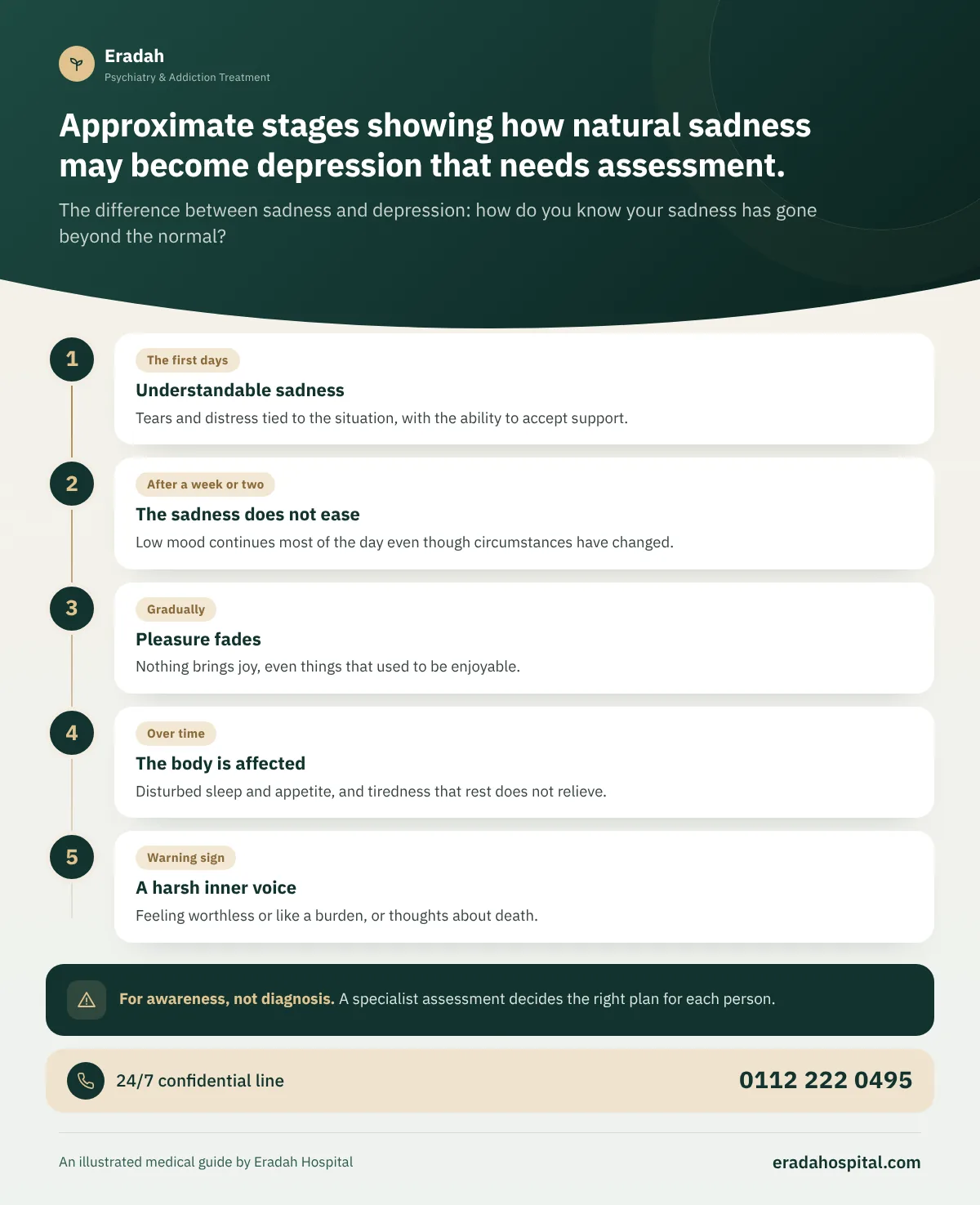
If you have reached the second or third stage, the right step is to talk to a professional. If the last sign appears, help is urgent and cannot wait.
What helps with ordinary sadness?
The NHS suggests simple steps for dealing with low mood, which are easy to apply in daily life:
- Talk about your feelings with a friend, a relative or a professional instead of keeping them to yourself.
- Regular movement; a daily walk may improve mood and sleep.
- Regular meals to keep your energy up.
- Small, achievable goals instead of trying to get everything done at once.
- Avoid alcohol, cigarettes and drugs as a way of easing distress, because they make things worse.
These steps help with ordinary sadness and support depression treatment, but they are not enough on their own if symptoms are severe or persistent. For more on non-medication options, read treating depression without medication.
Common mistakes when responding to the sadness of someone we love
- “Be strong, it's God's decree”: Faith is a great support, but this phrase can make a grieving person feel blamed for their feelings.
- “You have everything, so why are you upset?”: Depression does not need a convincing external reason to be real.
- Rushing: Pressuring a bereaved person to go back to “normal” within days deepens their isolation.
- Neglect: Treating weeks of emotional numbness as “a phase that will pass” delays treatment they may need.
It is better to say: “I can see you've been struggling lately, and I'm here with you. If you'd like, we can talk to a doctor together and I'll be with you.” It is also useful to know that adjustment disorder is an in-between condition that may be diagnosed in people whose distress lasts longer after a specific crisis.
When do you need a psychiatrist?
Ask for an assessment if sadness or emptiness lasts two weeks or more for most of the day, if your daily life is disrupted, or if you start turning to sedatives, alcohol or any substance to bear your feelings. At Eradah Hospital, it starts with a meeting with a psychiatrist who distinguishes between natural sadness, depression and adjustment disorder, followed by a clear recommendation of what you actually need, from a few sessions to a full treatment plan. The first consultation is free and confidential.
Suicidal thoughts or danger to self? Get help now
- Talk about death, about life not being worth living, or about the family being "better off without him"
- Suddenly saying goodbye to family, giving away belongings, or writing a will
- A strange sudden calm after a period of severe despair
- Stopping eating and drinking or caring for oneself altogether
- A sudden increase in drinking, substance use or reckless behavior
Stay with the person and do not leave them alone, and ask calmly and clearly whether they are thinking of harming themselves; asking does not plant the idea, it opens the door to talking. Listen without blame or lecturing, and quietly move medications and dangerous items out of reach. Call the ambulance (123) or go to the nearest emergency room if the danger is imminent, and contact the mental health support line 16328, available around the clock.
Ambulance 123 Mental health support line 16328