What happens if depression is not treated?
An untreated episode can last many months and tends to recur: the likelihood of depression returning rises with each new episode, and medical reviews indicate that about half of those who have had one episode may have another, with the rate rising considerably after the second and third.
With recurrence, episodes may begin with smaller triggers, the good periods between them become shorter, and depression may turn into a chronic condition. For this reason doctors do not advise a "wait and see if it passes" approach if symptoms continue or affect life.
Sources: StatPearls (Major Depressive Disorder) and the World Health Organization. Figures are estimates and vary between studies.
Does depression affect the heart?
Yes. In many studies depression has been linked to a higher risk of heart disease and to worse outcomes in people who have had a heart attack or angina. The American Heart Association issued a scientific statement that considers depression a risk factor for poor prognosis in patients with acute coronary syndrome and recommended screening for it in them.
This is believed to happen by more than one route: higher stress hormones and inflammation, and disturbed heart rhythm, along with the effect of depression on behavior, such as inactivity, smoking, unhealthy eating, and neglecting blood pressure, diabetes and cholesterol medication.
How does depression harm the body in general?
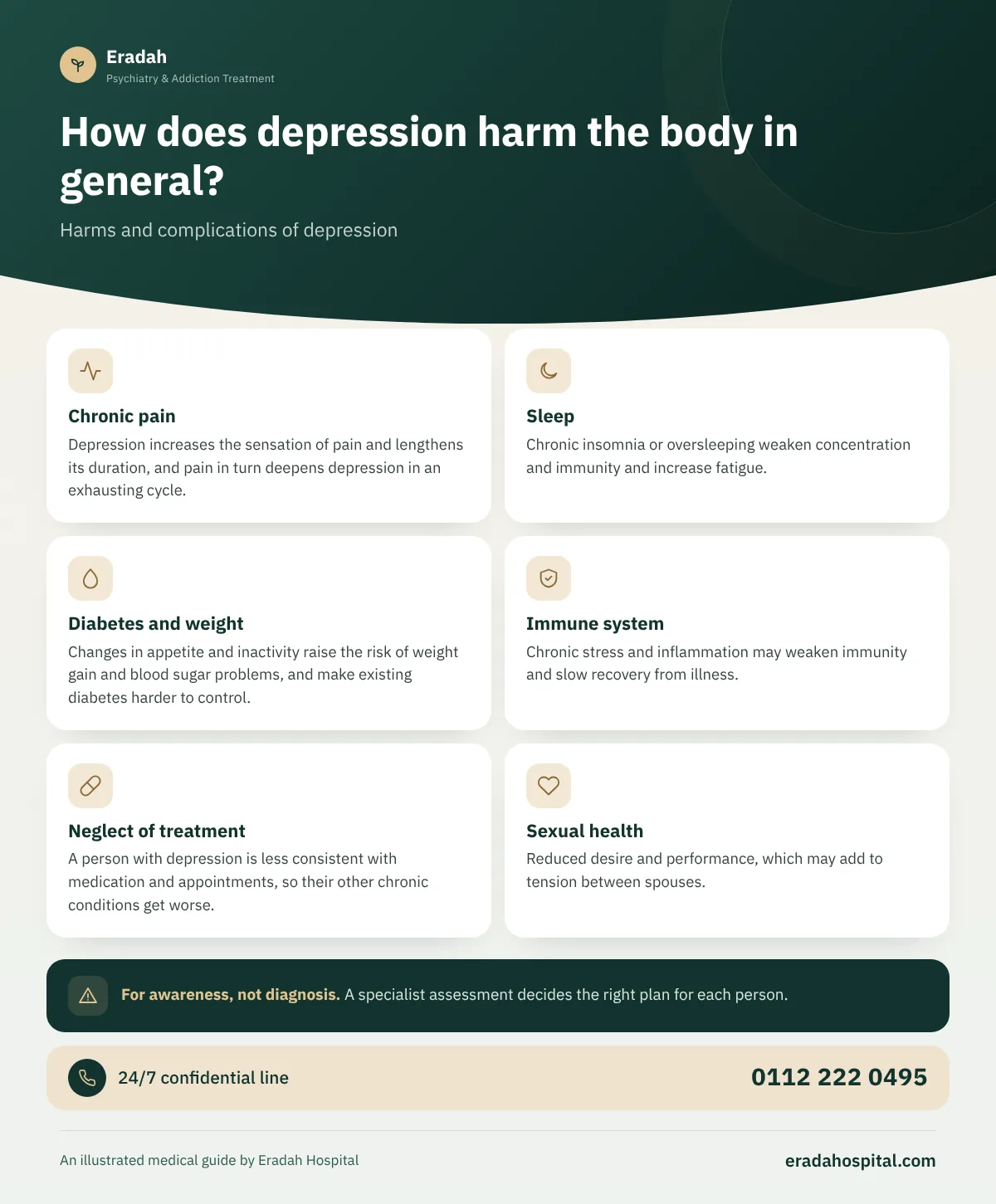
Depression increases the sensation of pain and lengthens its duration, and pain in turn deepens depression in an exhausting cycle.
Chronic insomnia or oversleeping weaken concentration and immunity and increase fatigue.
Changes in appetite and inactivity raise the risk of weight gain and blood sugar problems, and make existing diabetes harder to control.
Chronic stress and inflammation may weaken immunity and slow recovery from illness.
A person with depression is less consistent with medication and appointments, so their other chronic conditions get worse.
Reduced desire and performance, which may add to tension between spouses.
How does depression affect the mind, memory and mental health?
Depression weakens concentration, speed of thinking and decision-making, and some of this weakness may continue for a while after mood improves. In older adults, depression can overlap with memory problems, and research suggests a link to a higher risk of dementia later, although the relationship between them is complex and still being studied.
Untreated depression also paves the way for other disorders, most notably anxiety and panic attacks, and makes dealing with later trauma and stress harder.
How does depression affect work and study?
Depression is one of the biggest causes of lost productivity in the world. It does not show only in absence but in "presenteeism": the employee is at their desk but unable to concentrate or get tasks done as usual. Over time this can lead to:
- Declining performance and missed chances for promotion, and possibly losing the job.
- A student failing or falling behind, and sometimes dropping out of university.
- Strained relationships with colleagues and managers because of irritability or withdrawal.
- Loss of self-confidence, which in turn deepens depression.
How does depression harm marriage and relationships?
Depression steals the energy relationships need: talk, interest and desire decrease, and the partner thinks the patient has "changed" or "doesn't love them anymore." Arguments multiply because of irritability and misunderstanding, and it can reach separation if it is not understood that what is happening is an illness and not deliberate neglect.
The patient also gradually withdraws from friends and relatives, so the support network they need most weakens. Educating both spouses together about the nature of depression greatly reduces this harm.
How does a parent's depression affect children?
Children need emotionally available parents, and depression makes that difficult. Studies indicate that children of mothers or fathers with untreated depression are more likely to have behavioral, emotional and school problems, and depression later in life.
This is one more reason for treatment, not grounds for blaming the parents. Treating a mother's or father's depression improves the children's well-being too, and explaining it to them in simple language ("Mom is a bit unwell and getting treatment, and it's not your fault") protects them from blaming themselves.
Does depression have a financial impact on the family?
Yes, depression can lead to loss or reduction of income, hasty financial decisions or neglect of obligations, besides the cost of going between doctors and tests for physical complaints without reaching the right diagnosis. That is why early treatment not only protects health but saves the family many losses.
Does depression push people toward drugs and alcohol?
People with depression often turn to alcohol, hashish, sedatives or tramadol seeking temporary relief from psychological pain or insomnia. But that relief is short, followed by more depression and anxiety, and it may end in addiction. Depression combined with substance use also raises the risk of impulsive behavior and self-harm. The full explanation is on the depression and addiction page.
What is the relationship between depression and suicide risk?
Depression is one of the most important factors linked to suicide, but it is important to know that most people with depression do not attempt suicide, and that suicidal thoughts are a symptom of the illness that eases with treatment, not a final decision or a sign of weakness.
The risk usually rises with the severity of depression, severe hopelessness, a previous attempt, alcohol or drug use, isolation, and recent major losses. It may also rise in the first weeks of improvement or after leaving the hospital, which is why follow-up in these periods is important.
And for patients themselves: if these thoughts come to you, you are not alone, and these thoughts are not the truth about your worth or your future. Talk to someone you trust now, call 16328, or go to the nearest emergency room. Many people have been through what you are going through, recovered, and found a life worth living.
What are the harms of depression during pregnancy and after birth?
Depression during pregnancy can reduce a mother's attention to nutrition and medical follow-up, and in some studies is linked to premature birth and low birth weight. After birth it can affect breastfeeding, bonding between mother and baby and the baby's emotional development, and increases the burden on the whole family.
A mother should not feel guilty; depression in pregnancy and after birth is common and has a safe treatment that the doctor chooses carefully. Most important is to speak openly and early with her obstetrician or psychiatrist.
Why are complications of depression more serious in older adults and teenagers?
In older adults, depression can lead to loss of appetite, weight loss and muscle weakness, neglect of chronic illness medication, a higher risk of falls and fractures, and isolation that speeds mental decline. It is often wrongly explained as "just old age," so treatment is delayed.
In teenagers, untreated depression can cause declining school performance and dropping out, being drawn to friends who use substances, early experimentation with drugs, and risky behaviors. Intervention at this age protects crucial years of building a future.
Can complications of depression be avoided?
- Starting assessment and treatment early when symptoms last more than two weeks.
- Staying with the treatment plan even after improvement, and not stopping it without the doctor.
- Staying away from alcohol, drugs and non-prescribed sedatives.
- Regular follow-up of chronic conditions such as blood pressure, diabetes and heart disease.
- Involving the family in understanding the illness and knowing the danger signs.
- Having a clear plan for what to do when early signs return.
Learn about the depression treatment options available; asking for help is the first step toward protecting your health and your family.
Suicidal thoughts or danger to self? Get help now
- Talk about wanting to die, being a “burden” on others, or life having no meaning
- Severe despair and a feeling that there is no way out and no hope of getting better
- Suddenly saying goodbye to family and friends, giving away personal belongings or putting affairs in order
- Complete withdrawal from people, or a sudden unexplained calm after a period of intense distress
- Increased use of alcohol or drugs, or reckless behavior that puts their life at risk
Do not leave the person alone. Ask them calmly and directly about their thoughts and listen without judgment or blame; asking does not plant the idea, it opens the door to help. Call the ambulance on 123 or take them to the nearest emergency room, or call the mental health support line 16328 (24 hours), and keep medications and anything they could harm themselves with out of reach.
Ambulance 123 Mental health support line 16328